
As published in Bravo Magazine
When Kristen Stewart confirmed the purchase of the Highland Theatre in Highland Park, the news sounded less like a real-estate transaction and more like a symbolic gesture. In a city where historic theaters close quietly, Stewart chose to run in the opposite direction. She paid about 6.99 million dollars for a cinema shuttered since 2024, taking on not only an old building but a cultural legacy marked by cycles of splendor, decline, and resilience. In interviews, she described the almost physical impulse of recognizing in that space something she had been searching for without knowing it, a place to gather people, imagine futures, and restore cinema’s collective dimension.
The Highland Theatre opened its doors on March 2, 1925, at 5604 North Figueroa Street, when Highland Park was still establishing itself as a neighborhood, and going to the movies was a social ritual. Designed by Lewis Arthur Smith, an architect responsible for other historic theaters in California, the building was conceived as a true exhibition palace. Its single auditorium held about 1,400 spectators and featured ornamentation inspired by Moorish and Spanish Colonial styles, with details that turned every screening into an event. The opening was emblematic. The film shown was Lady of the Night, directed by Monta Bell, and the preview was attended by Norma Shearer, then one of MGM’s biggest stars. The message was clear. This neighborhood theater also belonged on Hollywood’s symbolic map.
For decades, the Highland served as a community gathering place. Families, couples, and young people crossed Figueroa to see the week’s releases, part of a popular circuit that sustained much of American film culture in the twentieth century. Like many similar palaces, it began to feel the effects of television and changing entertainment habits starting in the 1950s. The crisis deepened in the 1970s, when, in an attempt to survive financially, the theater began showing adult films. The decision sparked local protests and marked a period of profound decline, both economically and symbolically.
Recovery came in 1975, when the Highland was purchased by the Akarakian family. Under new management, the theater reconnected with the neighborhood, investing in family programming, children’s screenings, and Spanish-language films that reflected the region’s diversity. In the 1980s, following an industry trend, the space was converted into a triplex. The original grand auditorium was divided into three smaller rooms, reducing total capacity to about 465 seats. The architectural experience changed, but the cinema survived at a time when many others closed permanently.
Official recognition arrived in 1991, when the Highland Theatre was designated Los Angeles Historic-Cultural Monument No. 549. The title acknowledged its architectural and historical importance, protecting the building from demolition or irreversible alterations. Even so, landmark status did not guarantee financial stability. The theater entered the twenty-first century already under pressure from a rapidly changing market.
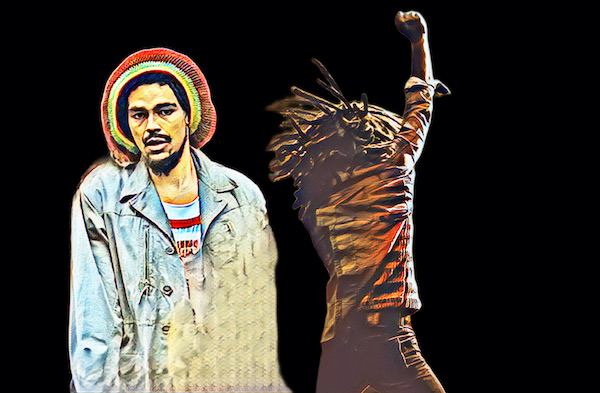
The COVID-19 pandemic delivered the decisive blow. The Highland shut down completely between March 2020 and May 2021. When it reopened, nothing was the same. According to Dan Akarakian, who operated the theater, ticket sales fell about 70 percent compared with pre-pandemic levels. Audiences had migrated to other forms of entertainment, and keeping the theater open meant losing money week after week. In February 2024, just days before its 99th anniversary, the Highland ended screenings for good. The final films shown were Madame Web, Bob Marley: One Love, and Lisa Frankenstein, contemporary titles projected in a room carrying nearly a century of history.
The building, owned by investor Cyrus Etemad, had already undergone a quiet transition. Etemad allowed the theater to continue operating rent-free for a year after the lease expired and publicly stated his intention to preserve the space as a venue, primarily for cinema and music. He also acknowledged that the building required a major renovation. The Highland existed in suspension, closed, legally protected, yet without a clear future.

It is into this gap that Kristen Stewart steps. Her purchase places the Highland within a broader movement among filmmakers and artists to acquire historic theaters in Los Angeles, such as Quentin Tarantino, who revitalized the Vista Theatre, and the group led by Jason Reitman that bought the Village Theatre in Westwood. This is not merely nostalgia but a concrete response to the erosion of cinema as a collective experience.
Stewart speaks of the Highland as an antidote to the industry’s corporatism, a space that exists not only to buy and sell films but to educate, provoke, and welcome. Her plans include restoring the building’s original architectural elements, honoring its history, and transforming it into an active cultural center with screenings, events, gatherings, and community programs. In doing so, she reinserts the Highland Theatre into the living landscape of Los Angeles, not as a relic but as a changing organism.
The story of the Highland has never been linear. It reflects the transformations of the city, the industry, and the audience itself. By purchasing this cinema, Stewart is not trying to freeze the past. She is betting on the idea that memory only matters when it can meet a possible future. And yes, quite possibly, she enters Hollywood history in the process.
Descubra mais sobre
Assine para receber nossas notícias mais recentes por e-mail.
 miscelana.com