
If Season 2 of A Knight of the Seven Kingdoms remains faithful to the novella The Sworn Sword, audiences will encounter a narrative radically different from the first. There is no celebration, no crowd, no chivalric glory. Instead, there is heat, scarcity, resentment, and a conflict that initially appears too small to merit historical attention yet reveals with almost cruel precision how Westeros truly functions far from royal castles.
The story begins roughly two years after the tourney at Ashford. Dunk and Egg are now in service to an impoverished rural lord, Ser Eustace Osgrey, in the Reach. The landscape is dominated by a severe drought that destroys crops, empties rivers, and turns daily survival into a constant calculation of loss. In this context, a dispute over a small stream becomes a matter of life and death.
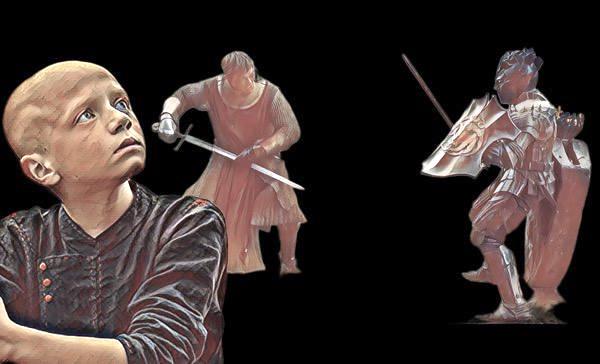
The conflict emerges when Osgrey accuses the neighboring house, ruled by Lady Rohanne Webber, of diverting water that once irrigated his lands. Rohanne, in turn, shows no willingness to retreat, as her own people depend on the same resource. There is no clear villain. Only two sides are trying to survive within a feudal system where natural resources determine power.
This local dispute is deeply shaped by a larger past. Osgrey supported the Blackfyres in the civil war against the Targaryens and paid dearly for that choice. He lost lands, status, and family members, living now as a human relic of a conflict Westeros has officially moved beyond but never truly forgotten. Dunk’s presence, as a knight whose honor is not filtered through political resentment, exposes the tensions between memory, pride, and reality.
Lady Rohanne Webber emerges as an equally complex opposing force. A widow, ruler, and strategist, she refuses to be treated as decorative or villainous. Her stance is pragmatic and defensive, yet her intensity transforms each encounter with Dunk into a silent clash between two worldviews. Where he sees individual honor, she sees collective responsibility.
As tensions escalate, the threat of open violence becomes real. Knights are mobilized, provocations accumulate, and the possibility of a battle between two small houses hangs over a population already weakened by hunger. Yet, as is typical of George R. R. Martin, the climax does not depend on spectacular heroic feats but on difficult moral decisions and negotiations that leave everyone partially dissatisfied.
Egg plays a crucial role by questioning the power structures that allow peasants to pay the price for disputes among nobles. His still youthful but deeply ethical perspective foreshadows the kind of king he will attempt to become. At the same time, he is forced to confront the distance between ideals and governance, a theme that will echo throughout Targaryen history.
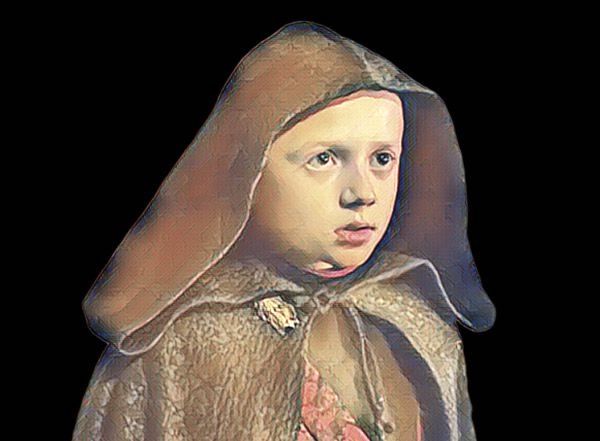
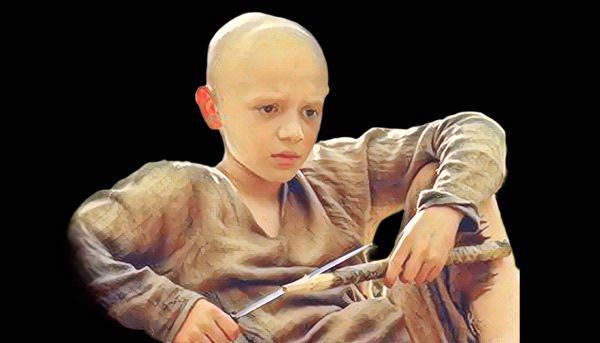
The resolution offers none of the catharsis associated with traditional chivalric tales. There is no clear victory, no full justice, no sense that the world has improved. What exists instead is a workable agreement built on painful concessions and the awareness that similar conflicts will continue across Westeros. Dunk’s honor does not transform the system; it merely prevents it from producing even greater immediate suffering.
This seemingly modest story is essential to Dunk and Egg’s broader arc because it marks the transition from formative adventure to moral maturity. The knight who once defined himself through physical courage must now grapple with the political and human complexity of a continent traumatized by recent wars and governed by rigid structures.
If the adaptation remains close to the source material, Season 2 will be less about grand events and more about atmosphere, subtext-laden dialogue, and characters who cannot afford to be wholly good or wholly evil. It is a story about survival in times of scarcity and about the persistence of honor in a world that rarely considers it useful.
And perhaps it is precisely this absence of traditional heroism that makes the narrative so powerful. By removing dragons, prophecies, and decisive battles, George R. R. Martin exposes something more unsettling: that most of Westeros’s history is not made of legends, but of small decisions taken by ordinary people trying to keep everything from collapsing entirely.
Descubra mais sobre
Assine para receber nossas notícias mais recentes por e-mail.
 miscelana.com
1 comentário Adicione o seu