
We barely had time to get excited, and it was already over. A Knight of the Seven Kingdoms delivered exactly what it promised and proved to be a major success, precisely what fans of the saga had been waiting for for years. We will have to wait until 2027 to see these characters again, but the series already offers meaningful connections to Game of Thrones that clarify questions many readers had not fully deciphered in the books.
The final episode of the first season is not a climax, nor a spectacle, nor a loud hook for the future. It is something far rarer in contemporary television: a true epilogue, contemplative and almost melancholic, concerned not with what happens but with what remains afterward. In a sense, it follows the emotional tradition of Game of Thrones, which always understood that consequences matter as much as events.
Prince Baelor’s death in the previous episode hangs over everything like a shadow because it is not merely the loss of an admirable man; it is the loss of a possibility. Westeros did not just lose an heir; it lost the chance for a better, fairer, perhaps less brutal reign. The dominant feeling is not explosive tragedy but emptiness, the kind of emptiness only politics can produce, when history shifts because of an accident, a mistake, a poorly aimed blow. And we know, from what the six episodes have shown us, that the crown will ultimately fall onto the shoulders of the least likely prince.
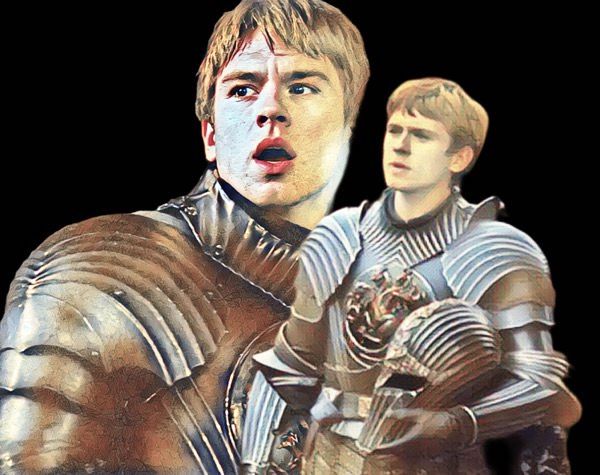
Unaware of that future, everyone in the finale exists in a kind of moral hangover. Valarr, Baelor’s son, oscillates between disbelief and fury toward the man who, however unintentionally, set in motion the events that led to his father’s death. Maekar, the brother who delivered the fatal strike, carries a more complex guilt: he knows he killed not just a relative but a promise. In Westeros, power is rarely kind to those who survive.
And then there is Duncan, at the silent center of it all, unable to celebrate his absolution. Legally innocent yet morally unsettled, he seems incapable of accepting that his life was worth Baelor’s. The question haunting him is not “What happens now?” but “Why me?” Why did the gods preserve a wandering hedge knight instead of a prince destined for greatness? Perhaps he should have asked Daeron or listened to his dreams.
A knight without a place
Contrary to what political logic would suggest, Dunk refuses Maekar’s offer to enter permanent service to House Targaryen at Summerhall. He also rejects Lyonel Baratheon’s exuberant invitation to live among feasts, hunts, and camaraderie in the Stormlands. “Have you ever been to Tarth?” Lyonel asks, a line that quietly alludes to the lineage that will one day connect Dunk to Brienne. In practical terms, he turns down stability, protection, and prestige, everything a landless knight should desire.
Unlike at the beginning of the series, Dunk no longer seeks proximity to nobles. He is unsuited to being either an instrument of the crown or a companion to a rebellious lord. His honor is too stubborn for court life and too sincere for political maneuvering. What the series suggests, with unusual delicacy, is that Dunk can only remain whole because he belongs to no one.
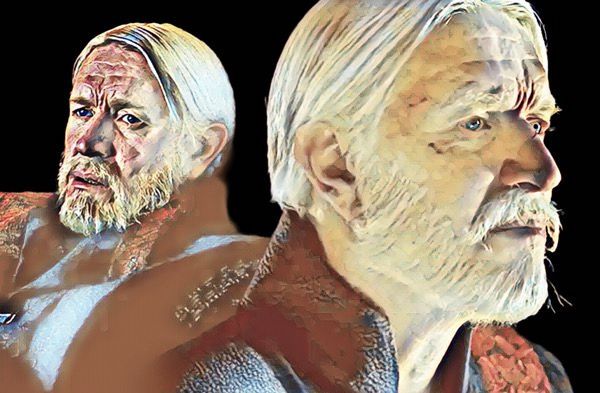
This idea resonates in one of the episode’s most symbolic sequences: the memory of Ser Arlan of Pennytree explaining the custom of nailing a coin to a tree as a promise to return from war. Dunk has no castle, lineage, or territory, yet he repeats the gesture, marking that he was there while symbolically claiming the entire realm as his home.
There is also the lingering ambiguity surrounding his knighthood. The question of whether Duncan lied about being knighted still matters. Even while striving to act with justice and honor, he built his identity on a half-truth. And yet Baelor, Maekar, and Lyonel never seemed entirely fooled.
Whatever the case, Dunk chooses a solitary life, uncertain but free.
The pain of the survivors
Duncan may be the “victor,” but he does not feel like one. The guilt of Baelor’s death, even if indirect, weighs more heavily than his physical wounds. His allies shrug it off, arguing that a dead dragon is the best fate for any Targaryen, but Dunk profoundly disagrees.
His brief encounter with Valarr offers no comfort. For the prince, his father died because of a trivial conflict involving a wandering knight, and forgiveness is impossible.
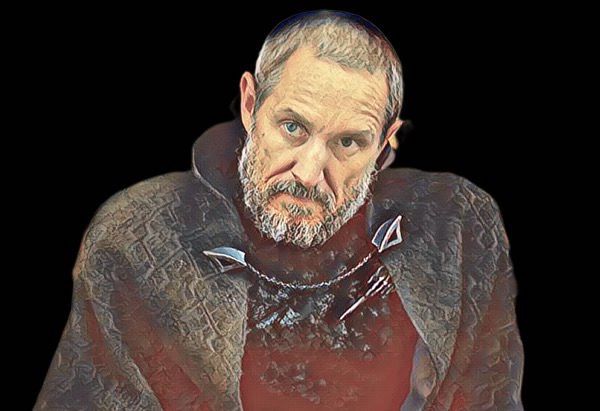
The conversation with Maekar is equally fraught. Sam Spruell delivers a remarkable portrayal, blending arrogance, resentment, surprise, and a rough-edged affection for his children. His scene with Peter Claffey is arguably the most important in the episode. Though the line of succession still runs through Valarr, Maekar speaks like a man who understands how fragile the future truly is.
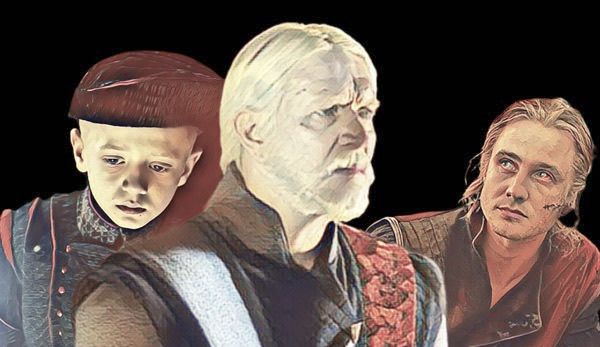
In his own way, he tries to accommodate Egg’s wishes, offering Dunk a position at Summerhall along with proper training. But Dunk is exhausted. He refuses. Enough princes.
The decision devastates Egg, whose hatred of his family is matched only by his fear of becoming like them.
The coin of Targaryen madness
Alone in his chamber, Egg watches his blond hair growing back with visible distress, as if each strand reaffirms a destiny he desperately wants to escape. Armed with a knife, he heads to Aerion’s room, perhaps intending to kill or mutilate him. Before he can act, he discovers Maekar already there, silently observing.
The moment is interrupted but unresolved. Egg breaks down in tears, and Maekar consoles him without words, revealing both tenderness and helplessness. He protects Egg while also protecting the other son, whose instability is undeniable.
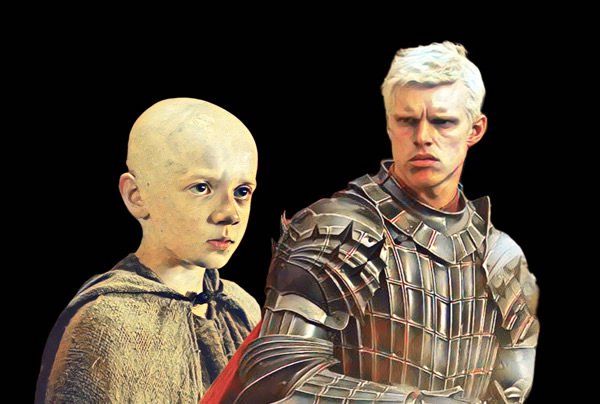
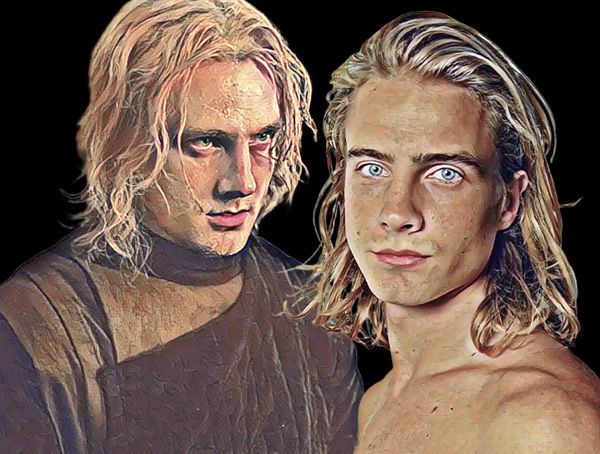
Later, Dunk encounters Daeron drinking among the wounded. The prince remarks that his brother was not always the monster he has become. When Dunk defends Egg, Daeron clarifies that he was not referring to him, but Aerion. That distinction changes everything.
Dunk realizes that if Egg remains at court, he may succumb to the same destructive patterns. To save him, Dunk agrees to take the boy as his squire, but only far from power. Maekar sees the proposal as an insult, exposing his son to poverty, hardship, and ordinary life. And distance from his own father.
The birth of a historic partnership
The farewells are understated, as Dunk prefers. When Egg appears ready to leave, claiming his father’s permission (he’s lying, as we confirm in the last scene of the episode), the series fully embraces its emotional core. Whether the permission exists is irrelevant. What matters is the choice.
Their dynamic returns to the tone that defined the season: sometimes formal, sometimes conspiratorial, sometimes almost fraternal. An unlikely friendship between a common man and a royal heir.
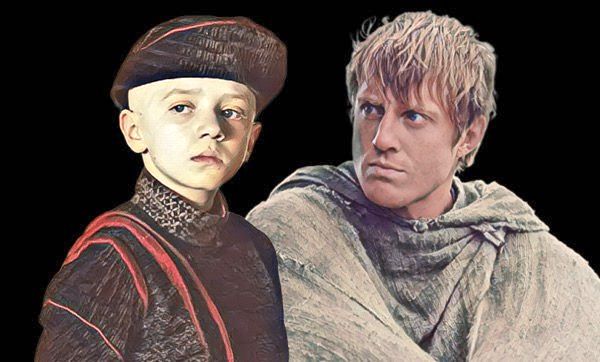
There is something deeply subversive about this education. Egg will learn not from masters and strategists alone but from the lived reality of the realm, cheap inns, hard food, cold stables, and nights under the open sky. It is an education through experience rather than doctrine. Westeros rarely produces rulers this way.
The final joke, when Egg pedantically notes that the “Seven Kingdoms” are actually nine, is more than humor. It is a reminder that official history simplifies reality to make it governable.
A quiet ending, and therefore a powerful one
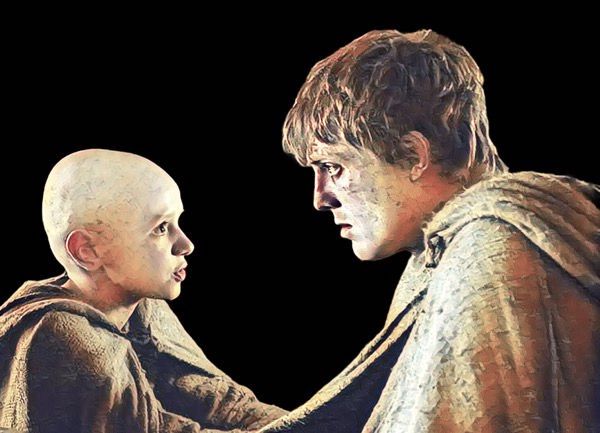
The season concludes with an image unusual for this universe: hope. Two outsiders ride toward the unknown without dragons, armies, or immediate conspiracies, armed only with the belief that they might do better than those who came before.
Within a franchise defined by cynicism and structural violence, that simplicity feels almost radical.
It also reinforces the central theme of the Dunk and Egg saga: history is shaped not only by kings and wars but by moral choices made by people deemed insignificant. Dunk’s goodness, often mistaken for naivety, emerges as a form of resistance.
Tomorrow is a question
The title “The Morrow” comes from the question Ser Arlan asked at the end of each day: What will tomorrow bring? It is a simple and profoundly human question, especially in a world where the future often seems predetermined by blood, prophecy, or violence.
By ending on this open question, the series suggests that destiny is not entirely fixed. Not for Dunk, not for Egg, not for Westeros.
Perhaps that is its greatest act of defiance: asserting that even in a world ruled by dragons and crowns, tomorrow still belongs to those who keep walking.
And once again, there is the lingering sense that the score lacks a truly unforgettable musical identity like Ramin Djawadi’s. Perhaps the second season will correct that.
Descubra mais sobre
Assine para receber nossas notícias mais recentes por e-mail.
 miscelana.com