
It is hard to think of another contemporary Hollywood actress who has been as openly determined to portray Audrey Hepburn as Lily Collins. Their physical resemblance — undeniable — has been something Collins has explored for years in photo shoots, interviews, and even in the visual construction of Emily in Paris, where entire sequences function as direct homages to the classic star.
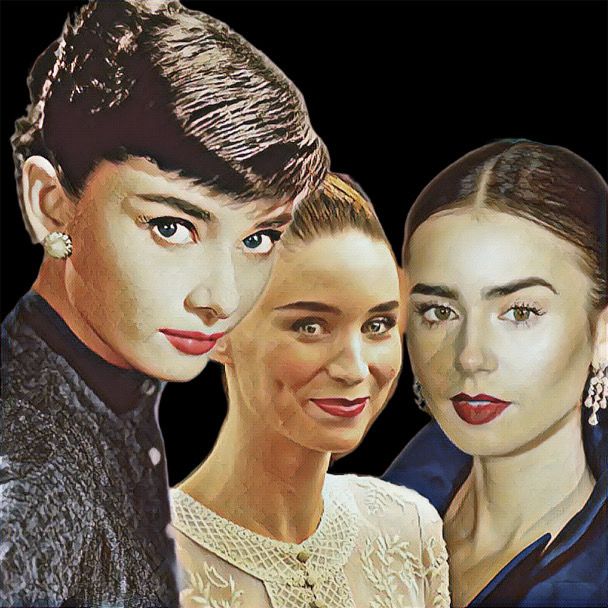
On some occasions, Collins has even worn pieces that once belonged to Hepburn herself, such as iconic sunglasses, turning admiration into something close to ritual reenactment. For years, that desire ran into competing projects — a separate biopic even moved forward with Rooney Mara reportedly attached — but now, at last, the dream is taking concrete form.
The new film will not be a traditional biography. Instead of recounting Hepburn’s entire life, it will focus on the behind-the-scenes story of Breakfast at Tiffany’s (1961), one of the most influential films of the twentieth century and the work that cemented Holly Golightly as the archetype of modern elegance. Based on Sam Wasson’s book Fifth Avenue, 5 A.M.: Audrey Hepburn, Breakfast at Tiffany’s and the Dawn of the Modern Woman, the movie aims to reconstruct the chaotic production process that transformed Truman Capote’s acidic novella into a sophisticated and melancholy romantic comedy.


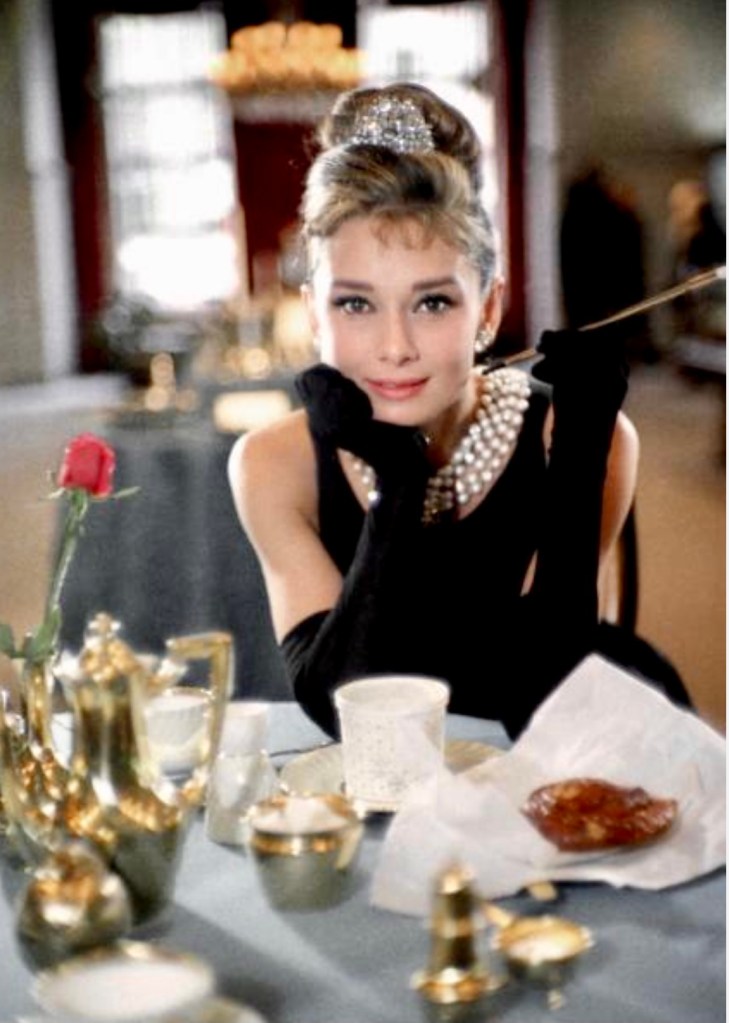
The conflict begins even before filming. Capote wanted Marilyn Monroe for the lead role and felt betrayed when the studio cast Hepburn instead — a decision that would reshape not only the film but the cultural imagination of the postwar era. The script will also explore on-set tensions, creative disputes, and dramatic incidents during production, including a near-fatal accident while shooting the famous opening scene outside the Tiffany & Co. flagship store. Historical figures such as Capote himself, director Blake Edwards, and legendary costume designer Edith Head will appear as characters, turning the film into a portrait of Hollywood’s machinery at a moment of aesthetic and moral transition.
Collins will not only portray Audrey but also serve as a producer, a clear sign of deeply personal involvement. According to the actress, the project took nearly a decade to come together and stems from “a lifetime of admiration and adoration” for the star. That devotion helps explain why her relationship to Hepburn goes far beyond stylistic influence.
From the beginning of her career, Lily Collins has never hidden the figure that hovers over her artistic imagination as an almost unattainable ideal. This is not simply admiration for a classic Hollywood icon — something common among contemporary actresses. In her case, the connection borders on structural identification, built over years through fashion, public persona, and a carefully choreographed delicacy that evokes — consciously or not — the aura of the woman who redefined twentieth-century feminine elegance.
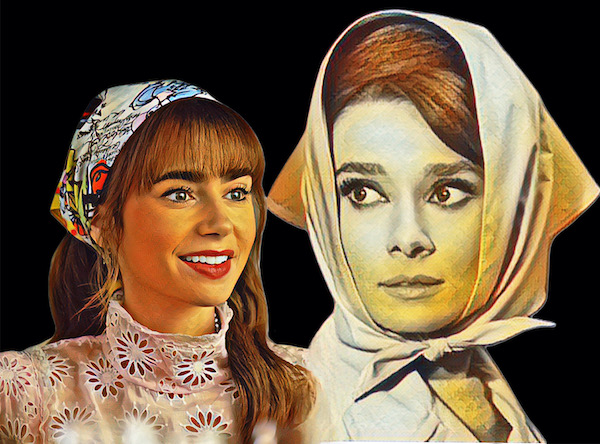
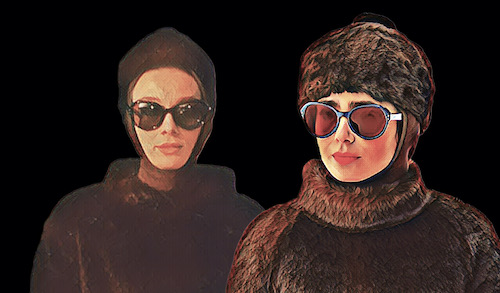
Daughter of musician Phil Collins and raised between England and the United States, Lily grew up surrounded by cultural references but found in Hepburn a model of femininity that combined grace, discretion, and quiet strength. In interviews, she has described the actress as a “beacon,” someone who proved it was possible to be sweet without being fragile and sophisticated without seeming aloof. The visual dialogue is constant: strong brows, high chignons, minimalist lines, clean silhouettes. Her red-carpet looks often echo Breakfast at Tiffany’s and Roman Holiday, as if each public appearance were a contemporary variation on a classical ideal.
Yet the connection goes beyond surface aesthetics. Collins has also expressed deep admiration for Hepburn’s humanitarian work, to which the star devoted the latter part of her life as a UNICEF ambassador. In an era when celebrities are often accused of performing activism, Hepburn represents a model of quiet, authentic altruism. By invoking that legacy, Collins seems to seek not only stylistic inspiration but moral legitimacy, as if the symbolic inheritance of Hepburn offers resistance to contemporary cynicism.


Portraying her, therefore, is not merely a prestigious acting job. It is a confrontation with the very myth that helped shape Collins’s own public identity. There is something profoundly circular in this: an actress who built part of her persona in the shadow of an icon must now embody that same figure and reveal the woman behind the perfection. The risks are obvious. Hepburn occupies an almost sacred place in popular culture, and any attempt to reproduce her can easily slip into reverent imitation or caricature. The real challenge will be to move beyond the surface — the tilted smile, luminous gaze, impeccable posture — to access the contradictions of a woman marked by wartime trauma, insecurity, and solitude.
The enduring fascination with Audrey Hepburn also says something about our present moment. In a culture saturated with hyper-visibility and disposable celebrity, she remains a symbol of an era when mystery was still possible. Lily Collins, with her controlled elegance and carefully polished image, seems intent on reclaiming some of that lost enigma. By focusing on the moment when Holly Golightly was born as a modern myth, the film becomes more than a dramatized making-of: it is an investigation into how aura is manufactured, how Hollywood constructed — and audiences perpetuated — an ideal of femininity that still endures.

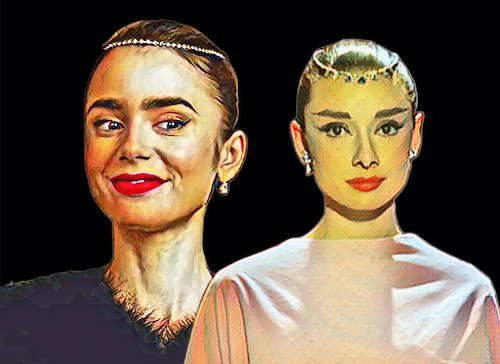
If the project fulfills its promise, it may reveal not only the backstage story of a classic film but also the delicate process by which a contemporary actress attempts to converse with a luminous ghost from the past. In pursuing Audrey Hepburn, Lily Collins may ultimately be pursuing a larger question: what kind of star can still exist in a world that no longer fully believes in stars?
Descubra mais sobre
Assine para receber nossas notícias mais recentes por e-mail.
 miscelana.com