
As published in Bravo Magazine
If you have never watched Peaky Blinders but feel as though the entire world talks about Tommy Shelby as if he were a real historical figure, that impression is not accidental. The British series created by Steven Knight became a global phenomenon by turning the story of a crime family into an epic portrait of war, ambition, trauma, and power. Set between the aftermath of World War I and the rise of fascism in Europe, it follows the evolution of Thomas Shelby, a veteran deeply scarred by the front who builds an illegal empire while trying to keep his inner demons under control.
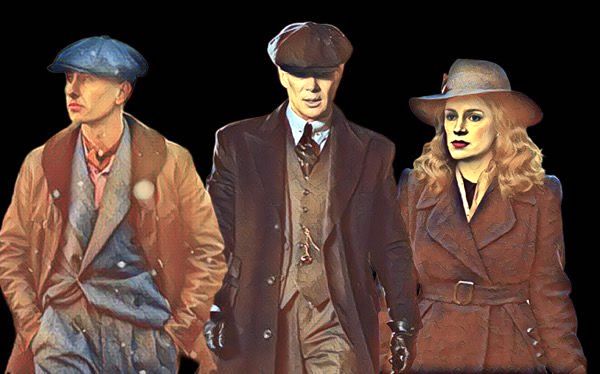
What follows is a season-by-season guide designed for newcomers, offering the essential context to understand why this story remains so relevant today — especially with the arrival of the film Peaky Blinders: The Immortal Man.
First of all, it is important to abandon any expectation of innocence. Neither Tommy nor the Shelbys are traditional hero. He is one of contemporary television’s great anti-heroes: brilliant, manipulative, charismatic, and emotionally devastated. It is also a rare role, one that allowed Cillian Murphy to create a character capable of provoking love, revulsion, and compassion at the same time, without ever losing the ability to pull the viewer into his perspective.
The series suffered a profound shock with the death of Helen McCrory, who played Polly Gray, the matriarch who functioned as the family’s moral conscience, emotional counterweight, and axis of power. Her absence forced the narrative to reorganize itself and altered a dramatic path that would likely have unfolded very differently. Even so, Steven Knight managed to recalibrate the story without betraying its core idea: that power, family, and trauma are inseparable in the Shelby universe.
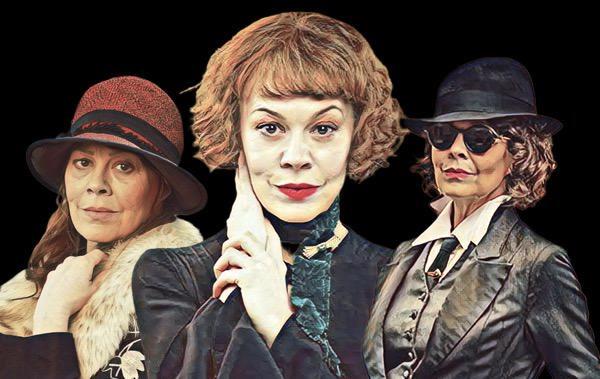
With this in mind, the saga can be approached not as a glamorous gangster story, but as a modern tragedy about men and women who survived war only to discover that survival does not necessarily mean returning to life.
Season 1 (1919): origin, trauma, and ambition
The first season introduces Birmingham just after World War I, a city marked by poverty, unemployment, and men who returned from the front unable to resume civilian life. Tommy Shelby leads the family gang known as the Peaky Blinders, involved in illegal betting and small schemes but driven by far greater ambitions.
The central conflict begins when the gang comes into possession of stolen weapons, attracting the attention of the British government. A determined inspector is sent to recover the arms and dismantle the organization. At the same time, the season establishes the family dynamic — especially the central figure of Polly Gray, the aunt who holds the group together — and sets the tone of the series: elegant, violent, and deeply melancholic.
More than a crime story, it is a narrative about survival after war and about how trauma can become a catalyst for social ascent.
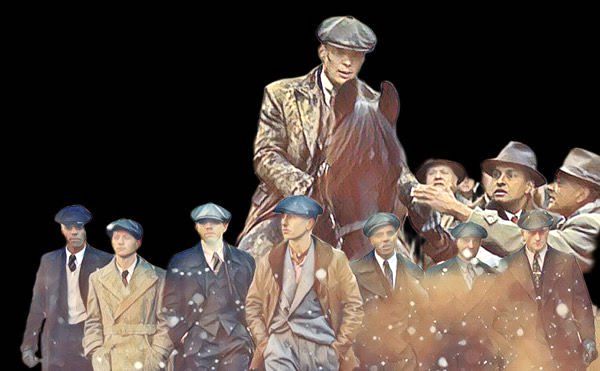
Season 2 (1921–1922): expansion to London
With Birmingham under control, Tommy decides to expand his operations into London, a far more dangerous and politically complex territory. This move brings him into contact with new gangs and unpredictable figures operating on a larger scale.
The season shows that success requires fragile alliances and inevitable betrayals. It also deepens the characters’ pasts and reveals that the Shelbys’ rise threatens interests far beyond local rivals. The tone remains stylized, but the violence becomes more strategic and calculated.
If the first season is about foundation, the second is about growth — and the price of wanting more than the world seems willing to grant.

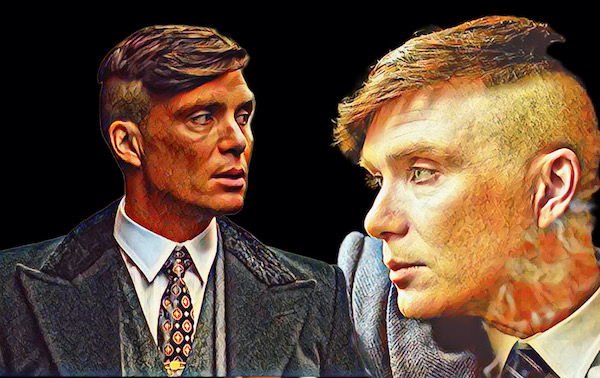
Season 3 (1924): wealth and international conspiracy
Now wealthy and socially influential, the Shelbys interact with aristocrats, secret services, and clandestine operations tied to European politics. The series moves beyond a crime drama into territory involving espionage, terrorism, and international power games.
It is also a season marked by personal tragedies that deeply shake Tommy and reinforce the idea that greater power brings greater emotional vulnerability. The contrast between luxury and despair is constant, and the narrative adopts a darker, more psychological tone.
Here it becomes clear that social ascent does not mean liberation, but exposure to even more complex dangers.


Season 4 (1925–1926): family war and revenge
After devastating events, the Shelby family disperses and must reunite to face an external enemy determined to destroy them all. The threat comes from the Italian-American mafia, turning the season into a direct, brutal, and deeply personal confrontation.
Without the political veneer of previous seasons, the story returns to the gang’s violent roots, but on a much larger scale. Danger is constant, and a sense of mortality permeates every episode.
At the same time, the series begins to address the social and labor tensions of the period more explicitly, showing that the Shelby empire also depends on an unequal economic system.

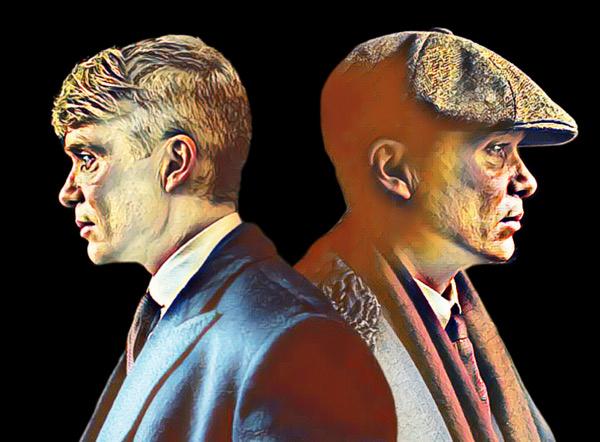
Season 5 (1929): politics and fascism
The global economic crisis radically reshapes the landscape. Tommy enters British politics, attempting to use the system to protect his interests while also confronting the rise of extremism.
The main antagonist is a charismatic fascist leader inspired by real historical figures, transforming the series into a direct commentary on how authoritarian regimes gain traction in times of instability. Violence remains present, but now it is institutional, ideological, and strategic.
Internally, Tommy begins to show signs of psychological collapse. Insomnia, guilt, and paranoia suggest that the power he gained did not bring peace, only new forms of conflict.

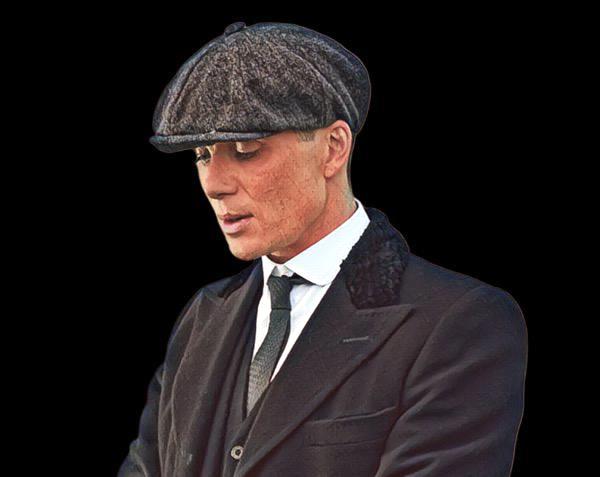
Season 6 (1933–1934): legacy, grief, and the end of a cycle
The final season is the most introspective and somber. The family faces profound losses, escalating political threats, and the sense that Tommy Shelby’s time may be running out.
The narrative centers on legacy: who will inherit the empire, and what will remain of it? An unexpected heir emerges, highlighting both the possibility of continuity and the risk of repeating past mistakes.
The conclusion avoids simple resolutions. Rather than a clear triumph or definitive fall, it presents a transformed character confronting his mortality and responsibility for everything he built.


Why watch before the film
Peaky Blinders functions as a sweeping saga about the transformation of a man and a family across two decades of historical upheaval. The film The Immortal Man resumes the story in 1940, during World War II, when the consequences of all those choices resurface.
For newcomers, understanding this trajectory makes the experience far more powerful. It is not simply about following a gang, but about observing how violence, once used as a tool for ascent, inevitably demands its price.
Tommy Shelby is neither a traditional hero nor a straightforward villain. He represents a generation shaped by war and unable to escape it, even when the battle appears to be over.
Descubra mais sobre
Assine para receber nossas notícias mais recentes por e-mail.
 miscelana.com