
The year 2026 seems to have become — for better or for worse — the year in which the Brontë sisters returned to the center of the contemporary cultural imagination. After the renewed interest in Emily Brontë, fueled by films, biographies, and reinterpretations that attempt to decipher the author of Wuthering Heights, it is now Jane Eyre that resurfaces once again, this time with Aimee Lou Wood, known for Sex Education and the recent season of The White Lotus, in the role of the orphaned governess who redefined the figure of the romantic heroine. This is not merely another remake among many. It is proof that Charlotte Brontë’s work remains one of the foundational texts of modern female subjectivity, capable of speaking to different eras without ever becoming comfortable or fully assimilable.
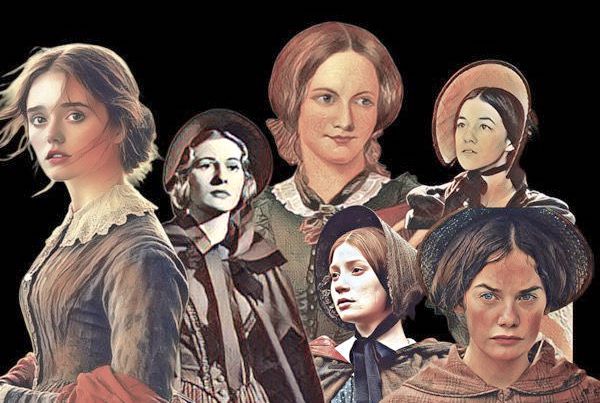
Published in 1847 under the male pseudonym Currer Bell, the novel emerged at a time when women were permitted to write only within very narrow moral and social limits. What Charlotte did was expand those limits to the point of rupture, creating a narrator who does not apologize for desiring love, autonomy, and dignity at the same time. Jane is not beautiful, not wealthy, not socially significant, nor is she docile. Her strength lies in her stubborn refusal to accept an inferior place in the world, even when every circumstance seems to conspire to confine her to invisibility. That refusal is the emotional engine of the narrative and also the reason the book continues to resonate with readers across generations, each finding in it a mirror for their own negotiations between independence and belonging.
The novel endures because it articulates conflicts that belong not only to the nineteenth century but to human experience itself. A childhood marked by abandonment and humiliation, the search for economic autonomy in a society that restricts women’s choices, the tension between desire and religious morality, class inequality within romantic relationships, and above all, the question of whether it is possible to love without erasing oneself from a dramatic core that remains profoundly current. Jane does not want merely to be loved; she wants to be recognized as an equal, something that remains surprisingly radical even today. Her story is less a fairy tale than a process of psychological formation, narrated in the first person with an intimacy that anticipates the modern novel and creates the sense that we are following not a character but a consciousness in the making.
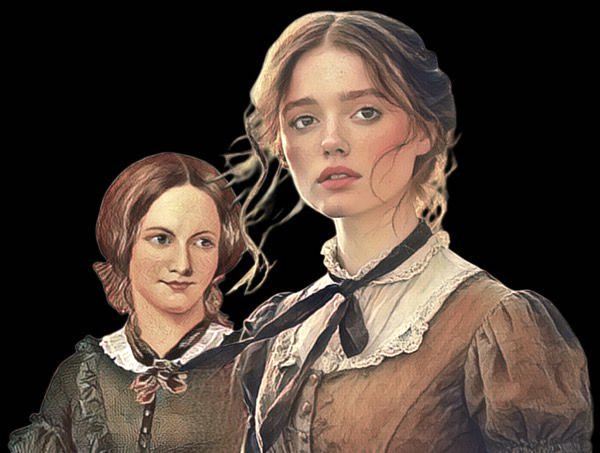
The work’s lasting power also lies in its singular blend of genres. Jane Eyre is at once a Gothic romance, a coming-of-age narrative, a social critique, and a love story, with elements of suspense that sustain tension until the end. Thornfield Hall, the mansion where Jane works as a governess, is not merely a setting but an architectural metaphor for the repressed secrets of the Victorian era, including the most disturbing of them all: the presence of Bertha Mason, Rochester’s hidden wife, whose madness functions both as a narrative device and as a symbol of the colonial and patriarchal violence obscured by British society. Each new adaptation emphasizes a different aspect of this ambiguity, sometimes foregrounding the romance, sometimes the psychological horror, sometimes the feminist dimension, which explains why the story never seems exhausted.
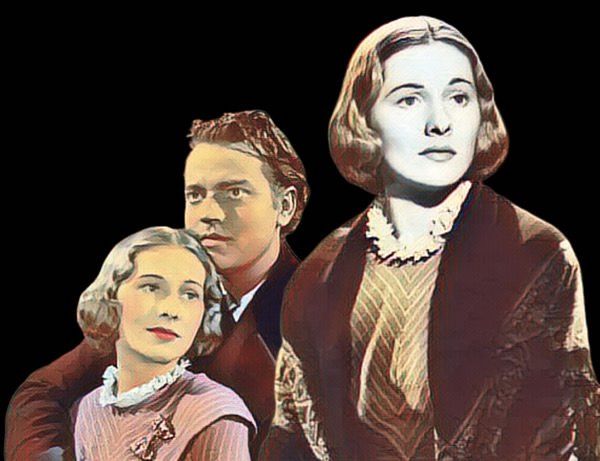
In cinema, the 1943 version directed by Robert Stevenson and starring Joan Fontaine and Orson Welles consolidated the Gothic aesthetic of the narrative for twentieth-century audiences, transforming Rochester into a dark, domineering, almost Byronic figure and Thornfield into a space of expressionist shadows.
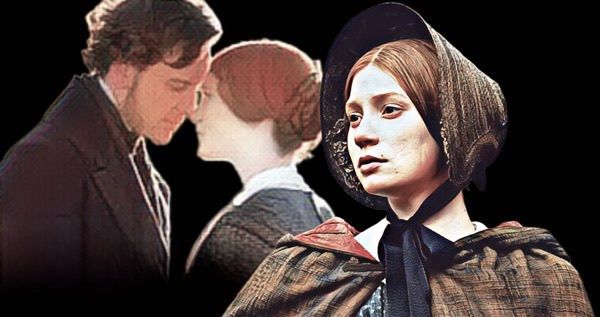
Decades later, the 2011 adaptation directed by Cary Fukunaga, with Mia Wasikowska and Michael Fassbender, offered a more intimate and psychological reading, emphasizing Jane’s trauma, the couple’s repressed sexuality, and the atmosphere of emotional isolation that permeates the novel.
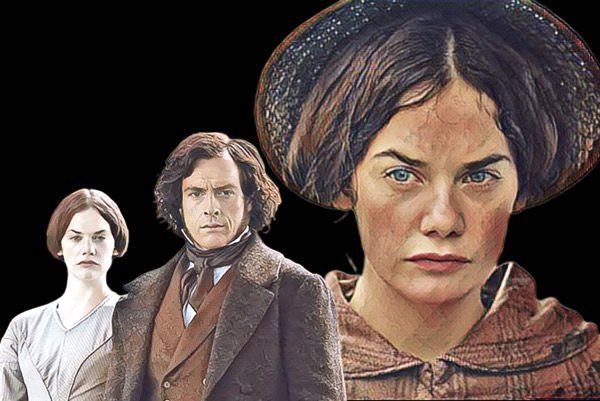
For many readers, however, the most satisfying version remains the BBC miniseries from 2006, starring Ruth Wilson and Toby Stephens, which has sufficient time to develop the relationship between Jane and Rochester gradually and preserve the moral complexity of the original work without reducing it to melodrama or suspense.
British television, in fact, has played a crucial role in preserving the relevance of Jane Eyre, with periodic adaptations since the 1950s, each reflecting the sensibilities of its era. In earlier versions, Jane appears as an example of virtue and resignation; in more recent ones, as a resilient, emotionally complex woman aware of the structures that oppress her. This interpretive flexibility is an essential part of the Brontë phenomenon. Like Elizabeth Bennet in Jane Austen’s work, Jane Eyre has become a kind of archetype, a character who can be continually reconfigured without losing her essence.
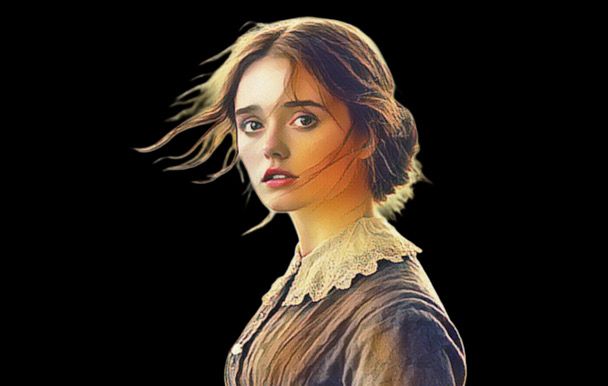
The choice of Aimee Lou Wood for the new film suggests a particularly compelling reading for the present moment. Wood possesses a quality of transparent vulnerability combined with a quiet firmness that prevents her from being perceived as fragile or passive, something very close to the literary Jane. Her presence in contemporary productions marked by emotional ambiguity and social discomfort suggests that the adaptation will likely privilege the psychological dimension of the story, exploring not only the romance but the inner process of survival and self-definition that sustains it. In an era shaped by debates about trauma, mental health, and female autonomy, this approach may bring Charlotte Brontë’s text even closer to modern audiences.
More than nostalgia, the constant return to Jane Eyre reveals a recurring need to revisit narratives that place female interiority at the center of human experience. The novel offers neither pure escapism nor absolute romantic comfort, but a trajectory of self-determination built through losses, refusals, and difficult choices. Perhaps it is this emotional honesty, combined with an irresistible dramatic structure, that keeps the work alive nearly two centuries after its publication.
Each new adaptation is less an attempt to replace the previous ones than a fresh reading of a text that refuses to age, because it continues to pose essential questions about love, freedom, and identity. In a cultural moment fascinated by complex, imperfect heroines, Jane Eyre does not feel like a literary relic but like an unexpected contemporary figure who returns again and again to remind us that true revolution often takes place within the consciousness of an apparently ordinary woman.
Descubra mais sobre
Assine para receber nossas notícias mais recentes por e-mail.
 miscelana.com