
The reaction to Netflix’s Pride and Prejudice teaser has been less explosive than curiously contemplative, which, in a way, matches the strategy itself. It is a silent, almost shy teaser, one that seems less interested in selling the story than in introducing the new faces of Elizabeth Bennet and Mr. Darcy and establishing a mood. It invites observation before judgment, as if the production understood that any premature words would only fuel inevitable comparisons.
Those comparisons arrived anyway. No one watched it without immediately thinking of the 2005 film, whose visual influence hovers over this material like a collective memory that cannot be erased. The golden cinematography, the use of landscape as emotional extension, the physical proximity charged with restrained tension, the long looks, the hands that say more than dialogue — all of it recalls the sensory grammar that turned that adaptation into a modern classic. Netflix’s teaser seems to recognize this legacy and, rather than escaping it, embraces it as a point of departure.
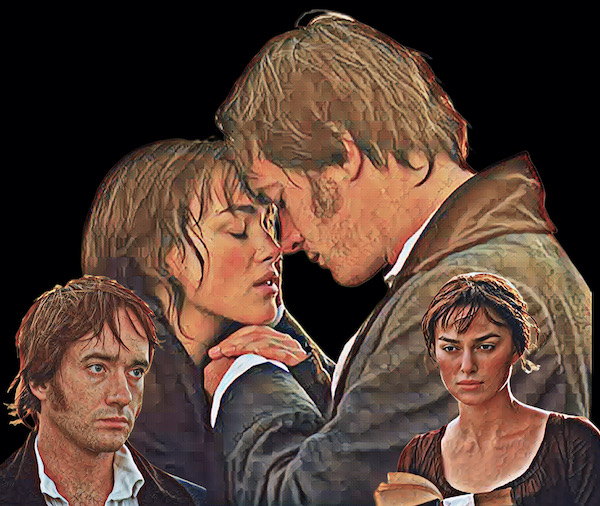
In this context, silence does not feel like absence but like an aesthetic statement. Without spoken lines, the focus shifts to the potential chemistry between the protagonists, to the distance that separates them, and at the same time draws them together, to the invisible social weight suspended between two people who do not yet know how to exist in each other’s presence. It is an approach that privileges atmosphere and emotion over verbal irony, moving the center of the narrative from social critique to the intimate experience of romance — precisely the key that made the 2005 version so popular.
This also explains why the BBC miniseries from 1995 appears less as a direct reference and more as an implicit counterpoint. That adaptation, more faithful to Austen’s text and satirical spirit, is deeply verbal and theatrical. Netflix’s teaser, by contrast, relies on the unsaid, on minimal gesture, on the idea that the love between Lizzie and Darcy is less an intellectual duel than a magnetic field. For some viewers, this choice is promising; for others, it raises fears of an overly romanticized Austen, almost filtered through the sensibility of the Brontë sisters.
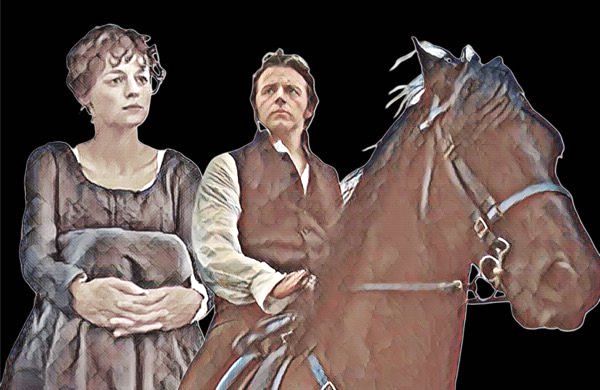
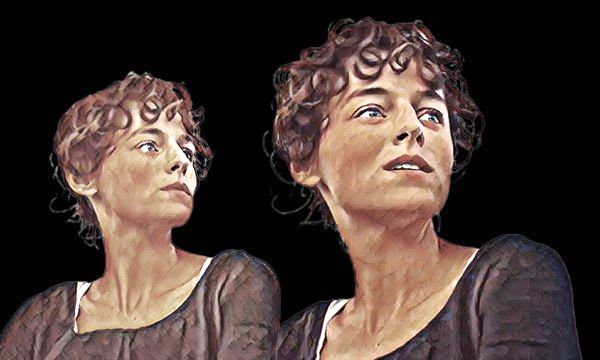
Reactions, however, converge on one essential point: a widespread caution. Many viewers found the material beautiful, elegant, and respectful of the period, but they also question the real reason for revisiting a work that already has adaptations widely regarded as definitive. At the same time, the series format fuels legitimate expectations that there will finally be room to explore nuances that cinema inevitably sacrifices — Austen’s sharp humor, the chaotic family dynamics of the Bennets, the economic pressures underpinning the plot, and the gallery of secondary characters that give texture to the romance.
Ultimately, the teaser functions less as a promise of innovation and more as a gesture of recognition. It tells the audience that this will not be an iconoclastic reinterpretation or a radical update, but a new incarnation of a story already deeply embedded in the collective imagination. If it delivers on what it suggests, the series may occupy a rare middle ground: combining the emotional intimacy that captivated generations on film with the narrative breadth that only television can offer, wrapped in the refined aesthetic that has become the signature of contemporary prestige period drama.
Perhaps that is why the dominant reaction is neither excitement nor rejection, but a kind of affectionate vigilance. Viewers are not merely curious about whether the series will be good; they are watching closely to see whether it understands why Pride and Prejudice endures, two centuries later, as less an idealized love story than a delicate study of pride, vulnerability, and the difficult art of learning to truly see another person.
Descubra mais sobre
Assine para receber nossas notícias mais recentes por e-mail.
 miscelana.com