
For centuries, the warning “be careful what you wish for” has traveled through myths, fables, and moral traditions as a kind of universal wisdom. The idea appears in the story of King Midas, in European tales of granted wishes, and in modern narratives about fame and power: fulfillment does not end anxiety, it transforms it. What you gain may carry an invisible cost, sometimes greater than the prize itself.
In Hollywood, that cost often takes the shape of a golden statuette.
The Oscar is presented as the ultimate coronation, the final validation of talent and relevance. In practice, however, it frequently marks the moment when a public figure ceases to be a consensus and becomes a subject of debate. Victory does not simply consecrate; it rewrites the narrative. And it is precisely in this delicate territory that Timothée Chalamet now finds himself, the frontrunner for the 2026 Oscar.
For years, the actor occupied a rare position in contemporary cinema: near-universal admiration. He was seen as a genuine prodigy, a refined performer capable of moving between arthouse cinema and major studio productions without seeming opportunistic. His charisma felt spontaneous, his ambition quiet.
That perception began to shift when he did something deeply human and almost taboo in Hollywood: he admitted that he wants to win the Oscar.
After receiving the SAG Award in 2025, Chalamet abandoned the ritual modesty that dominates acceptance speeches and spoke openly about striving for excellence and recognition. There was no feigned surprise, no performance of indifference. It was an honest gesture, but also a breach of an unwritten code. Hollywood celebrates ambition, as long as it remains implicit.
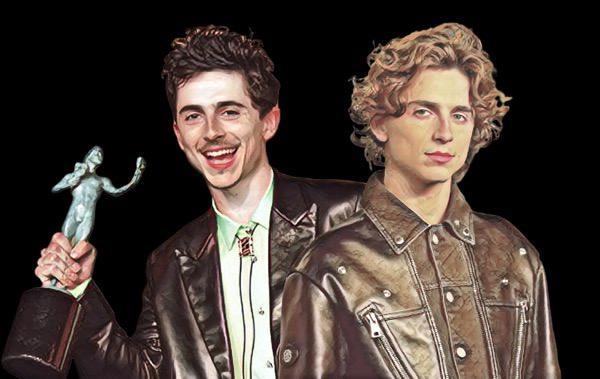
The reaction was immediate. The actor, once framed as a prodigy, began to be described by some as calculated, overly self-aware, even desperate for validation. Nothing about his technique or filmography had changed. What changed was the perception that he wants to win.
This shift reveals a central paradox of celebrity culture. Audiences demand authenticity, yet recoil when that authenticity exposes ambition. People want to believe that greatness is rewarded naturally, not pursued deliberately.
If Chalamet wins the Oscar 2026 for Marty Supreme, the inevitable question will be whether the triumph amplifies admiration or backlash. History suggests the latter is at least possible.
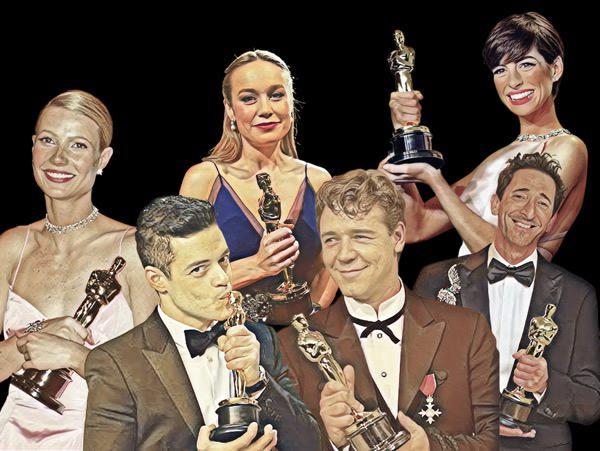
Gwyneth Paltrow offers a classic example. Before Shakespeare in Love, she was seen as elegant and understated, associated with a kind of ethereal refinement. Her Best Actress win, however, triggered a complex reaction. Rather than stabilizing her image, it made her polarizing. The triumph brought suspicions about merit, media saturation, and a growing antipathy that would shape her public perception for years.
Anne Hathaway experienced an even more emblematic case. Before winning for Les Misérables, she was widely beloved, perceived as talented and approachable. During the campaign, her intense dedication to the role and visible desire for recognition began to be interpreted as calculation. After the victory, a curious cultural phenomenon emerged: she did not lose professional prestige, but she became the target of a disproportionate wave of dislike, informally known as “Hathahate.” For years, interviews and public appearances were scrutinized with a severity rarely applied to male peers.
Her talent was never the issue. The problem was the perception that she wanted it too much.
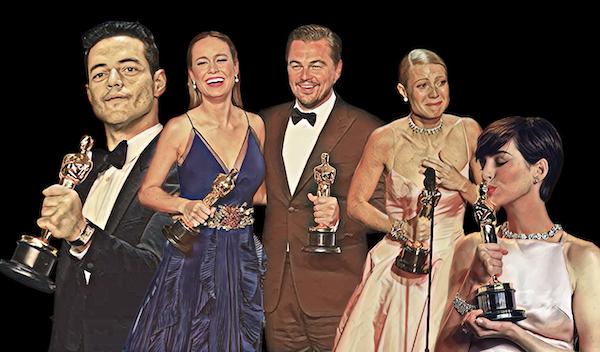
Men have experienced versions of this paradox as well, though usually with less intensity and shorter duration. Leonardo DiCaprio spent years as the Academy’s great “overlooked” actor, turning his eventual win for The Revenant into a collective cause. That victory instantly ended the narrative and replaced it with another: an actor whose work would forever be measured against the award he finally secured.
Eddie Redmayne, after winning for The Theory of Everything, quickly shifted from promising newcomer to the subject of harsh scrutiny with each subsequent project, as if the Oscar had raised expectations to an unsustainable level. Rami Malek faced debates about merit after winning for Bohemian Rhapsody, while Adrien Brody and Russell Crowe endured periods of public fatigue following early triumphs that inflated expectations and scrutiny.
There is, however, a noticeable difference in how these reactions unfold. Actresses often face waves of personal antipathy that extend beyond their work, while male actors tend to face criticism focused on career choices and performances. Male coronations usually produce pressure; female ones often produce rejection.
Chalamet’s case is particularly intriguing because he occupies a middle ground. His public image is not only that of a talented actor but of a generational symbol — sensitive, highly visible off-screen, intensely followed online. This brings him closer to the type of emotional scrutiny traditionally directed at young leading actresses, making him more vulnerable to polarized reactions.

There is also an unavoidable narrative mechanism at work. During the ascent, audiences project hope. After the coronation, they project expectation. The artist stops being a promise and becomes someone who must continually prove they deserve the pedestal.
This is why so many winners describe the post-Oscar period as a mix of euphoria and intense pressure. The award magnifies everything: opportunities, expectations, criticism, surveillance. Nothing goes unnoticed anymore.
Ultimately, “be careful what you wish for” is not a warning against desire itself, but against imagining that fulfillment will bring peace. In the realm of fame, it usually brings the opposite: maximum exposure and minimal tolerance.
If Timothée Chalamet wins, it will confirm a talent rarely questioned. But it may also mark the end of the phase in which he was loved with almost no resistance. The Oscar does not create detractors out of nothing; it amplifies tensions already present and legitimizes criticisms that once seemed premature.
Like Midas’s gift, the gold is real. So is the weight.
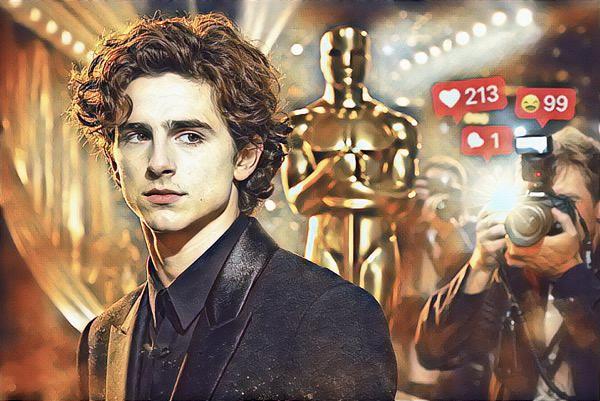
Perhaps the true risk is not wanting too much, but underestimating what happens after the wish is granted. In Hollywood, ultimate recognition does not conclude an artist’s story. It changes the genre, from ascent to permanent judgment.
And that is precisely the threshold on which Chalamet, both frontrunner and target, now appears to stand.
Descubra mais sobre
Assine para receber nossas notícias mais recentes por e-mail.
 miscelana.com