
From its very first episode, Peaky Blinders built a singular relationship with music. Unlike scores that merely accompany action, the songs here function as moral commentary, psychological extension of the characters, and, often, narrative foreshadowing. Nick Cave, Arctic Monkeys, PJ Harvey, and many others were chosen not just for their dark atmosphere, but because their lyrics and textures echoed what Tommy Shelby would never say aloud. In this series, the music almost always knew before the audience what was coming.
In The Immortal Man, that logic appears to be pushed to its extreme. The official track list does not simply suggest the film’s tone; it practically outlines its dramatic structure. Read in sequence, the titles form a skeletal version of the story and reveal something crucial: this is not a tale of criminal expansion, but one of legacy, fatherhood, grief, ef and succession. In other words, a family tragedy.
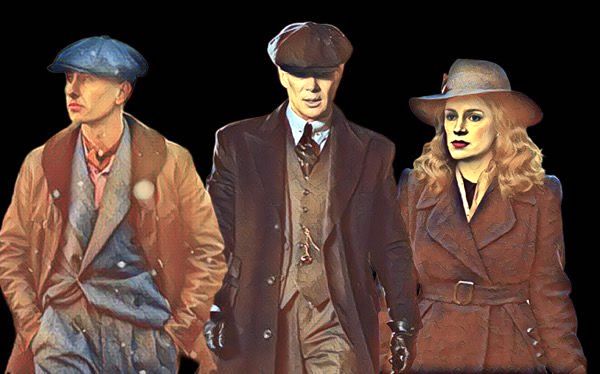
“Opening Scene / The Currency” suggests the film begins with power in its most essential form. In Peaky Blinders, currency is never just money, but influence, loyalty, and moral debt. Immediately afterward, “The Immortal Man” establishes the central theme: Tommy as a mythic survivor of wars, betrayal,s and losses, a man who has become larger than life itself.
The arrival of “Ruby’s Scarf” shifts the focus inward. Ruby remains Tommy’s emotional fixation, the daughter whose death shattered him and paradoxically saved him by preventing his suicide. An object tied to her suggests living memory, ritual mourning, or a moment of extreme vulnerability. “Nobody’s Son” reinforces the theme of fractured identity, preparing the ground for the film’s true axis: Duke Shelby.
The number of tracks centered on Duke is striking and revealing. “No Heaven No Hell for Duke Shelby” describes a character without belief in transcendence or punishment, someone morally unanchored. “Duke and Beckett Strike a Deal” and “Beckett Tests Duke” point to a process of seduction and evaluation by the antagonist, likely the character played by Tim Roth. Duke is not merely manipulated; he is being shaped.

“Ada and Duke” suggests family intervention, consistent with Ada’s evolution as the Shelby clan’s pragmatic conscience. “Dukes Descent” makes clear that his arc is one of gradual moral collapse rather than a single mistake. This trajectory culminates in “Tommy vs Duke” and later “Father and Son,” signaling that the central conflict is not external but internal to the Shelby lineage.
Zelda, portrayed by Rebecca Ferguson, emerges as a crucial piece of this puzzle. “Tommy, Kau, lo, and Zelda” indicates she is not just a distant memory but an active presence in the story. As Duke’s mother and Tommy’s former lover, her return represents an unresolved intimate past coming back to demand recognition.
Beckett’s role appears to be that of an ideological and strategic antagonist. He surfaces only at decisive moments, not as brute force but as an agent of influence. “Tommy vs Beckett” suggests that the direct confrontation occurs only after the damage has already been done, once Duke has been fully drawn into his orbit.
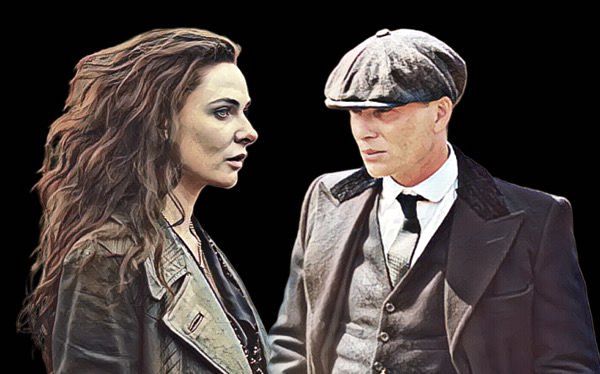
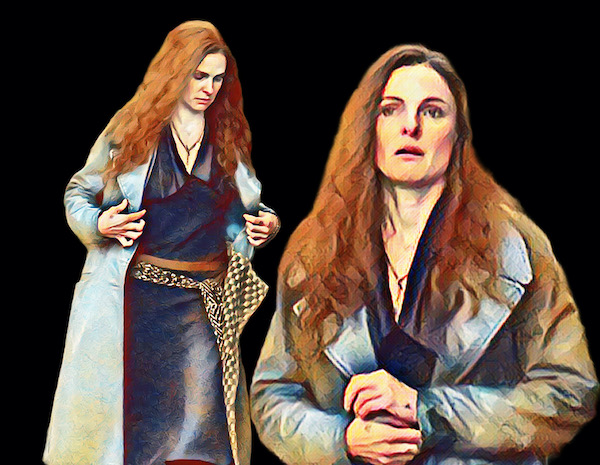
Several titles point to domestic paranoia and family fragmentation. “An Intruder In The House” signals an internal threat, literal or symbolic. “Close the Door” suggests a point of no return, a decision that permanently separates characters or worlds.
The violence implied by the track list seems localized and personal rather than epic. “Stable Shootout,” “Pig Pen,” “A Gun Is No Good,” and “The Bullet” evoke messy, improvised confrontations consistent with a story driven by intimate betrayal. “St Elizabeth’s Mortuary” and “Confession” indicate a significant death and late revelations.
A cluster of highly symbolic titles deepens the psychological dimension. “Opium Dreams” implies chemical escape and haunting memory. “Puppet” signals manipulation, likely of Duke. “Medusa” evokes paralyzing horror in the face of something monstrous yet familiar. “Angel” and “The Tunnel” suggest liminal states between life and death, redemption and damnation.
The return of “Red Right Hand (Immortal)” is especially telling. The series’ signature theme reappears,s linked to the idea of immortality, implying that Tommy has become a legend within the very world he built. “The Coin” and “The Map” evoke choice and destiny, as if he is preparing one final move.

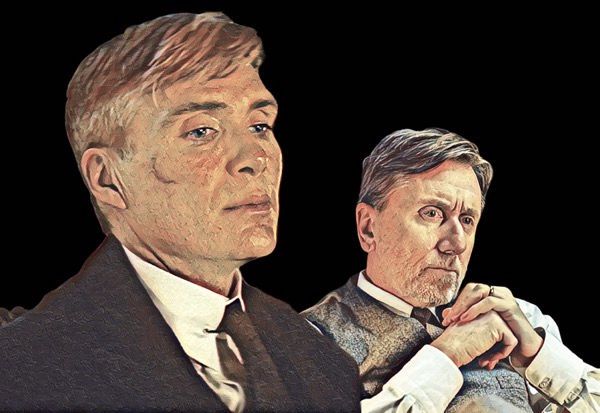
“Hunting The Wren,” with its folkloric associations of symbolic sacrifice, reinforces a sense of ritual closure. The final track, “Ellipsis,” may be the most revealing of all. An ellipsis does not end a sentence; it suspends it. It suggests continuation beyond the framean open ending, melancholic, ic and contemplative rather than definitive.
What ultimately emerges is clear. The Immortal Man does not appear to be a grand criminal epic about territorial dominance or rising power. It is a story about what happens when power no longer provides meaning. Tommy faces not an external enemy but the legacy he created, now taking on a life of its own through Duke. Beckett represents the force that exploits this vulnerability. Zelda embodies the intimate past returning to claim its due. Ruby remains the only presence capable of preserving Tommy’s humanity.
If the series was always a tragedy disguised as a gangster saga, the film promises the opposite: an overt tragedy in which the real suspense lies not in who wins, but in who manages to keep their soul.
Descubra mais sobre
Assine para receber nossas notícias mais recentes por e-mail.
 miscelana.com