
We constantly face a curious and persistent reality: characters who were born in literature but seem to belong to readers. Everyone has their own vision, their own certainty about who they are, what they desire, and how they should be portrayed on film or television. This is true of Jo March, Elizabeth Bennet, and Jane Eyre. They are not merely protagonists of canonical novels, but formative figures, intimate companions across generations, women many readers feel helped shape who they became. That is why, whenever a new adaptation is announced, the reaction is not simply curiosity or excitement, but vigilance and a kind of emotional possessiveness that manifests as a silent “let’s see if you are worthy of touching her.”
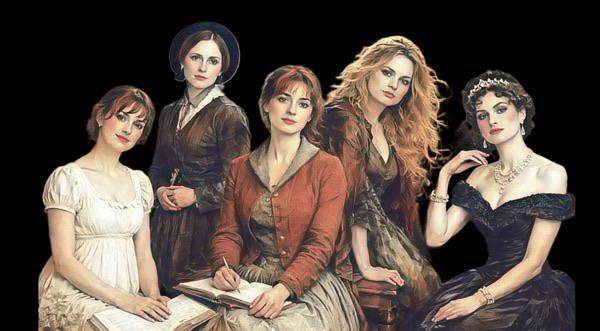
This reaction intensifies because certain portrayals have, over time, become almost canonical in their own right. For Elizabeth Bennet, two images dominate the contemporary imagination. The first is Jennifer Ehle in the BBC’s 1995 miniseries, whose performance balances intelligence, irony, and emotional maturity so convincingly that many readers consider her the Lizzie closest to the spirit of the novel. The second is Keira Knightley in the 2005 film, who brought a younger, more impulsive and physically expressive energy, aligning the character with modern sensibilities without entirely abandoning her essence. Between these two versions, a kind of interpretive axis has been established within which any new actress will inevitably be placed.
Emma Corrin will now take on the role in a new television adaptation, and although she has already faced similar expectations when portraying Princess Diana in The Crown and later a sexually emancipated heroine in Lady Chatterley’s Lover, the challenge here is different, because Lizzie is not merely a historical or literary icon but a deeply internalized emotional ideal. There is also the recurring concern about possible anachronisms, particularly in contemporary Austen adaptations, yet the sensitivity and vulnerability Corrin has shown in previous work suggest that she is more likely to win audiences over than alienate them.

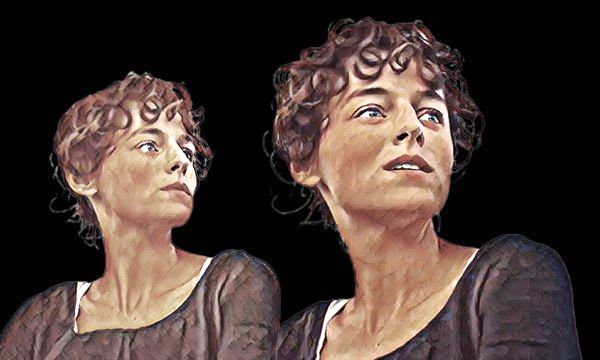
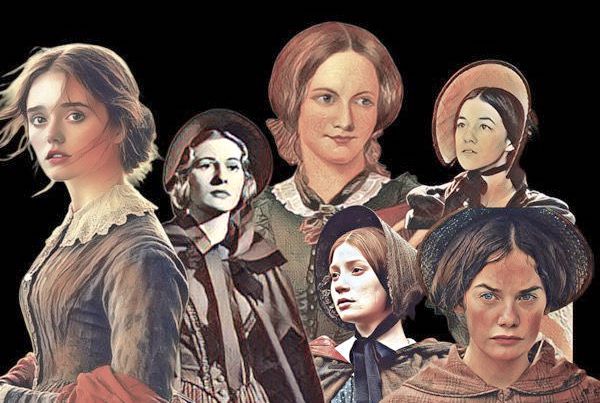
Jane Eyre has a similar, though more fragmented, history. Joan Fontaine left a lasting mark in the 1943 adaptation, emphasizing the character’s vulnerability and emotional restraint. Decades later, Zelah Clarke in the 1983 miniseries won readers’ loyalty through near literal fidelity to the text and a quietly intense performance. Ruth Wilson, in the 2006 television version, highlighted Jane’s moral strength and intelligence without softening her austerity, while Mia Wasikowska in the 2011 film offered an introspective, melancholic interpretation attuned to contemporary sensibilities. None of these portrayals erased the others; all coexist as possible reference points, making it even harder for a new actress to assert herself without provoking immediate comparisons.
Aimee Lou Wood, internationally known for Sex Education and recently acclaimed for The White Lotus, as well as for appearances in productions such as Living and significant work on the British stage, possesses qualities that align with the traditional image of Jane: contained expressiveness, a look that defies conventional Hollywood beauty standards, and the ability to convey vulnerability without passivity. Her challenge, however, will be to sustain the character’s moral intensity without softening her to make her more palatable to contemporary audiences, preserving the strangeness and firmness that make Jane such a singular figure.
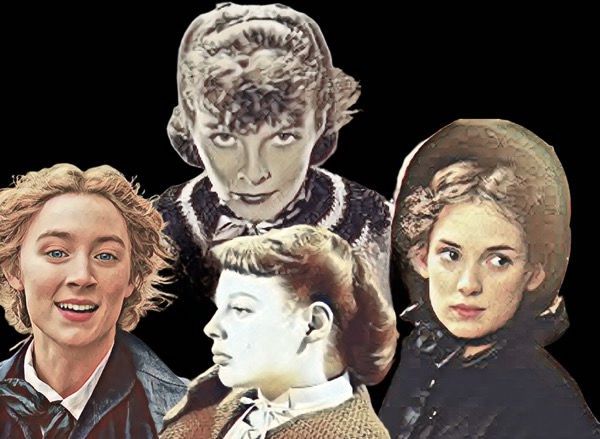
Jo March also carries a lineage of beloved performers who shaped public perception of the character. Katharine Hepburn, in the 1933 film, emphasized Jo’s rebellious temperament and almost androgynous energy, creating a pioneering version that remains influential. June Allyson, in the 1949 adaptation, became for many the warmest and most accessible Jo, while Winona Ryder, in 1994, brought an emotional vulnerability that resonated deeply with audiences who grew up in the 1990s.
Saoirse Ronan, in 2019, highlighted Jo’s intellectual ambition and frustration with the limits imposed on women, aligning the character with contemporary debates about female authorship. Maya Hawke also portrayed Jo in the BBC’s 2017 miniseries, a more intimate production that sought to recover the novel’s domestic texture. Each of these versions is considered definitive by different audiences, illustrating how Jo continues to be reinterpreted according to the sensibilities of each era.
Catherine Earnshaw presents a different case, because the challenge is not balancing likability and flaw, but capturing a personality that is fundamentally untamable. The 1939 film helped establish a romantic, ethereal image that dominated the cultural imagination for decades, while Juliette Binoche in the 1992 version emphasized the character’s darker, more obsessive dimension. Other British television adaptations have oscillated between these readings without producing a definitive consensus.
Cathy’s next incarnation will be played by Margot Robbie, whose star power and magnetic presence suggest a more visceral and perhaps explicitly tragic approach. Her casting already provokes debate, because Catherine has rarely been associated with glamour, but rather with a raw, almost feral intensity, making the transplantation of a contemporary megastar into this landscape both risky and compelling.


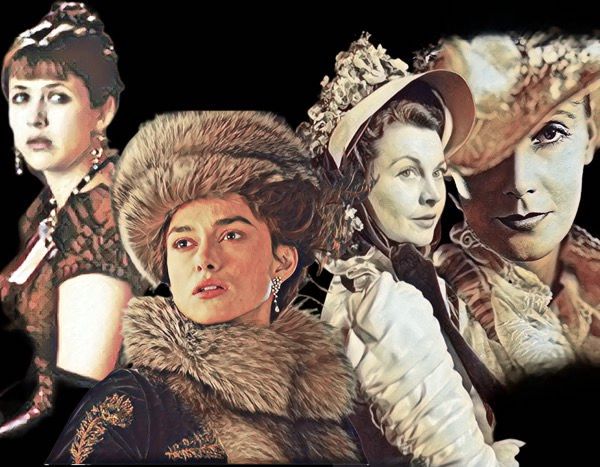
Anna Karenina, meanwhile, bears the additional weight of a monumental novel and an international cinematic tradition. Greta Garbo, in the 1927 and 1935 versions, crystallized an image of tragic elegance that remains influential to this day. Vivien Leigh brought a different dramatic intensity in the 1948 adaptation, while Sophie Marceau offered a more restrained psychological reading in 1997.
Keira Knightley, in 2012, presented a stylized and performative Anna embedded within a theatrical staging that divided audiences. None of these interpretations has settled the question of who Anna truly is: the passionate lover, the reckless woman, or the victim of an unforgiving society, which is why each new version is received as a moral statement as much as an artistic one.
When this history is considered, it becomes clear why new versions of Jane Eyre and Pride and Prejudice are born under scrutiny. The actresses cast are not competing solely with the original text but with decades of images embedded in collective memory, often tied to personal moments of reading or discovery. Even before a trailer appears, audiences measure the new performer’s face, posture, and presence against a mosaic of prior interpretations.
Elizabeth Bennet may seem too witty, too sweet, or too modern depending on how far she strays from the Lizzie each viewer internalized. Jane Eyre, whose strength lies precisely in her refusal to please, risks the opposite judgment of being either too soft or too inaccessible. In both cases, the initial reception says less about the quality of the performance than about the degree of rupture from images that have become emotionally normative.
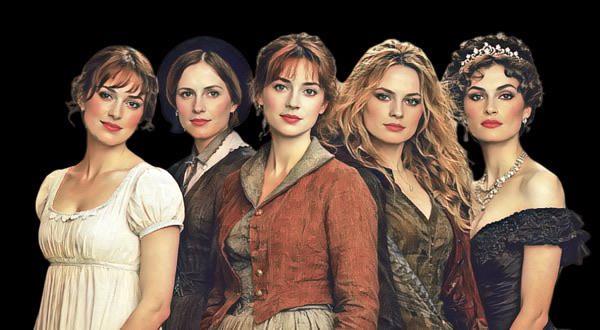
Ultimately, resistance to new interpretations reveals less about the productions and more about the emotional bond these characters have forged over two centuries. Criticizing a new Lizzie or a new Jane is also a way of defending one’s own reading history and the interpretations that accompanied it. No actress begins from zero, because these heroines arrive on screen already carrying a genealogy of faces, voices, and gestures that shaped how we imagine them.
Perhaps it is precisely this impossibility of replacement that keeps these characters alive. Each new actress does not erase the previous ones but enters into dialogue with them, expanding the repertoire of possible readings. What appears as resistance may also be a form of preservation, a way of ensuring that Lizzie Bennet and Jane Eyre remain not only literary figures but intimate presences in the lives of those who have read them.
Descubra mais sobre
Assine para receber nossas notícias mais recentes por e-mail.
 miscelana.com