
There are absences that fiction tries to disguise with elegance, as if mentioning a name in passing were enough to transform a void into a mere narrative choice. In Bridgerton, however, the disappearance of the Duke of Hastings has never stopped feeling like what it truly is: a rupture. By the fourth season, several characters return, familiar faces reappear, the sense of family is restored, and yet Simon and Daphne remain off-screen, reduced to a fleeting mention, almost procedural, as though they were distant relatives rather than the couple that launched the show’s global phenomenon.
Two years ago, I had already written about the disappearance of the Duke of Hastings, when his absence still seemed circumstantial and consistent with the show’s anthology premise. The fourth season, however, makes that reading impossible to sustain. With Jonathan Bailey’s return and the reaffirmation that former leads can remain part of the family’s orbit, it becomes clear that Simon is not simply out of focus. He has been effectively left behind.
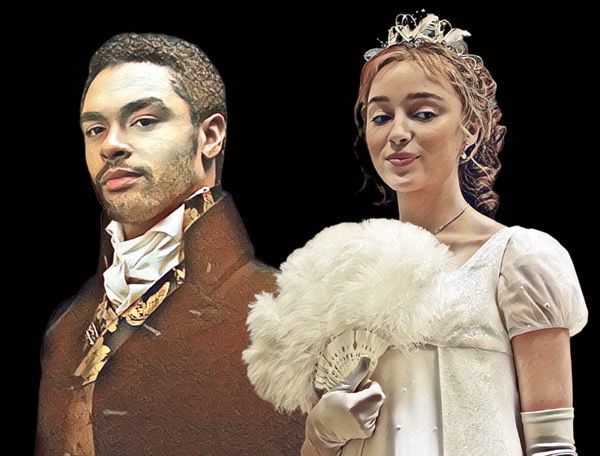
This stands in stark contrast to Julia Quinn’s novels, where the pair never truly vanish. They stop being protagonists but remain present, visiting London, attending family gatherings, offering advice, existing in the emotional margins of the story. Their happily-ever-after does not translate into narrative exile. In the television adaptation, by contrast, Daphne’s marriage seems to have unfolded on another continent, in a parallel life that rarely intersects with the Bridgertons’.
Phoebe Dynevor did reappear in the second season, serving as an emotional bridge in Anthony’s arc, but after that, she was gradually removed from the board. Simon, meanwhile, simply ceased to exist visually. There is no farewell, no conflict, no dramatic explanation. Only silence.
Behind the scenes, the production does not treat this absence as temporary. Showrunner Jess Brownell has stated that she never considered recasting the characters, believing it would disrespect the work Regé-Jean Page and Phoebe Dynevor put into them in the first season. At the same time, she acknowledges that bringing them back for only a brief appearance “wouldn’t feel right” and could come across as artificial. The solution they arrived at is even more peculiar: to assume that the couple still exists within that universe, just outside the frame. In other words, Simon and Daphne are “hypothetically present,” but the camera does not show them. The result is a silent erasure that is neither narrative nor dramatic but logistical, sustained by the idea that mentioning them without seeing them would create more awkwardness than simply ignoring them. Ironically, this turns the couple who inaugurated the show’s romantic fantasy into the least visible figures of their own happy ending.
The decision was framed as consistent with the anthology structure of the series, yet it ignored a crucial fact: the Duke was not merely that season’s lead; he was the face of a collective fantasy at a very specific historical moment. At the height of the pandemic, when the world was isolated and starved for escapism, Page emerged as an almost perfect embodiment of romance, elegance, and classical sensuality. The success was immediate and overwhelming. He became a magazine cover regular, a constant presence on social media, a symbol of desire and, for a brief time, the most talked-about man in global entertainment.
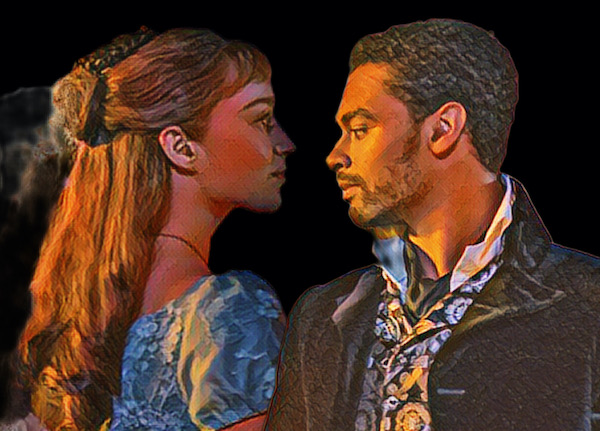
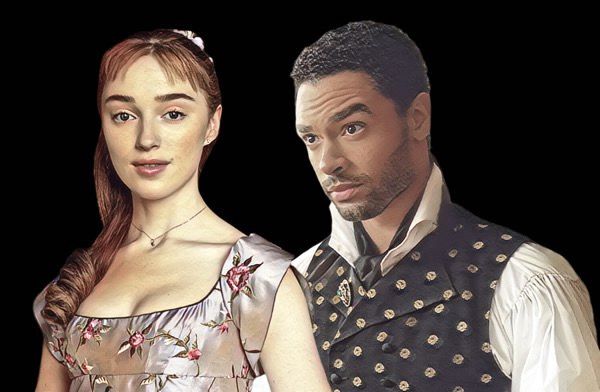
He was also quickly floated as a potential new James Bond, in a spontaneous chorus that blended fans, press, and industry voices. It seemed like the beginning of a meteoric rise, the kind that turns an actor into a definitive Hollywood leading man.
And then, curiously, nothing.
Page appeared in the Netflix action film The Gray Man alongside Ryan Gosling and Chris Evans, playing a polished antagonist but a secondary one with little cultural impact. He joined the cast of Dungeons & Dragons: Honor Among Thieves, a likable and well-received film, yet again not positioned as the narrative center nor as a star capable of carrying a blockbuster alone. There were additional, smaller projects, voice work, and announcements that never generated the same momentum. At no point did he consolidate himself as a recurring lead in major productions, nor as a fixture in prestige dramas or franchise cinema.
The contrast becomes especially clear when compared with other actors from the series. Jonathan Bailey, who plays Anthony, has become a major star across television, theater, and film while maintaining ties to Bridgerton, returning for meaningful appearances even after his season as lead. He shot his scenes, fulfilled his role within the family structure of the story, and preserved the emotional continuity of the universe. Page, by contrast, became a total absence, almost an elegant ghost everyone pretends not to notice.
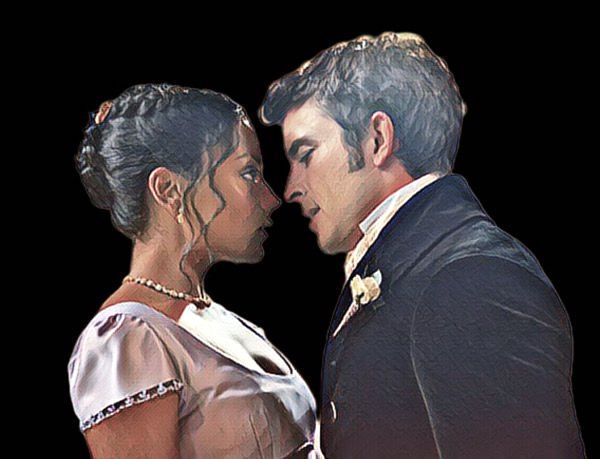
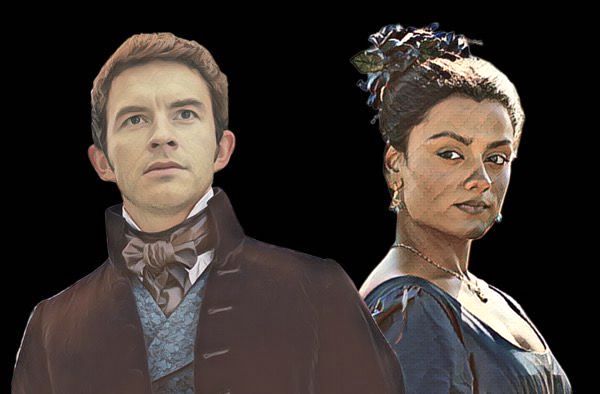
This choice ultimately affected not only narrative coherence but also the show’s atmosphere. The Duke embodied the archetype of overwhelming romance, the adult sensual fantasy that helped define the tone of the first season. Without him, and without Daphne’s physical presence, the family’s past feels less tangible, as if part of its collective memory had been erased.
Within the story, the implied explanation is simple: the couple lives in Clyvedon, busy with children and ducal duties. Outside the story, the reason is far more human. Careers shift, contracts end, priorities change, and fiction must accommodate those decisions without admitting it has lost one of its most visible pieces.
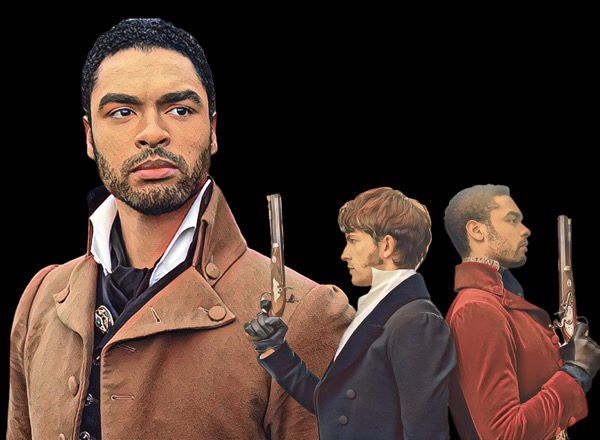
Perhaps the most intriguing aspect is not the absence itself but its permanence. In an era of cameo culture, surprise returns, and carefully curated nostalgia, the Duke of Hastings has never reappeared even briefly, not even at moments that would demand his presence by sheer emotional logic. The character who inaugurated Bridgerton’s modern fairy tale has, paradoxically, become the one who belongs least to its happy ending.
Ultimately, the question “where is the Duke?” is not only about a character but about an interrupted promise. The promise that the face symbolizing escapism in a time of global crisis would continue to inhabit that fantasy. Instead, he remains a memory of the beginning, of a moment when everything seemed possible, including the meteoric rise of a new global star.
Descubra mais sobre
Assine para receber nossas notícias mais recentes por e-mail.
 miscelana.com