
You should be wary whenever you encounter the unsettling promise of finally “understanding” Marilyn Monroe. With each passing decade comes a new document, a new recording, a new biography presented as the definitive key to decoding the woman behind the myth. In the year of her centenary, Andrew Wilson’s I Wanna Be Loved By You: Marilyn Monroe — A Life in 100 Takes revives that hope — and with it, a discomfort that is hard to ignore. Because the material that claims to reveal Norma Jeane comes precisely from the space where she should have been most protected: her psychoanalysis.
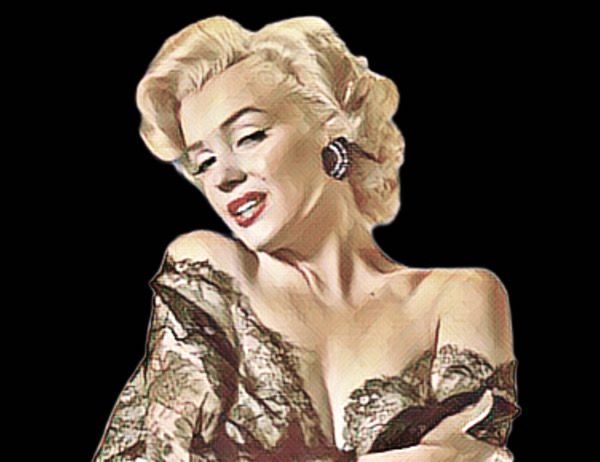
The book rejects a linear cradle-to-grave narrative and instead unfolds in one hundred fragments, like film takes. The structure itself is eloquent. Marilyn appears not as a single personality but as a constellation of successive, sometimes incompatible identities: the abandoned child, the determined young survivor, the studio-manufactured star, the actress seeking artistic legitimacy, the pioneering businesswoman, the woman in collapse. By refusing the idea of a stable essence, the biography suggests that the real mistake may always have been searching for a “true Marilyn” as if she could exist outside the circumstances that created her.
Much of the book’s power — and controversy — comes from materials connected to psychiatrist Ralph Greenson, who treated her in the final years of her life. In these records appears a woman marked by depression, anxiety, medication dependence, and a painful need for emotional approval. They also reveal an extraordinary and widely debated therapeutic decision: Greenson integrated Marilyn into his own family life, attempting to provide the stability she had never known. The consulting room ceased to be neutral and became almost domestic, as if medicine itself were trying to replace what childhood had denied her.
Yet reducing Marilyn to a clinical case is as inadequate as reducing her to a sex symbol. The biography emphasizes her agency: the discipline with which she studied acting, her intuitive intelligence, and her acute awareness of how she was perceived and exploited by Hollywood. Before becoming an icon, Norma Jeane had already survived familial abandonment, unstable foster homes, her mother’s institutionalization, and early exploitation. Seen from this perspective, her rise seems less inevitable than astonishing.
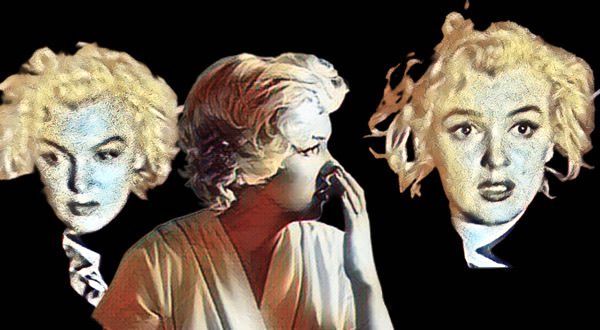
It is here that more intimate documents — such as the letter she wrote during her psychiatric hospitalization in 1961 — acquire devastating force. In it there is no diagnosis, no interpretation, only Marilyn’s own voice describing the horror of being placed in a ward for severely disturbed patients, in an environment she experienced as carceral and devoid of empathy. Ignored by staff, she decided to attract attention the only way she knew: by acting. She smashed glass, threatened to harm herself, and performed madness to be seen. “If you’re going to treat me like a nut, I’ll act like a nut,” she wrote. The line reads like a brutal summary of a life lived under other people’s projections.
The episode reveals something medical files rarely capture: the patient’s subjective experience. In clinical records, it is a nervous breakdown. In her letter, there is abandonment, fear, and humiliation. It also exposes the eerie fusion of actress and person, Marilyn improvising her own survival as if she were on set, because perhaps she had no other language through which to be heard.
Later accounts — drawn from Greenson’s family and popularized through biographies and documentaries — add an even more troubling vocabulary, describing her as “paranoid,” “masochistic,” or a “waif,” a homeless child figure. Whatever their clinical precision, such labels illustrate a recurring cultural process: the translation of complex suffering into consumable identities. What may have been a tentative interpretation in therapy becomes, in the public sphere, a definitive description of who she was.
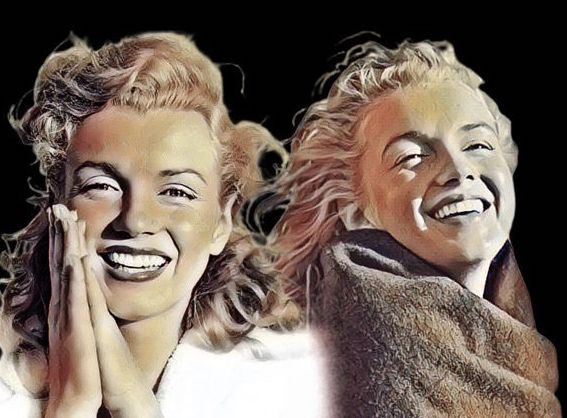
The irony is bitter. Psychoanalysis exists to create a space of absolute confidentiality, where a person can speak without fear of exposure. Turning that material into a public narrative retroactively breaks the very promise that made the treatment possible. In Marilyn’s case, the violation feels especially cruel because her entire life was a struggle to separate Norma Jeane — the person — from Marilyn — the collective construction. The analyst’s office was, in theory, one of the few places where that division could disappear.
Publishing those confessions turns even that refuge into a spectacle.
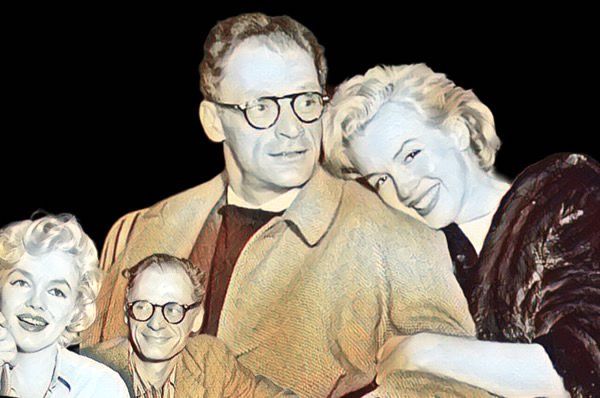
Her marriage to Arthur Miller, the collapse during the filming of The Misfits, the dependency, the loneliness — all were already part of the public narrative. What changes now is not the facts but the proximity. Readers are invited to occupy a position that once belonged to the analyst, to overhear what was never meant for the world.
Perhaps this is why Marilyn feels so modern. Her contradictions anticipate ours: hypervisibility, celebrity culture, the medicalization of distress, loneliness amid adoration, and sexualization paired with intellectual dismissal. In many ways, she was an early prototype of the contemporary celebrity — someone whose private identity was gradually consumed by the public gaze.
And yet no new biography solves the mystery. Each revelation generates more questions than answers. The more material surfaces, the less graspable she becomes. Norma Jeane continues to slip between versions.
Perhaps the real question was never who Marilyn Monroe was, but why we need so urgently to know. What do we do with women who become symbols? At what point does the search for understanding slide into voyeurism? Is there any ethical way to narrate a life that was so relentlessly consumed while she was alive?
One hundred years after her birth, we still watch Marilyn as if she were standing before an invisible camera, waiting for the next “cut.” Perhaps because admitting there will never be a final take — that something in her must remain opaque, private, untouchable — is the only way to grant her, at last, what she was seldom given: privacy.
Descubra mais sobre
Assine para receber nossas notícias mais recentes por e-mail.
 miscelana.com