
As published in Bravo Magazine!
In the past, at the end of awards ceremonies, people talked about who won. Lately, there’s a certain perversity in highlighting the “snubs” — the losers who would certainly prefer anything but being remembered the next day. Still, there’s a logic to this shift. When favorites fail to deliver at the decisive moment, we look back at the night to understand where the trend changed without us noticing — or what that change signals. There’s no better ceremony than the most influential precursor to the Oscars to assess what might happen on March 15, and later on in September at the Emmys.
If the SAG Awards — now called the Actors — remain the most direct thermometer of actors’ sentiment and, by extension, the industry itself, there’s a very specific kind of defeat that makes noise: that of the favorites who walk away empty-handed. It’s not just about losing, but about losing when you were expected to win.
The 2026 edition had exactly that effect. While it consolidated some narratives, it dismantled others that had seemed too solid to collapse. Timothée Chalamet, Pluribus, Severance, and One Battle After Another arrived as strong contenders, each for different reasons, and left with something more uncomfortable than a simple loss: the sense that they may not be as inevitable as they once appeared.

Timothée Chalamet: Honesty Has Its Price
Chalamet’s talent and popularity have grown over the past decade, supported by solid, versatile choices that have made him the face of a generation. The problem is that he also embodies that same generation — one that often irritates the older one, still the majority among voters and frequently uncomfortable with the codes of a digital culture shaped by cancellation, authenticity, and inclusion. By rejecting those codes, he doesn’t necessarily win over older audiences.
To make matters worse, last year — on the SAG stage itself — he declared that he believed his win was justified and that he wanted to become a legend like Brando and other giants. The candor sounded excessive in an industry that values public modesty and reinforced the image of someone openly seeking external validation.
Even so, Chalamet entered the season as one of the strongest names in the Best Actor race, backed by an intense and visible campaign. SAG would have been the ideal space to demonstrate organic support from the acting community — a validation that carries more weight than critics’ awards.
The absence of a win doesn’t eliminate him from contention, but it shifts the narrative. Instead of inevitable favorite, he moves into the unstable territory of still competitive. In a year with several strong contenders, that makes a difference. More important than losing was the absence of momentum. SAG often amplifies those on the rise. When that doesn’t happen, the silence speaks loudly.
It’s worth remembering that in 2025, he won the SAG but lost the Oscar. The question now is whether in 2026 the movement could reverse.
The Supporting Categories: The Most Intriguing Race Gains Definition
If there were surprises in the defeats, there were also clear signs of reorganization in the victories. The most significant was Amy Madigan’s win for Weapons. Already a Critics Choice winner, she had been running a discreet campaign, backed by a smaller film seemingly on the margins of the year’s major titles. Her SAG victory transforms that peripheral position into a strategic advantage.
In a category marked by polarization, she emerges as the consensus alternative. Neither Teyana Taylor nor Wunmi Mosaku — both extraordinary — were ignored during the season, but they represent very defined sides of a larger clash. Madigan occupies the comfortable space of unanimous respect, the safe choice for voters who admire the other performances but do not wish to reward either dominant pole.
What had seemed like an open race now has a clear favorite — and it is Amy Madigan.
Among the men, something similar is taking shape. Sean Penn won Supporting Actor for One Battle After Another, playing Colonel Stephen J. Lockjaw, solidifying his position as one of the category’s leading names and fueling the possibility of a third Oscar. Other contenders secured important wins throughout the season, particularly among critics and regional associations, demonstrating consistent support — but less decisive backing within the guild. SAG tends to favor performances with immediate emotional weight, territory in which Penn operates with absolute authority.

Catherine O’Hara: The Studio Interrupts Hacks’ Dominance
Hollywood loves stories about itself, and union awards often have a tone of genuine celebration among actors. In recent years, Jean Smart had dominated comedy with Hacks, but in 2026, the prize went to Catherine O’Hara for The Studio, in an emotional victory. The actress passed away just weeks before the ceremony, and the recognition was received as an inevitable and uncontested tribute. Seth Rogen, her co-star, delivered a moving speech while the audience rose to its feet. In that context, it makes no sense to speak of snubs. The award transcended competition.
Keri Russell: The Surprise No One Expected
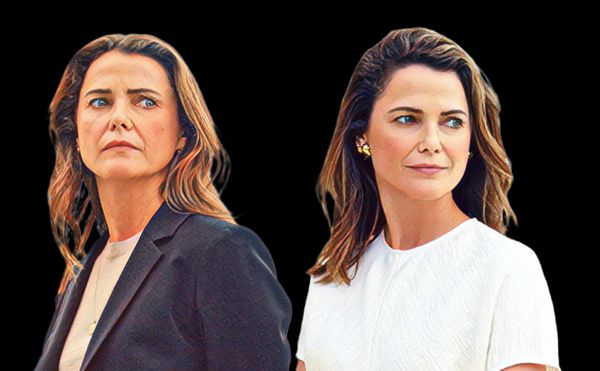
In the Dramatic Actress in Television category, Keri Russell’s win for The Diplomat was the first major surprise of the night. The cameras captured her spontaneous expletive of disbelief, perfectly summarizing the general sentiment. Russell is excellent in the series but had not been considered a favorite. Her victory not only reshuffles the season’s narrative but also makes the Emmy race far more unpredictable.
Pluribus and Severance: Prestige Without Warmth
Few projects arrived with as ambitious an aura as Pluribus. Politically charged and formally daring, it seemed to possess the gravitas that usually attracts the guild. The lack of recognition suggests something uncomfortable: respect is not the same as enthusiasm. The production may remain strong through the Emmys, but its emotional reception may be cooler than critical discourse indicates.
The case of Severance is equally revealing. The series had been treated as an institutional force in contemporary television — sophisticated and culturally dominant. It seemed destined to convert prestige into trophies. SAG, however, responds above all to the connection between actors and characters. Intellectual impact does not guarantee affection.
In long seasons, that can become decisive. Prestige sustains attention. Affection sustains votes.

One Battle After Another: The Fight Continues
Perhaps the night’s most intriguing case. One Battle After Another had been accumulating major awards, including those from the Directors and Producers guilds, creating a sense of inevitability. SAG, however, only partially confirmed that strength with Sean Penn’s win, while the top ensemble award went to Sinners.
That split reinforces the perception of a fragmented Oscar race, in which different films dominate distinct areas. Sinners, notably, won Best Ensemble — one of the most relevant indicators for Best Picture — in addition to Michael B. Jordan’s win as Lead Actor, consolidating the film as one of the season’s major protagonists.
What It Means to Leave Empty-Handed
Being snubbed by SAG is not a death sentence. History shows numerous Oscar and Emmy winners who stumbled there before triumphing. But it is an important warning because the award represents the largest voting body of performers — precisely the Academy’s most numerous branch.
More than predicting outcomes, SAG reveals mood. And the mood of this edition suggests a less predictable season than it seemed just weeks ago.
The night’s losers are not out of the game. They simply no longer appear invincible. In Hollywood, that is the difference between a comfortable campaign and a truly open race.

Netflix’s Fragility on a Night Broadcast by Netflix
Even hosting the ceremony, the platform had only isolated wins and lost ground to rivals.
There is also a subtext impossible to ignore. Despite being the platform responsible for the ceremony’s global broadcast, Netflix delivered a surprisingly discreet performance in the television categories. The company that for years shaped the consumption and language of contemporary TV appeared more as host than protagonist. There were nominations and visible campaigns, but structural wins were lacking.
The most discussed exception was Keri Russell’s win for The Diplomat, an individual recognition that did not translate into overall series dominance. Only Adolescence managed to convert prestige into an unequivocal trophy with Owen Cooper’s victory — and even that in a limited way.
The overall effect was the impression that Netflix remains omnipresent, but not indispensable. Other platforms dominated ensemble categories and consolidated warmer, more collective narratives — precisely the type of recognition SAG tends to favor.
There is an evident irony in this. The company that redefined how we watch television broadcast a ceremony in which its own creative power seemed less decisive than in previous years. It is not a decline — but perhaps something more relevant for awards season: confirmation that the race is open and that no force enters as an automatic favorite anymore.
In Emmy’s terms, the signal is clear. Visibility does not replace enthusiasm, and global reach does not guarantee artistic consensus. The actors’ night suggests that, in this cycle, the platform will have to compete vote by vote, without the aura of inevitability that accompanied it for so long.
Descubra mais sobre
Assine para receber nossas notícias mais recentes por e-mail.
 miscelana.com