
There is an invisible line connecting Minnie Castevet and Aunt Gladys. If Amy Madigan wins the Oscar for A Hora do Mal (Weapons) — and that possibility no longer feels remote — that line will stop being merely aesthetic and become historical.
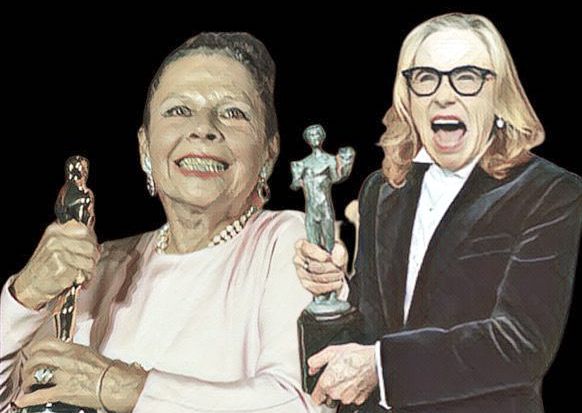
In 1968, Ruth Gordon won the Academy Award for Best Supporting Actress for Rosemary’s Baby. It was a rare moment in which the Academy recognized horror not as a genre curiosity but as a performance of remarkable precision. Minnie Castevet was not a caricatured villain. She was cordial, intrusive, and almost maternal. The menace came from familiarity. Gordon turned the overly friendly neighbor into a deeply unsettling presence precisely because she seemed harmless. The endless conversation, the gestures of care, the insistence on helping. Instead of a monster, the film presented something far more disturbing: someone who was already inside the house.
Gordon’s victory also carried biographical weight. By the time she received the Oscar, she was already a highly respected veteran of American theater and cinema. Born in 1896, Gordon had built a remarkable career decades before Rosemary’s Baby. She appeared in Hollywood films in the 1930s and 1940s and, alongside her husband Garson Kanin, became a celebrated playwright and screenwriter on Broadway. She was even nominated for an Academy Award as a screenwriter for Adam’s Rib. For years, she had been recognized as one of those rare actresses who combine intelligence, humor, and authority on screen. When she won the Oscar, she was already in her seventies, and the award functioned less as a discovery than as a culmination. Minnie Castevet would become one of the most memorable characters in horror cinema, and Gordon continued working for years, often associated with that same eccentric and sharp presence that always seemed to conceal secrets.
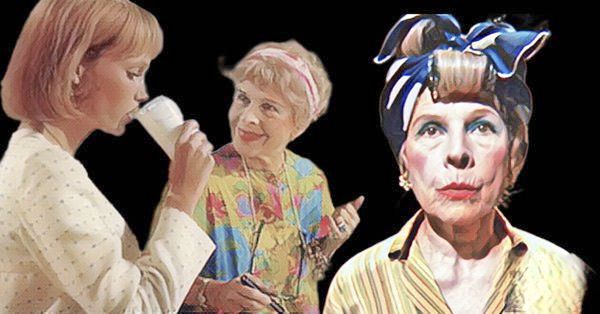
Decades later, Amy Madigan builds something equally unsettling in Aunt Gladys. Madigan is also an actress with a long and respected career. Nominated for an Oscar in the 1980s for Twice in a Lifetime, she has built a solid body of work across film, television, and theater, appearing in movies such as Field of Dreams, Uncle Buck, and Gone Baby Gone, as well as numerous acclaimed television productions. She is the kind of performer whose presence instantly adds weight to a scene. And yet she has rarely been at the center of awards conversations. The recognition surrounding Weapons therefor,e carries the feeling of a late discovery. Not because the talent has suddenly emerged, but because it has finally found the role capable of concentrating it.
In Aunt Gladys, Madigan creates an antagonist who operates within the same quiet logic that made Minnie unforgettable. She is not a loud villain. She is not histrionic. Her power lies in calmness, belonging, ng and certainty. Gladys does not invade the space; she already inhabits it. Like Minnie, she turns intimacy into a tool of control. The terror does not come from spectacle but from conviction.
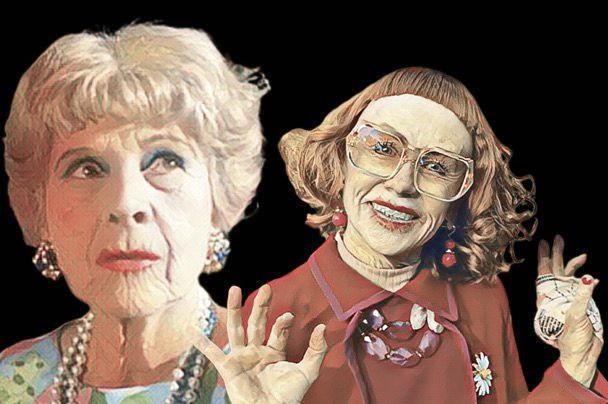
If Madigan wins, the parallel will not be merely symbolic. It will recognize a very specific lineage within horror: the domestic villain, the threat embedded in everyday life, the performance that builds fear through restraint and precision. It would mean the Oscars acknowledging something they rarely admit: that the most sophisticated terror is born from proximity.
Madigan’s possible recognition also carries a personal dimension. She has been married to Ed Harris since 1983, forming one of Hollywood’s most enduring and discreet partnerships. Over more than four decades, the two actors have built parallel careers marked by artistic integrity and by public positions during delicate moments in the history of the industry. One often-remembered episode occurred at the 1999 Oscars, when director Elia Kazan received an honorary award. While part of the audience stood to applaud, Madigan and Harris remained seated in a silent gesture of protest related to Kazan’s role during the era of McCarthyism and Hollywood’s blacklists. Small but eloquent, the gesture revealed how historical memory and political conscience can intersect with the lives of artists who have lived long enough to witness the industry transform around them.
That biographical trajectory adds another layer to the reception of Weapons. Aunt Gladys may exist within a horror film, but the authority with which Madigan portrays her comes from decades of experience, observation, and artistic maturity. When an actress with that background embodies a character who manipulates intimacy and trust, the effect extends beyond the conventions of genre.
There is also an almost circular detail in this story. Julia Garner functions as an unexpected bridge between the two universes. Before starring in Weapons, Garner led the prequel to Rosemary’s Baby, titled Apartment 7A. The film explores the events that precede Rosemary’s arrival at the Bramford building and expands the universe that gave rise to Polanski’s story and, inevitably, to the figure of Minnie Castevet. Garner plays a young dancer who moves into the building and gradually becomes entangled in the same circle of manipulation and occult influence that defines the original film.
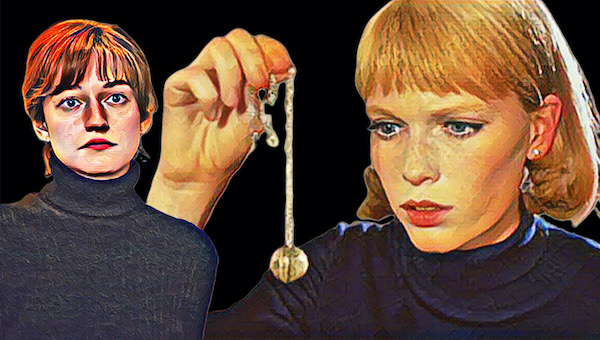
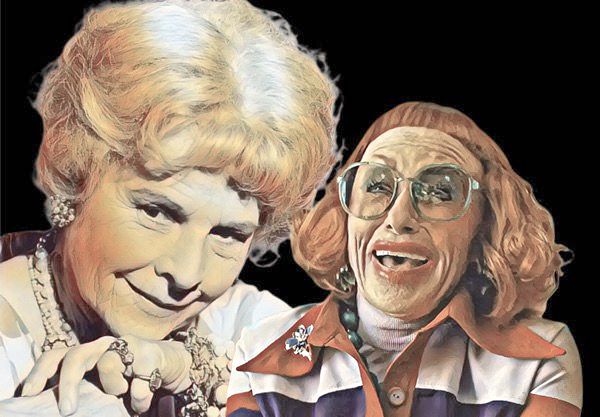
By passing through that universe and later starring in Weapons, Garner ends up connecting two eras of horror. On one side stands the 1968 classic that immortalized Ruth Gordon. On the other hand, a contemporary film that may feature Amy Madigan. Between Minnie and Gladys, between two generations of actresses and two ways of staging everyday evil, Garner emerges almost as an accidental narrative bridge.
If Madigan wins the Oscar, the moment will resonate beyond a single performance. It will echo across decades. A dialogue between two characters who proved that horror does not need to shout to be devastating.
Minnie Castevet showed that terror could live in the voice of a neighbor.
Aunt Gladys shows that it still can today.
And perhaps the Academy is ready, once again, to recognize that.
Descubra mais sobre
Assine para receber nossas notícias mais recentes por e-mail.
 miscelana.com