
Over the years, Cillian Murphy and creator Steven Knight have often reflected on the moments that best define Peaky Blinders and the character of Tommy Shelby. There is no single official list published by the two, but certain scenes repeatedly come up whenever they discuss the essence of the series. Interestingly, these sequences also help explain what is at stake in Peaky Blinders: The Immortal Man, the film that continues the story. They reveal how the myth of Tommy Shelby was constructed, how his power took shape, and why his fate has always carried something inevitably tragic.
Tommy Shelby’s entrance on the black horse
Steven Knight has often said that he wanted the series to begin with an image that felt almost mythical. That is how the first scene of Peaky Blinders was conceived. Tommy Shelby appears riding a black horse through the streets of Small Heath in Birmingham while sprinkling blue powder on the animal for luck. Before any dialogue is spoken, we already understand who he is.
Knight has explained in interviews that he needed an image that could introduce the character instantly, something that communicated power, mystery, and authority. The goal was for viewers to realize that Tommy Shelby would not be merely another gangster, but a figure hovering somewhere between history and legend. Cillian Murphy has also noted that the entrance was staged almost like the introduction of a western hero, only transplanted into the industrial landscape of postwar England.
That first image becomes even more meaningful when we remember the final moments of the series and realize that it functions as the beginning of a complete arc. The man who rides into Birmingham on a black horse is the same man who, years later, will attempt to escape the legend he created.

“By order of the Peaky Blinders.”
Few lines have become as inseparable from a television series as “By order of the Peaky Blinders.” What began as a simple assertion of authority within the story eventually evolved into a cultural symbol of the show.
Cillian Murphy has mentioned that this is the line fans quote to him most often when they meet him. For Steven Knight, the power of the phrase lies in the moment it represents in Tommy Shelby’s rise. When he begins to use those words, the Peaky Blinders stop being just a local gang and start behaving like an organization with its own authority.
In effect, Tommy creates an institution. The phrase transforms individual commands into something closer to a decree. This detail also helps explain the world the film will inherit. The Immortal Man will not simply deal with a powerful man, but with the consequences of the system of power he built.
“I nearly had everything.”
One of the most emotionally intense moments in the series comes when Tommy erupts and admits that he nearly had everything. When he shouts that he was close to achieving everything he wanted, the character reveals the frustration that has always been hidden beneath his controlled exterior.
Cillian Murphy has said that these emotional outbursts are essential to understanding who Tommy Shelby really is. The character is not driven by ambition alone. Beneath it lies a constant attempt to fill the emptiness that began during the war.
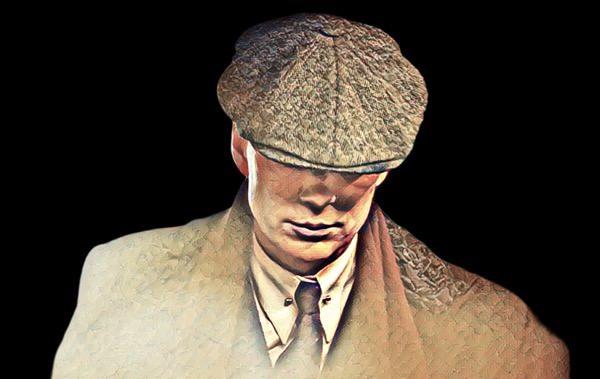
Steven Knight often emphasizes that he imagined Tommy from the beginning as a deeply traumatized man. Power, business, and politics were never ends in themselves. They were attempts to build order in a life already shattered by conflict. When Tommy admits that he nearly had everything, the audience understands that what he truly wanted may never have been attainable.
This emotional dimension will be crucial for the film because Tommy Shelby’s story has never been solely about ascent. It has always been about the psychological consequences of that ascent.
“No fucking fighting”
Another moment frequently mentioned by Steven Knight is the scene in which Tommy attempts to impose order on his own family and delivers the famous command that no one is to fight. The line “No fucking fighting” perfectly captures the internal dynamics of the Shelby clan.
Arthur, John, and the rest of the family are impulsive and volatile. Tommy, by contrast, tries to turn that chaos into strategy. Knight has explained that much of the series’ dramatic tension comes precisely from this contrast. Tommy thinks like a strategist while the others react on instinct.
Cillian Murphy has also observed that scenes like this reveal an important aspect of the character. Tommy leads not only through violence but also through the ability to anticipate events and control situations. He sees the entire chessboard while others see only the next move.
This trait becomes especially relevant when considering the transition to the film, because the world Tommy built has grown increasingly complex and dangerous. Maintaining control has always been his greatest challenge.

The final scene with the white horse
The series ends with an image that directly echoes the first episode. After discovering that he is not dying as he had believed, Tommy abandons everything and rides away alone across the countryside on a white horse.
Steven Knight has explained that the symbolism was deliberate. At the beginning of the story, Tommy appears on a black horse, entering the world of crime. At the end, he rides a white horse as he leaves behind everything he created.
Cillian Murphy has described the scene as a kind of rebirth for the character. It is not exactly redemption, but an attempt to break away from the identity he built over the years.
That moment is crucial for understanding the starting point of The Immortal Man. When the film begins, the audience will encounter a man who has tried to leave the Shelby empire behind. The central question will be whether someone who has become a legend can ever truly escape his own story.
Other scenes are frequently mentioned.
Beyond these five moments, both Cillian Murphy and Steven Knight have also highlighted other sequences that define Tommy Shelby’s arc. Among them are the death of Grace, which destroys the possibility of a normal life for him, the confrontation with Alfie Solomons and the psychological tension between two equally unpredictable men, and the execution of Michael, which definitively ends the internal war within the Shelby family.
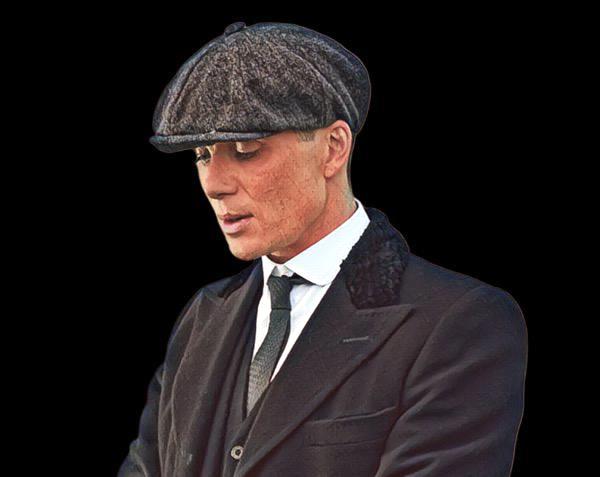
Murphy has also pointed to the line “Already broken” as one of the phrases that best capture Tommy Shelby. It summarizes Knight’s understanding of the character. Tommy is not a man corrupted by power. He returned from the war already shattered. Everything that follows is the story of a traumatized man trying to transform that permanent fracture into some form of control.
When the film arrives, these scenes will function almost like chapters of a prologue. They show how the myth of Tommy Shelby was built and help explain why the story’s true conflict was never only external. It was always within him.
Descubra mais sobre
Assine para receber nossas notícias mais recentes por e-mail.
 miscelana.com