
The first season finale of The Beauty left an inevitable question hanging in the air: where can this story go next? The series closes its first year by expanding the mystery surrounding the epidemic and suggesting that the phenomenon may be much larger than it initially appeared. For those looking for clues about what might happen next, the comics that inspired the adaptation offer an interesting roadmap.
Created by Jeremy Haun and Jason A. Hurley and published by Image Comics, the original story already explored social, political, and moral consequences far broader than the show’s starting point. While the television adaptation has made significant changes, the source material suggests several clear narrative directions. Looking at them helps explain why the season finale feels less like a conclusion and more like the beginning of a much larger story.
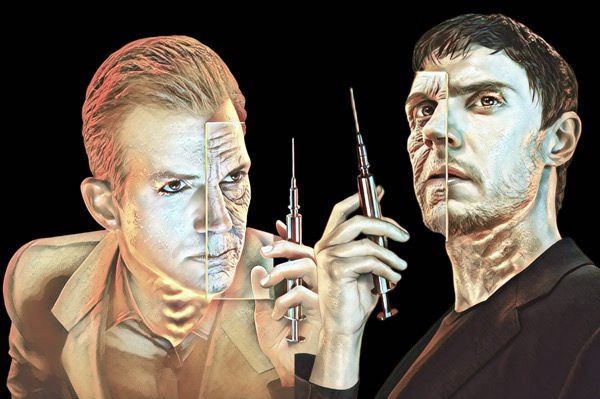
The epidemic is bigger than it seemed
In the comics, it quickly becomes clear that The Beauty is not just an isolated disease. It evolves into a large-scale social phenomenon. People continue to infect themselves even after learning that the disease is fatal, simply because the physical transformation it offers is immediate and irresistible.
This creates a deeply unsettling dynamic: the epidemic stops being merely medical and becomes cultural and psychological. The virus functions almost like a metaphor for contemporary society’s obsession with aesthetic perfection. Even once the fatal timeline becomes known, demand for infection does not disappear.
If the series follows this path, a second season would likely broaden the narrative’s focus, portraying a society that consciously accepts the risk of death in exchange for the promise of beauty.
The death deadline becomes a ticking clock
In the comics, a central revelation completely changes how the virus is perceived. It is discovered that every infected person inevitably dies within roughly two years.
This information turns The Beauty into a kind of collective countdown. Every infected character lives under an invisible clock.
From a narrative standpoint, this creates two powerful conflicts that the series could still explore. The first is the desperate search for a cure. The second is the emergence of individuals or groups willing to exploit the disease economically or politically before it claims the lives of its hosts.
The conspiracy behind the disease
Another important clue in the comics is that The Beauty did not arise entirely by accident. As the story progresses, evidence appears suggesting that certain forces may be manipulating the epidemic.
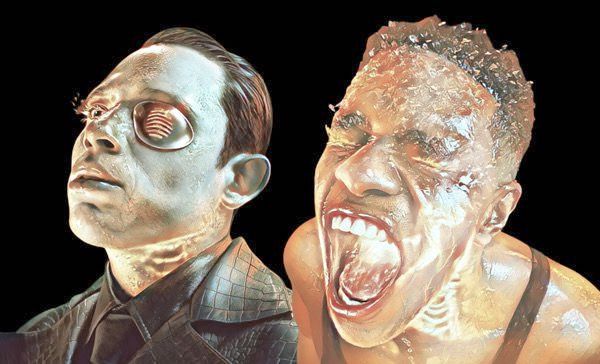
Some organizations see the disease as an opportunity for social control, profit, or experimentation. This expands the story beyond body horror and transforms it into an investigation of power and manipulation.
This element already appears in embryonic form in the television series and would likely become central in a potential second season.
The radicalization of society
In the comics, the impact of the disease produces profound changes in society. Different groups emerge with opposing positions.
Some defend the right to become infected, viewing The Beauty as a matter of personal choice. Others try to stop the spread of the disease, treating it as a collective threat.
This polarization turns the epidemic into a moral and political debate, echoing contemporary discussions about public health, individual freedom, and the manipulation of information.
The horror of perfection itself
Perhaps the most disturbing idea explored in the original material is that perfect beauty is not necessarily liberating. On the contrary, in many cases, it becomes another form of imprisonment.
Characters who achieve the ideal appearance begin to be treated as symbols, objects, or commodities. The promise of perfection ends up creating new social hierarchies and new forms of exploitation.
This deepens the satirical dimension of the story. The virus does not simply kill people. It reveals how much society is willing to sacrifice in order to approach an aesthetic ideal.
What this suggests for a second season
If the adaptation follows some of the directions suggested by the comics, the continuation of the series would likely move beyond being merely a mystery about a disease and instead explore three major narrative fronts.
First, the expansion of the epidemic and its social consequences. Second, the investigation into who is truly behind the creation or spread of the virus. Third, the psychological and moral impact of a society that consciously chooses to live under a deadline of death in exchange for beauty.
In other words, what begins as a story of body horror could evolve into something much larger: a dark portrait of a culture that has turned appearance into an absolute value.
In the comics, there is also one additional element that could dramatically shift the direction of the story if the series continues. At a certain point, the virus stops producing only beauty and begins generating far more disturbing transformations. If the adaptation eventually incorporates this idea, the universe of The Beauty could become even darker than it already appears.
Descubra mais sobre
Assine para receber nossas notícias mais recentes por e-mail.
 miscelana.com
1 comentário Adicione o seu