
When a series ends with more questions than answers, it is rarely accidental. The final episode of The Beauty closes its first season with the clear feeling that the story has not actually reached its end. Quite the opposite. The narrative seems to have only crossed its first major threshold, leaving enough dramatic threads to sustain a continuation.
Officially, a second season has not yet been announced by FX Networks or Hulu. Because the finale aired in early March 2026, the renewal decision will likely depend on the series’ performance during its first weeks on streaming and on its broader reception among audiences and critics. Even so, few recent season finales have been as transparent in signaling their intention to continue the story.
The series, adapted from the comic created by Jeremy Haun and Jason A. Hurley, begins with a disturbing premise. A sexually transmitted disease transforms people into physically perfect versions of themselves. The problem is that this aesthetic miracle comes with a fatal cost: everyone infected eventually dies.
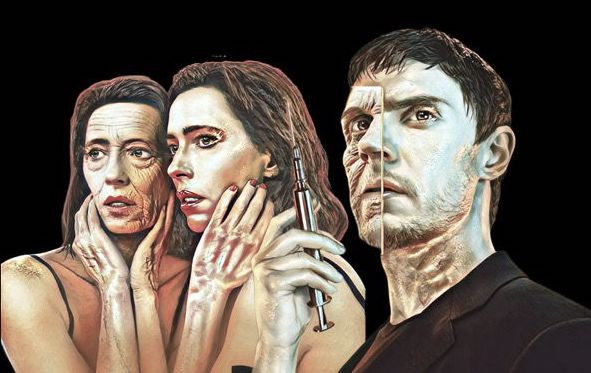
Throughout the first season, the story gradually reveals that behind this “beauty epidemic” lies a network of interests that blends industry, politics, and social manipulation. In the finale, however, the narrative takes a further step and makes it clear that the phenomenon is far from fully understood.
The first major mystery left unresolved is the future of Cooper. His transformation suggests that the disease may evolve into something very different from what had initially been believed. Until now, the virus appeared to follow a relatively predictable pattern. People became infected, turned extraordinarily beautiful, and then slowly moved toward an inevitable fate. Cooper’s change indicates that a new phase of the mutation may exist, opening the door to a broader storyline in a possible second season.
Another central question left hanging concerns the true scale of the epidemic. For much of the series, the phenomenon seemed confined to certain social circles, particularly those connected to the fashion world, image culture, and the economy of appearance. The finale suggests that this may only be the surface. If the infection continues to spread, the disease stops being an individual problem and becomes a social crisis.
This connects directly to another unresolved question: who truly controls The Beauty. Throughout the season, several hints suggest that corporate and political interests are exploiting the disease. The virus is not merely a biological tragedy. It is also a product, a tool of power, and perhaps even a social experiment. The final episode reinforces the idea that actors are operating behind the scenes whose identities and goals remain unknown.
There is also the emotional and moral impact of the epidemic itself. One of the most unsettling themes of the series is the way society accepts the risk of death in exchange for the promise of beauty. By portraying characters who knowingly choose to become infected, the narrative suggests that the desire for perfection may be stronger than the survival instinct. The final moment involving Bella, who decides to move forward despite the warnings, hints at a future in which the disease could become a collective choice.
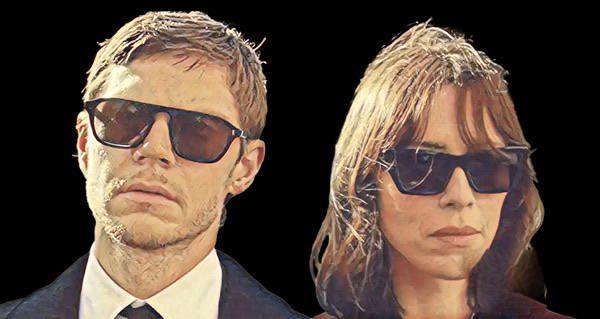
This narrative decision is especially powerful because it expands the symbolic reach of the series. The Beauty was never simply a body-horror story. From the beginning, it has also functioned as a satire about beauty standards, the obsession with youth, and the industries that profit from human insecurity.
For that reason, the ending of the first season does not feel like a conclusion but rather a shift in scale. What began as a mystery involving a few deaths and a strange virus now points to something much larger. An entire society may be on the verge of contaminating itself in pursuit of a promise everyone knows is fatal.
Even without an official renewal, the narrative structure strongly suggests that the creators envisioned a longer story. The original comic material provides ample space to expand this universe and explore the political and social consequences of the epidemic.
If a second season happens, the central question may no longer be who created The Beauty, but something even more unsettling: what happens to a society that consciously chooses its own destruction in the name of perfection.
Descubra mais sobre
Assine para receber nossas notícias mais recentes por e-mail.
 miscelana.com