
The premiere of Young Sherlock reopens a question that has accompanied popular culture for more than a century. Why does Sherlock Holmes continue to fascinate filmmakers, writers, and audiences generation after generation? And why do certain creators seem to return to him repeatedly, as is the case with British director Guy Ritchie?
The new streaming series is built on an idea that sounds simple but carries enormous narrative potential. Instead of portraying the already established detective of Baker Street, the story goes back in time to imagine how Sherlock Holmes became Sherlock Holmes.
To understand why this approach remains so compelling, it is necessary to return to the character’s origins.
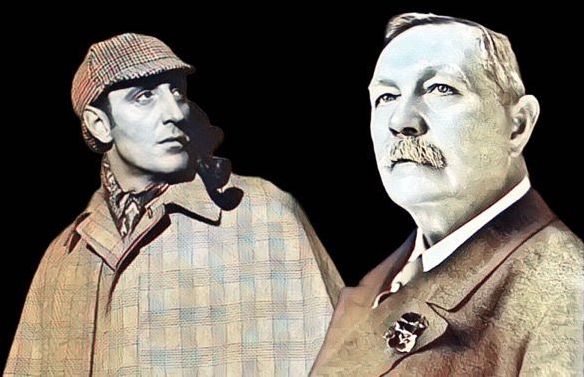
Holmes’s creation in literature is inseparable from his author, Arthur Conan Doyle. The detective first appeared in 1887 in the novel A Study in Scarlet. There, the foundations were laid for a character who would transform the history of detective fiction. Holmes was not merely an investigator. He was someone who applied logic, science, and observation in an almost clinical way to solve crimes that appeared impossible.
In the novels and short stories that followed, Doyle consolidated a type of protagonist unlike almost any detective that had come before. Holmes did not rely solely on intuition or courage. He relied on the method. His deductive reasoning, his ability to observe the smallest details, and transform seemingly insignificant clues into precise conclusions created a model that would shape detective fiction for generations.
This uniqueness helped distinguish Holmes from other famous literary detectives. Characters such as Hercule Poirot or Philip Marlowe also became iconic, but each represented a different tradition within the genre. Poirot was cerebral and theatrical, almost a mathematician of human psychology. Marlowe was cynical and morally ambiguous, a product of American noir. Holmes, by contrast, represented something more radical: a detective who treated crime as a scientific problem.
This singularity helps explain why he became the most adapted literary character in history. Sherlock Holmes has crossed nearly every narrative medium since the late nineteenth century.
In cinema, his earliest adaptations appeared during the silent film era. On television, the character gained new interpretations across the decades. Among the most influential are the series starring Jeremy Brett in the 1980s and, more recently, Sherlock, which transported the detective into the twenty-first century with Benedict Cumberbatch in the leading role.
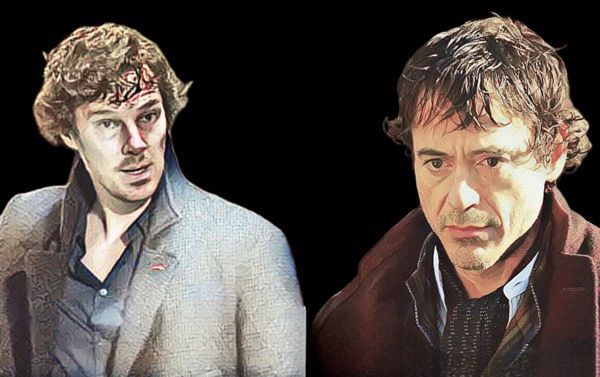
In contemporary cinema, perhaps the most striking reinvention was precisely that of Guy Ritchie. His films Sherlock Holmes and Sherlock Holmes: A Game of Shadows, starring Robert Downey Jr. and Jude Law, presented a Holmes very different from the traditional stereotype. Here, the detective was physically active, sarcastic, and almost chaotic, a strategist who analyzed every move before acting.
That approach fit perfectly with Ritchie’s cinema, known for fast-paced storytelling, eccentric characters, and narratives full of reversals. Holmes, with his hyper-analytical mind and unpredictable personality, seemed almost tailor-made for the kind of storytelling the director enjoys exploring. It is no coincidence that Ritchie has returned to the detective’s universe more than once and remains connected to new projects related to the character.
The new series Young Sherlock fits into this long process of reinvention.
The idea did not originate directly with Conan Doyle but with a contemporary writer. The production is based on the literary series Young Sherlock Holmes written by Andrew Lane. In these books, Holmes appears as a teenager, experiencing his first investigations and discovering the abilities that will later make him famous.
This approach inevitably raises an interesting question. How closely does this young version correspond to what Conan Doyle imagined for the character?

In truth, the original stories offer very little information about Holmes’s youth. Doyle mentions aspects of his education and his time at university, but most of the detective’s life before meeting Dr. Watson remains deliberately vague. That absence eventually opened space for later authors to imagine different versions of the character’s early years.
Rejuvenating Sherlock Holmes also reflects a broader cultural shift. For decades, audiences admired Holmes primarily for his extraordinary intelligence. Today, many creators seem interested in something slightly different. Instead of simply showing the genius solving mysteries, they explore the process that formed him.
This shift reflects a wider trend in contemporary storytelling. Iconic characters are no longer presented only as figures to admire but as personalities to be psychologically explored. Younger audiences often prefer to understand a character, to grasp their vulnerabilities and contradictions, rather than simply admire them from a distance.
For this reason, in Young Sherlock, the emotional formation of the character carries almost as much weight as his investigative abilities. Holmes’s youth allows the narrative to explore impulsiveness, uncertainty, and experiences that might explain his later obsession with logic and control.
Another point that naturally raises curiosity is the presence of his great antagonist. Holmes’s arch-enemy, Professor Moriarty, appears in Doyle’s stories as a criminal genius who functions as the detective’s dark mirror. The idea that the two might have known each other in youth, or even shared some earlier connection, does not belong to Conan Doyle’s canon. Nevertheless, many modern adaptations explore this possibility to intensify the dramatic relationship between the two characters.

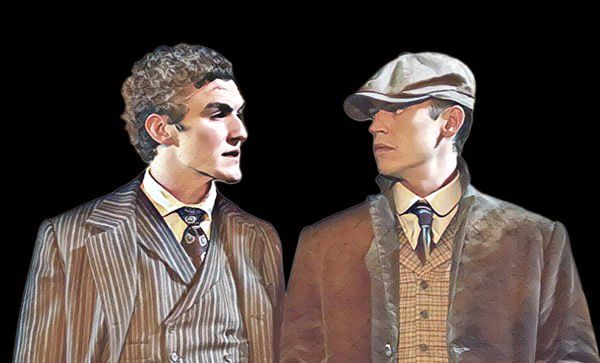
Young Sherlock does not confirm that Holmes and Moriarty were childhood friends, but the very concept of revisiting Holmes’s past inevitably places both figures within the same narrative orbit. By exploring the detective’s intellectual formation, the story also opens space to reflect on the emergence of his greatest rival.
Ultimately, this is precisely what keeps Sherlock Holmes alive in popular culture. Each generation finds a new way to reinterpret the character.
Some versions emphasize the almost superhuman detective created by Conan Doyle. Others highlight his eccentric temperament or his human flaws. Young Sherlock follows yet another path. Instead of simply celebrating the genius, it attempts to show the moment when that genius was still being formed.
Perhaps that is the deepest reason Holmes continues to endure. No matter how many times he is adapted, it always feels as though there is another possible story about how that curious young man eventually became the most famous detective in fiction.
Descubra mais sobre
Assine para receber nossas notícias mais recentes por e-mail.
 miscelana.com