
In recent months, few people have had as immediate an impact on social media as Rudy Mance. His name may not yet be familiar to the wider public, but his work certainly is. He was the designer brought in to fix one of the biggest problems facing Love Story: John F. Kennedy Jr. & Carolyn Bessette, the Ryan Murphy series that quickly became a ratings phenomenon and a constant topic of conversation online.
The fascination surrounding the show, interestingly, was not only about the romance between two of the most compelling figures of the 1990s. It was also about the clothes. And that is where Mance stepped in.
Who is Rudy Mance
Rudy Mance belongs to a generation of fashion professionals who moved into film and television, bringing with them a highly refined editorial eye. Before establishing himself as a costume designer, he worked as a fashion editor, an experience that shaped the way he thinks about clothing not merely as garments but as a narrative language.
That background helps explain the precision he brings to visual storytelling. Over the past several years, Mance has built a solid career collaborating on productions that demand both historical rigor and aesthetic sensitivity.
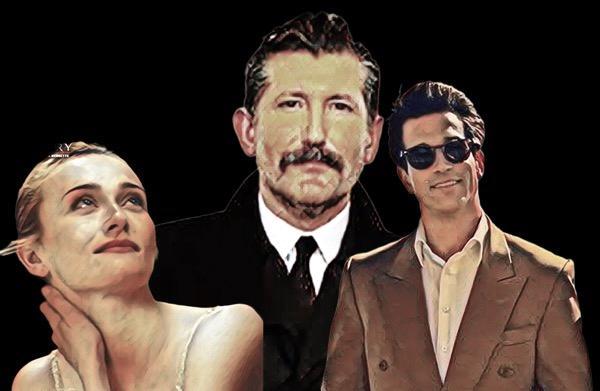
Among the projects that helped establish his reputation are the Oscar-nominated film American Fiction, the period drama The Alienist, and recent productions within Ryan Murphy’s universe, such as Feud: Capote vs. The Swans and Dahmer – Monster: The Jeffrey Dahmer Story.

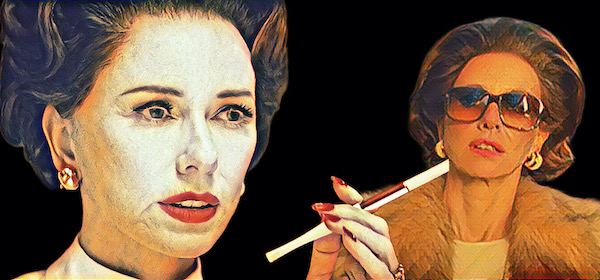
With Feud, which recreates Truman Capote’s circle among New York’s high society, the costume work was widely praised and earned significant Emmy nominations, cementing Mance as one of the most respected designers working in television today.
In The Alienist, set in late nineteenth-century New York, his work also stood out for its historical accuracy and for the way clothing was used to convey both social class and the psychology of the characters. In Capote vs. The Swans, the challenge was different: recreating the elegance and rivalries of New York’s elite in the 1960s and 1970s through haute couture gowns and an aesthetic deeply connected to the history of American fashion.
This trajectory made him a natural choice when an unexpected problem emerged on Love Story.
The costumes that almost sank Love Story
Love Story is now a cultural phenomenon, particularly because of the meticulous reconstruction of the couple’s style. But when the first promotional images from the series were released last year, the reaction online was immediate and brutal. For many viewers, the costumes were completely wrong.
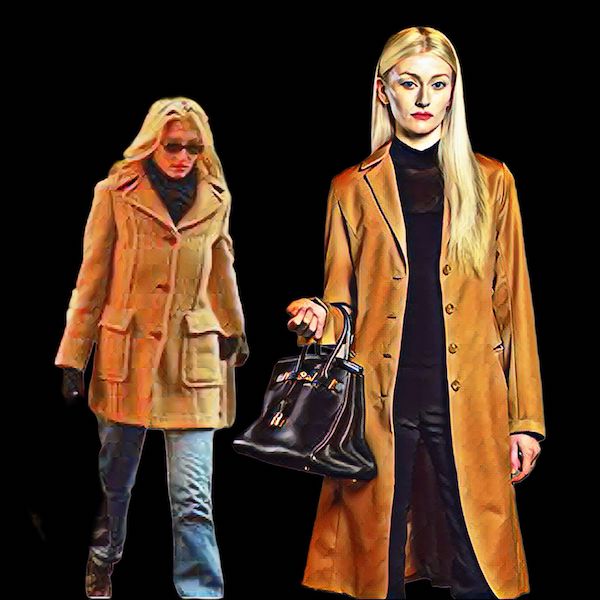
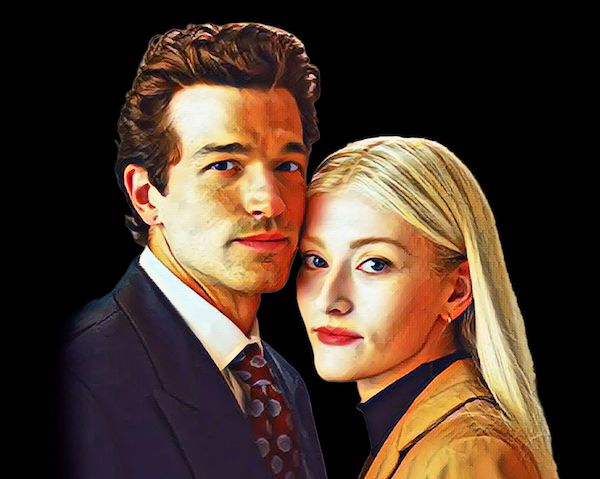
And that was a real problem.
Carolyn Bessette Kennedy and John F. Kennedy Jr. are among the most studied figures in modern fashion history. The couple’s aesthetic — minimalist, elegant, and seemingly effortless — still fuels mood boards, runway collections, and fashion editorials today.
In other words, any mistake would be immediately noticed.
Faced with the backlash, Ryan Murphy and showrunner Connor Hines made an unusual decision for a production already underway: they decided to completely rethink the wardrobe. To do that, they called Rudy Mance.
Rebuilding a myth of style
Mance’s work was almost archaeological.
In the case of John F. Kennedy Jr., there was abundant reference material. Photographed since childhood, his style was thoroughly documented. It was possible to trace his evolution from the young Kennedy heir to the editor of George magazine, mixing elegant tailoring with unexpected elements such as hiking boots or baseball caps.
Carolyn Bessette Kennedy, however, presented a far greater challenge.
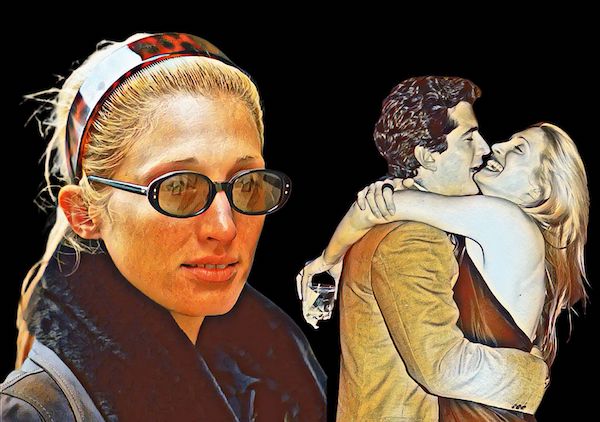
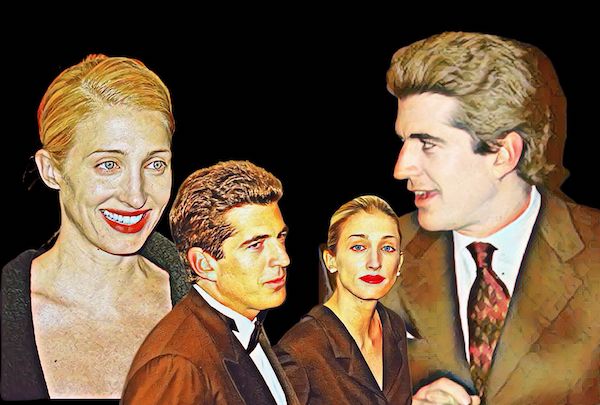
Before her relationship with John became public, thereweree very few photographs of her. The woman who would become a fashion icon left almost no visual record before the avalanche of paparazzi attention that began in 1996.
Mance approached the problem in reverse. Instead of starting at the beginning of Carolyn’s life, he began at the end.
Using the last known photographs of her — already famous, already surrounded by the press — he worked backward to imagine who that woman might have been before entering the Kennedy family.
Clothing became the central storytelling tool in that process.
The Carolyn Bessette aesthetic
The foundation of Carolyn’s style was minimalism.
She avoided ostentation and favored clean silhouettes, neutral colo,rs and impeccably tailored pieces. Designers such as Yohji Yamamoto, Ann Demeulemees,ter and Calvin Klein were among her most evident influences.
But there was also a psychological dimension to those choices.


Yamamoto described his clothing as “armor for life,” and Mance believes Carolyn saw them in exactly that way: as protection against media scrutiny and the pressure of entering one of the most famous families in America.
That idea was incorporated into the narrative of the series.
As Carolyn becomes more closely tied to the Kennedy world, her wardrobe grows more calculated, more aus,tere and more protective.
The detail that makes the character exist
For Mance, clothing is not merely aesthetic. It is dialogue.
Because Carolyn rarely spoke to the press, what she wore ultimately became her form of public communication.
The series uses small gestures to explore this idea. One example is a scene in which she removes a scarf to reveal a string of pearls. Pearls are a classic symbol of American WASP aristocracy, and the costume subtly suggests that Carolyn, the daughter of a middle-class family, was trying to find her place within that world.
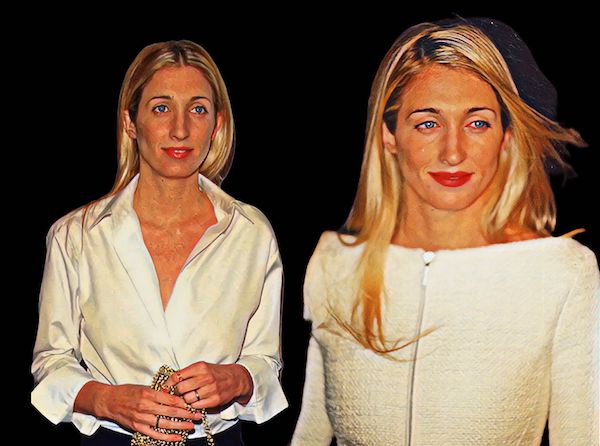

Another recurring detail is the repetition of clothing.
Unlike the logic of contemporary celebrity fashion, the couple frequently reused the same pieces. JFK Jr.’s worn T-shirts appear in different episodes, and some of his clothes later appear on Carolyn, reinforcing the intimacy of their relationship.
The most difficult moment: the wedding dress
Among all the costumes created for the series, none brought more pressure than Carolyn’s wedding dress.
Designed by Narciso Rodriguez, the dress she wore at the couple’s secret 1996 wedding is one of the most iconic bridal looks in modern fashion history.
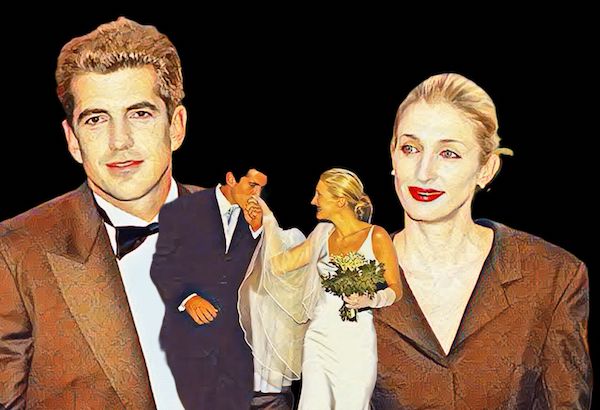
To recreate it, Mance’s team traced the original fabric. Their search led to a textile shop in New York that still had a small swatch from the material used three decades earlier.
From that clue, they were able to locate the Italian mill that produced the original fabric and commission a new run.
The shoes came directly from the archives of Manolo Blahnik, and the company responsible for the veil and gloves still had the original sketches used to make them.
The reconstruction was almost museum-level in its precision.
Why the work became a social media obsession
The results of all that effort were immediate.
As the episodes aired, viewers began sharing screenshots of the costumes, recreating the looks on social media and discussing every detail of the wardrobe.
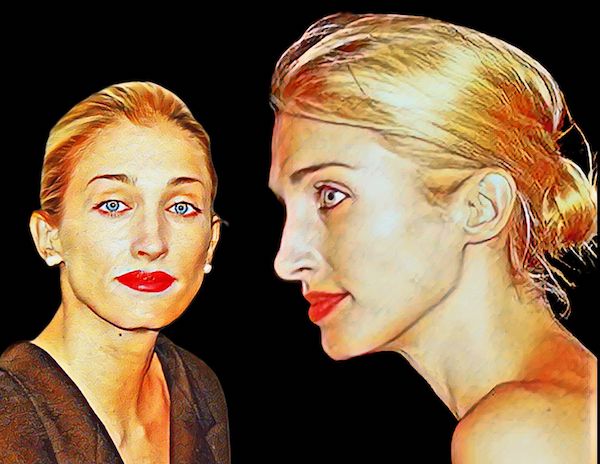
Carolyn Bessette Kennedy returned to the fashion imagination of a new generation. And Rudy Mance, quietly, became the designer responsible for reigniting that cultural obsession.
Ultimately, his work shows something fashion has always known: sometimes, to tell a powerful story, excess is unnecessary. What matters is understanding why certain clothes endure.
And few wardrobes have endured as powerfully as Carolyn Bessette Kennedy’s.
Descubra mais sobre
Assine para receber nossas notícias mais recentes por e-mail.
 miscelana.com