
The question now hovering over the universe of A Song of Ice and Fire is simple and uncomfortable: are the Targaryens heroes or villains? As the franchise created by George R. R. Martin continues to expand with television series, stage productions, and now a possible film about the Conquest of Aegon, the question becomes increasingly unavoidable.
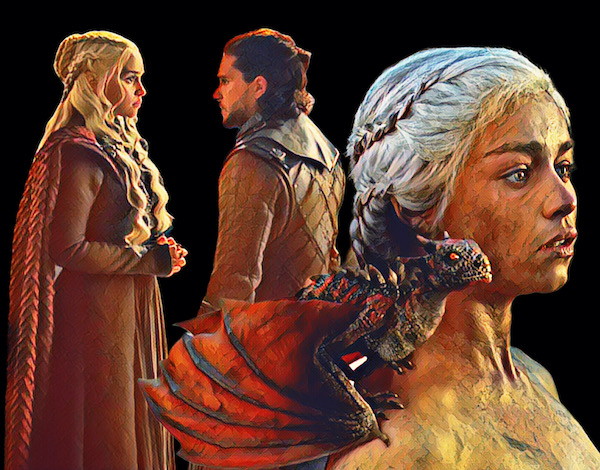
For a long time, the Targaryens were merely a historical presence in the main narrative of Game of Thrones. The series begins with a world still marked by the fall of the dynasty decades before the central events of the story. Only a few survivors remain, such as Daenerys Targaryen and Viserys Targaryen, figures living almost in exile and carrying the weight of an imperial past. Power itself is dispersed among several houses, including House Stark, House Lannister, House Bolton, and House Frey. This multiplicity of forces is precisely what gave the universe its moral complexity, since conflict was never concentrated in a single antagonist.
There were conspirators such as Cersei Lannister, sadists such as Ramsay Bolton, religious zealots such as Melisandre, and almost mythological threats such as the Night King. The strength of the story lay in this plurality of conflicts and in the constant sense that power circulated among competing interests.
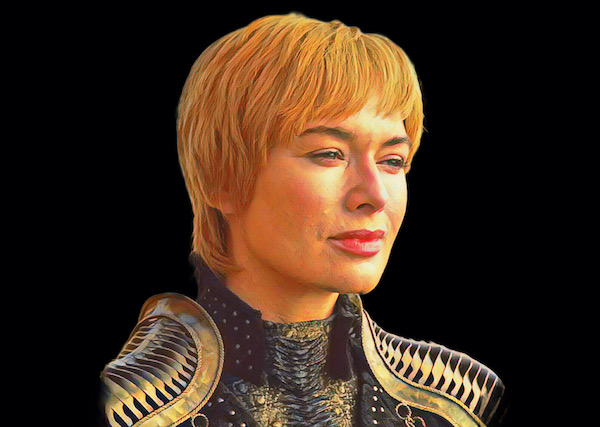


Today, however, the expanded universe appears increasingly centered on a single family.
The franchise has repeatedly returned to the Targaryens. House of the Dragon explored the dynasty’s civil war two centuries before the original series. A Knight of the Seven Kingdoms takes place a century after that conflict, still under Targaryen rule. A stage production titled Game of Thrones: The Mad King promises to explore the chaotic reign of Aerys II Targaryen. At the same time, there is growing discussion about a possible film depicting the conquest of Westeros by Aegon I Targaryen.
It is precisely at this point that an interesting narrative tension emerges. In historical terms, within Martin’s universe, what is known as Aegon’s Conquest was never exactly a heroic epic. It was, essentially, an invasion.
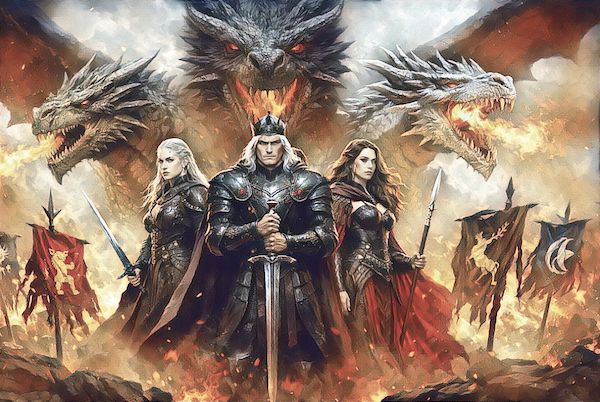
Aegon arrives from Dragonstone with three weapons of mass destruction, the dragons Balerion, Vhagar, and Meraxes, and demands that the kings of Westeros submit to his rule. When some refuse, he simply destroys castles and armies until they surrender. Events such as the Field of Fire make it clear that this is not a balanced conflict between equivalent forces, but rather a demonstration of technological supremacy, or perhaps more accurately, draconic supremacy.
In that sense, the traditional narrative of the Conquest has always seemed to me less like a heroic founding myth and far closer to military imperialism.
Recent screen adaptations, however, have introduced a new layer to this story.
In House of the Dragon, the idea emerges that Aegon experienced a prophetic vision about the threat coming from the North, the White Walkers, and that the unification of Westeros would be necessary to face them. This prophecy, passed secretly between Targaryen kings, transforms the conquest into something closer to a historical mission.
The idea is seductive, but it is also conveniently simplified.


If the conquest was motivated by a salvific prophecy, the act ceases to be merely imperial expansion and begins to resemble a gesture of historical responsibility. The destruction of armies and castles becomes, within this framework, a tragic but necessary price to save the continent.
It is, therefore, not surprising that many people view this explanation with some skepticism.
The natural question that arises is whether this prophetic layer was part of Martin’s original conception or whether it represents a later elaboration introduced by the television adaptation led by Ryan Condal.
So far, the books contain no clear evidence that the Conquest was motivated by a vision of the White Walkers. In Fire & Blood and The World of Ice & Fire, Aegon conquers Westeros for far more traditional reasons connected to ambition, strategy, and power. It is Rhaegar, much later in the timeline, who becomes obsessed with prophecies and with the legend of the Prince That Was Promised.
The prophecy introduced in House of the Dragon, therefore, appears to be a later interpretation that works very well for television, since it transforms conquerors into guardians.

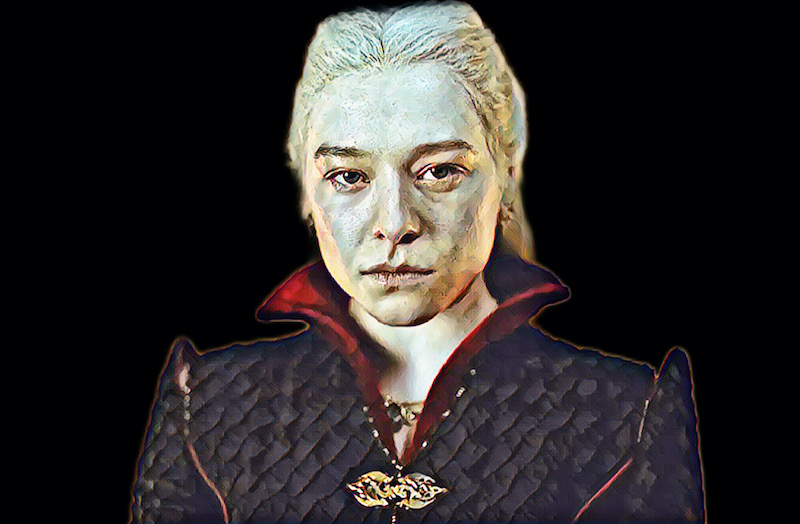
This narrative move also connects to a broader concern that some critics have already raised: the risk that the franchise may gradually transform the Targaryens into heroic protagonists of a story that was not originally centered on them.
The criticism that the world of Westeros is becoming too focused on this family resembles a phenomenon that occurred in Star Wars. When a specific element becomes extremely popular, such as the conflict between Jedi and Sith, there is a natural tendency to repeat that formula until the entire fictional universe begins to revolve around it.
In Westeros, dragons and the Targaryens increasingly occupy that position.
Yet what always distinguished Martin’s work was something quite different.
The author often repeated a simple idea: the villain is simply the hero seen from the other side of the story. That phrase captures the narrative ethics of Westeros with remarkable precision.
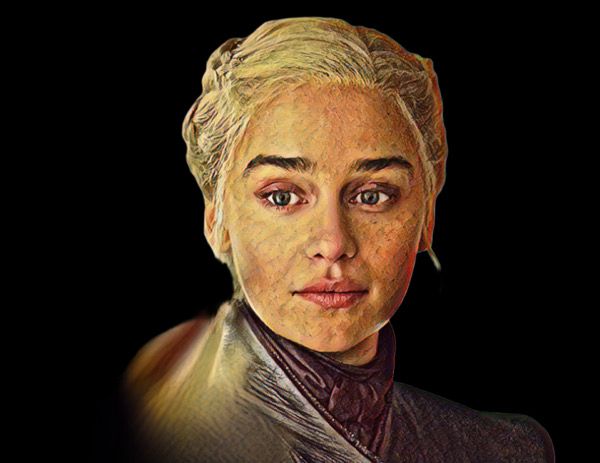
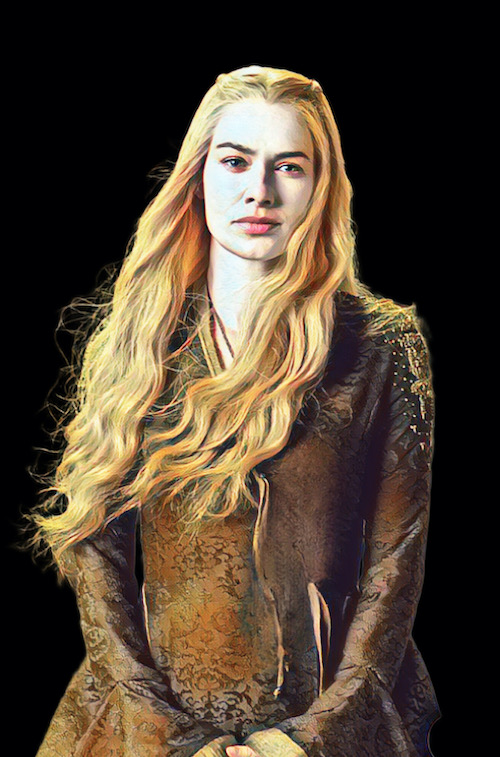
Almost no one sees themselves as a villain. Each character believes they are defending their family, their honor, or what they perceive as their rightful claim. That is why characters who are so radically different can coexist within the same narrative. Cersei believes she is protecting her children. Ramsay believes he is exercising power. Daenerys believes she is liberating the world.
The audience, in turn, tends to identify with those who drive the story forward.
Few characters have driven the story as powerfully as Daenerys.
For years, the passion of fans for Daenerys Targaryen was almost as powerful as her dragons. Many viewers never fully accepted the ending of Game of Thrones, in which she destroys King’s Landing and is ultimately killed by Jon Snow. For a significant portion of the audience, that conclusion felt like a betrayal of the liberator narrative that had defined her character.
The series, however, was also suggesting something more complex.
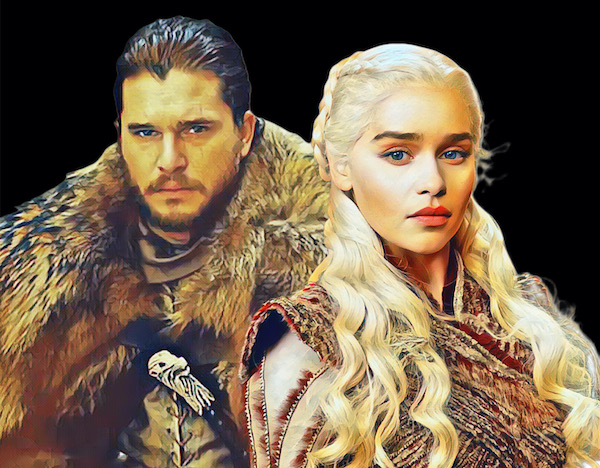
Daenerys believed deeply in three central ideas: birthright, historical destiny, and force as an instrument of justice. When those three ideas combine with dragons, the result can manifest either as liberation or as tyranny.
Jon Snow represents almost the opposite of that logic. He does not believe in divine right and never desired to rule. Perhaps that is precisely why many characters begin to see him as a moral alternative.
This tension between ruling through destiny and ruling through responsibility runs throughout Martin’s entire work.
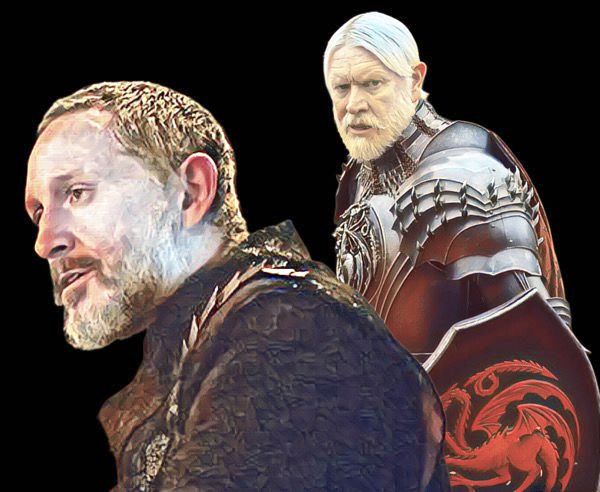
It may also explain why a series such as A Knight of the Seven Kingdoms produces such a curious reaction among audiences. Unlike House of the Dragon, almost no one in that story seems particularly fascinated by the Targaryens. Characters such as Baelor Targaryen may be virtuous, but they are still part of a dynasty that rules through blood and inheritance. Figures such as Ser Lyonel Baratheon, meanwhile, show no automatic reverence toward the royal family.
This perspective brings us back to the original question.
What does it mean to root for the villains?
Identifying with morally ambiguous characters is not a mistake on the part of the audience. On the contrary, characters such as Daenerys, Cersei, or Daemon fascinate precisely because they possess conviction, ambition, and the power to act. They are characters who genuinely change the course of history.
That reality makes the prospect of a film about Aegon’s Conquest even more intriguing.
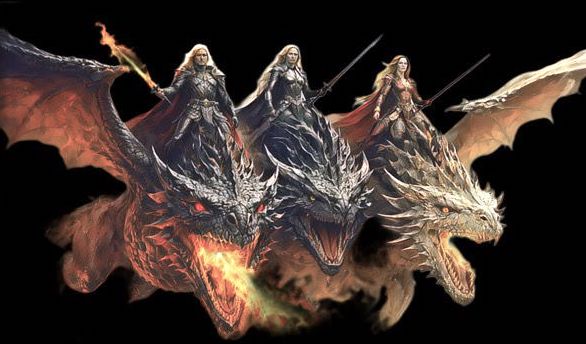
In the end, Aegon’s story can be told in two very different ways. It can be narrated as the birth of a kingdom, or as the moment when a foreign conqueror arrived with three dragons and transformed an entire continent into his empire.
Depending on who tells the story, Aegon may appear as a hero or as an invader.
Perhaps that is exactly what Martin always intended when he insisted that in Westeros, the villain is merely the hero seen from the other side of the war.
Descubra mais sobre
Assine para receber nossas notícias mais recentes por e-mail.
 miscelana.com