
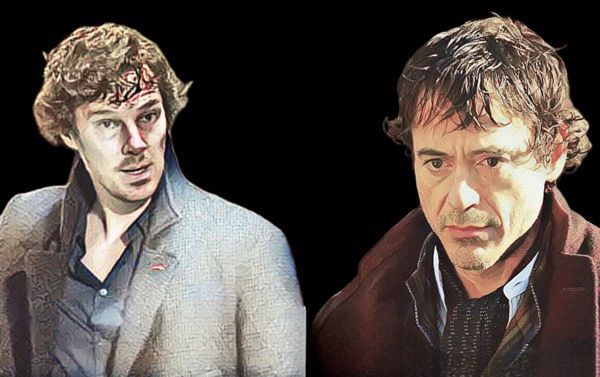
The arrival of Young Sherlock says a great deal about how the character created by Arthur Conan Doyle continues to be reinterpreted, and almost reinvented, for an audience that discovered Sherlock Holmes more recently, whether through the series Sherlock starring Benedict Cumberbatch or the films directed by Guy Ritchie and starring Robert Downey Jr.
It is almost as if that original character from the late nineteenth century, cerebral and complex and still widely popular today, somehow needed updating to remain relevant. The inevitable question is whether that is truly necessary. After all, if Sherlock Holmes has been admired since 1887, it is precisely because there is something singular about him. And it is that very quality that now seems to be constantly “reinterpreted.”
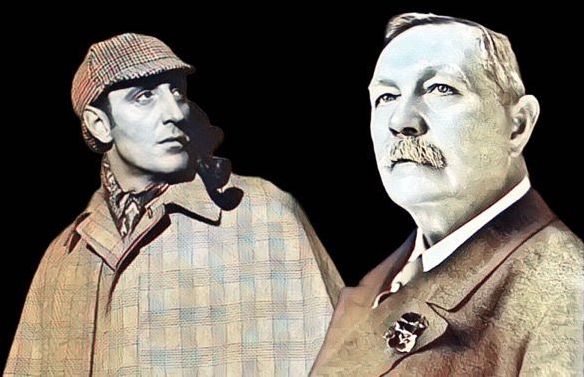
Sherlock Holmes became famous for applying something unusual for detective fiction of his time: the scientific method. By observing details others overlooked and combining them through deductive logic, he was able to solve crimes that appeared insoluble even to Scotland Yard itself. Over time, his name ceased to refer only to a character and became synonymous with the very idea of a detective. Holmes was not the first investigator in literature, but he unquestionably became the most famous. The most curious proof of this cultural longevity lies beyond the pages of the books. According to the Guinness World Records, he is the most portrayed character in the history of film and television. Yet none of that legacy truly seems to be reflected in the series that reimagines his youth.
In that sense, Young Sherlock functions almost as an indirect prequel to the louder, more physical version of the detective that has dominated cinema over the past two decades. For those who first encountered Holmes through Conan Doyle’s books, the result may feel somewhat strange. The literary Sherlock was many things, but he was rarely impulsive, flamboyant, or eager to lead slow-motion fistfights.
This shift in tone did not go unnoticed by critics, who quickly recognized that the series carries nearly all the visual and narrative hallmarks of Guy Ritchie’s filmmaking. There are exaggerated chases, street brawls, laddish humor, and a cartoonish energy that sometimes resembles comic-book adventures.


The problem, several critics argue, is that this aesthetic no longer produces the same impact it once did when it appeared in Sherlock Holmes: A Game of Shadows. What once felt fresh in the early 2010s now comes across as a style that is perhaps too familiar.
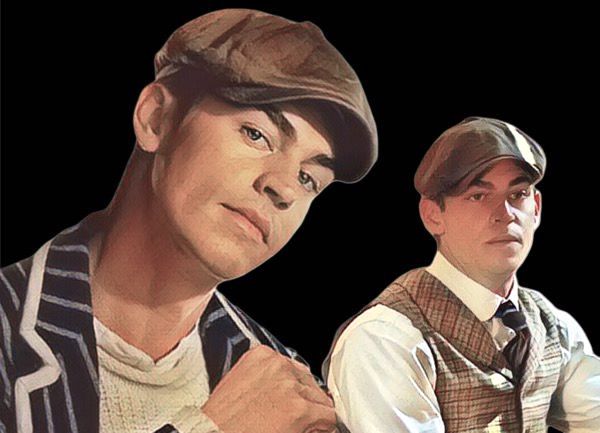
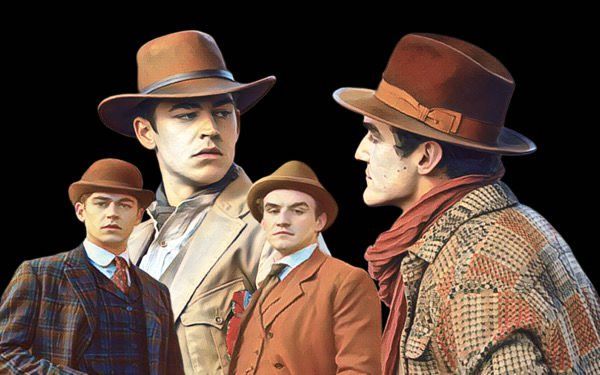
The protagonist himself illustrates this shift. The young Holmes played by Hero Fiennes Tiffin appears less like the future master of deduction and more like a youthful adventure hero caught in international conspiracies, chases, and physical confrontations.
Curiously, the character who ends up dominating several scenes is the one who should function as the antagonist. Dónal Finn delivers a charismatic and magnetic James Moriarty, creating a striking contrast with the still-forming Holmes. In Conan Doyle’s stories, the two technically meet only as adults, but the series chooses to connect them much earlier.
This narrative choice helps explain why Young Sherlock may provoke divided reactions. For viewers who discovered Sherlock Holmes through contemporary adaptations, this approach may feel perfectly natural. For readers of Conan Doyle, however, it represents almost a reversal of the character’s original logic.
I admit my instincts lean toward the more traditional. That does not mean Holmes cannot be reimagined for the present day or interpreted through a different narrative lens. What troubles me is something else. Sherlock Holmes was never conceived as an action hero. His power came from observation, logic, and the ability to notice what everyone else overlooked. If this trend continues, the next step might be a young, athletic Hercule Poirot, as though only that sort of reinvention could give a classic character value for younger audiences.
Perhaps that is why watching Young Sherlock creates such a paradoxical feeling. The series claims to show the detective before he becomes Sherlock Holmes. Yet instead of imagining the young man who might grow into Conan Doyle’s character, it seems to present a teenage version of the Sherlock that Guy Ritchie already reinvented on screen.
The plot also relies heavily on twists that function more like narrative tricks than genuine mysteries. These devices weaken the logic of the investigation and drag the story along. It becomes difficult to fully engage with the series when one senses that another artificial surprise will inevitably appear, without the clues necessary for viewers to follow Holmes’s reasoning. Hero Fiennes Tiffin, who shares scenes with his uncle Joseph Fiennes, does solid work. The real issue seems to lie less with the actors and much more with the writing.
And perhaps that is where the true paradox of Young Sherlock lies. In trying to modernize the character, the series moves away from what made him fascinating in the first place. Sherlock Holmes never needed spectacular explosions or oversized action to command attention. His power was intellectual. It lay in his ability to observe what others missed, to connect apparently trivial details, and to transform the chaos of a crime into pure logic.
That intellectual clarity is precisely what has carried the detective through more than a century of popular culture. The character created by Arthur Conan Doyle survived theater, radio, cinema, and television because he embodies something rare in fiction: the idea that intelligence and observation remain the most powerful tools of all. Perhaps that is why every generation feels compelled to reinvent him. And perhaps it is also why, whenever someone tries to transform him into something entirely different, we are reminded of how difficult the original is to surpass.
Descubra mais sobre
Assine para receber nossas notícias mais recentes por e-mail.
 miscelana.com