
Does Sherlock Holmes have a sister?
In the books written by Arthur Conan Doyle, the answer is no. Sherlock Holmes did not have a sister. The detective created at the end of the nineteenth century had only one known sibling, Mycroft Holmes, often described as even more brilliant than Sherlock himself.
Recent adaptations, however, have chosen to reimagine the Holmes family. Films and series such as Enola Holmes and Young Sherlock introduce a younger sister for the famous detective — characters that do not exist in the original canon but help update the universe created by Conan Doyle for contemporary audiences.
In the writer’s imagination, Sherlock Holmes’s family world was always surprisingly small.
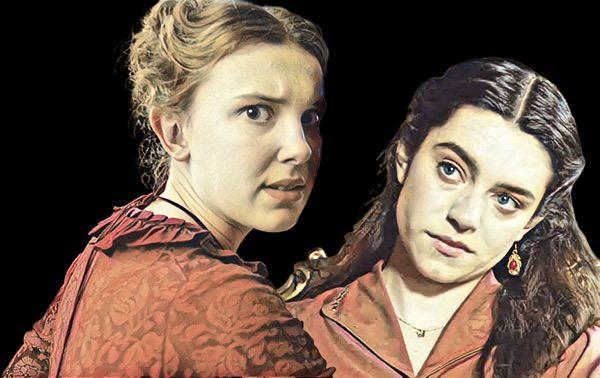
Although Sherlock was not an only child, while he roamed London solving seemingly impossible crimes, Mycroft preferred to remain behind the scenes of the British government, dealing with information and state strategy.
Beyond that, we know very little. Conan Doyle never developed the Holmes family background in any meaningful way. Sherlock’s parents appear only as distant references, and there is no mention whatsoever of sisters or other close relatives. Sherlock therefore emerges as the youngest member of a family barely explored narratively, someone who grew up almost in the shadow of a brilliant yet distant brother.
This silence about the family is not entirely accidental. The Sherlock Holmes stories were written within a deeply male universe. Watson, Lestrade, Moriarty and Mycroft form the central circle of recurring characters. Women, most of the time, appear only as clients, victims or passing figures. The one truly memorable exception is Irene Adler, who appears in a single story and yet leaves a lasting mark on the detective’s imagination.
More than a century later, modern adaptations began to respond to this absence in a curious way. At a moment when female protagonists have gained far more space in storytelling, some creators decided to expand precisely the area Conan Doyle left almost blank: the Holmes family.
And the solution they found was to invent a younger sister for Sherlock.
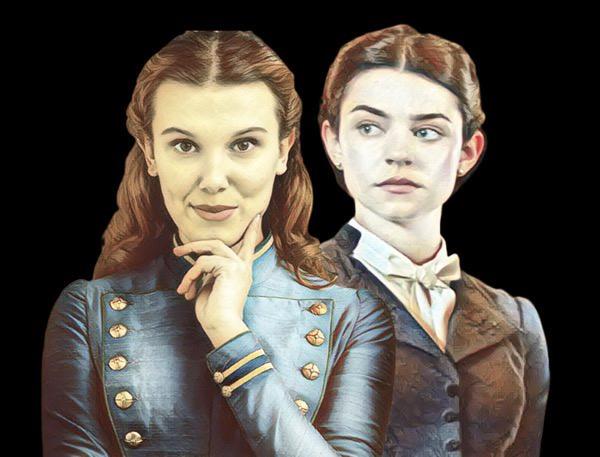
The Sister Who Became a Hero: Enola Holmes
The most famous version of this idea is Enola Holmes, created by writer Nancy Springer in the literary series The Enola Holmes Mysteries. The character reached global audiences through the Netflix adaptations, particularly Enola Holmes and Enola Holmes 2.
In this version, Enola is introduced as the younger sister of Sherlock and Mycroft, raised almost entirely by their mother, Eudoria Holmes. Unlike traditional Victorian families, Eudoria educates her daughter outside the social expectations of the time. Rather than preparing her for marriage, she teaches logic, chemistry, martial arts and critical thinking.
This upbringing explains much of Enola’s personality. She grows up independent, curious and intellectually sharp, clearly echoing the talents of her famous brother.
In the first film, her mother’s disappearance becomes the catalyst for the story. While trying to discover what happened to Eudoria, Enola begins her own journey as a detective. In Enola Holmes 2, played again by Millie Bobby Brown, she decides to fully follow in Sherlock’s footsteps and opens her own investigative agency.
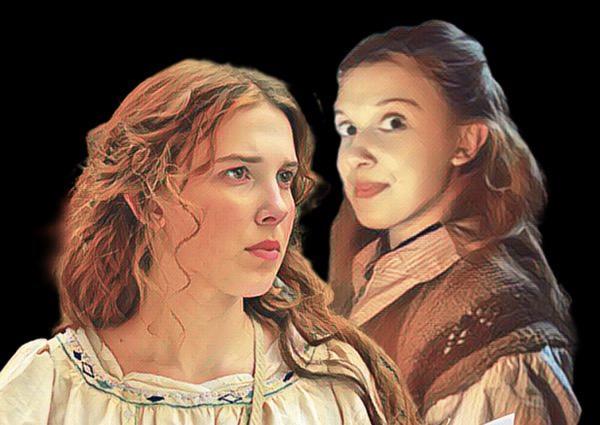
The problem is that Victorian London is hardly ready to accept a young woman as a professional detective. Potential clients doubt her abilities, and her dream of building a career similar to that of Sherlock Holmes seems destined to collapse before it even begins.
Everything changes when a young factory worker asks for help finding her missing sister. The apparently simple case takes Enola from London’s industrial districts to the halls of high society, revealing a conspiracy far larger than it first appeared. Faced with the growing complexity of the mystery, she ultimately turns to Sherlock himself for help, portrayed in the films by Henry Cavill.
The relationship between the siblings is marked by a curious mix of admiration and surprise. Sherlock quickly recognizes his sister’s intelligence, even if her investigative methods differ from his own. While he relies almost exclusively on cold logic and observation, Enola often perceives social and emotional nuances that escape her brother’s more clinical eye.
This contrast proved particularly appealing to younger audiences. For many viewers, Enola has become almost the “official” sister of Sherlock Holmes in popular culture, despite not existing in Conan Doyle’s original stories.
The Sister Who Became a Mystery: Beatrice
The series Young Sherlock, however, takes a very different path.
Instead of introducing a heroic younger sister, the show creates a figure surrounded by tragedy and mystery: Beatrice Holmes.
From the very beginning, the Holmes family carries the weight of the girl’s supposed death. Beatrice is believed to have died as a child in an accident, and her loss becomes a defining element of the emotional landscape for both Sherlock and Mycroft.
But the revelation that closes the first season completely changes that story.
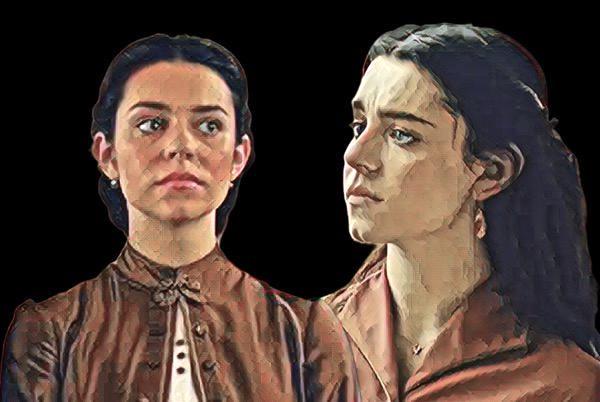
(SPOILER)
Sherlock discovers that Beatrice did not die. Her disappearance was carefully orchestrated by the family’s father, Silas Holmes. Facing financial difficulties, he manipulates events in order to take control of his wife Cordelia Holmes’s inheritance. At the same time, he constructs a narrative that pushes Cordelia toward psychological instability while permanently separating Beatrice from the rest of the family.
Beatrice grows up with another family while Silas maintains contact with her over the years. When she finally returns, he convinces her that she had been abandoned by her brothers. Driven by resentment, she initially assists him in his schemes and becomes a kind of accomplice in his manipulations.
Eventually, however, Beatrice realizes the cruelty of her father’s actions and appears to turn against him, joining Sherlock and Cordelia in confronting him.
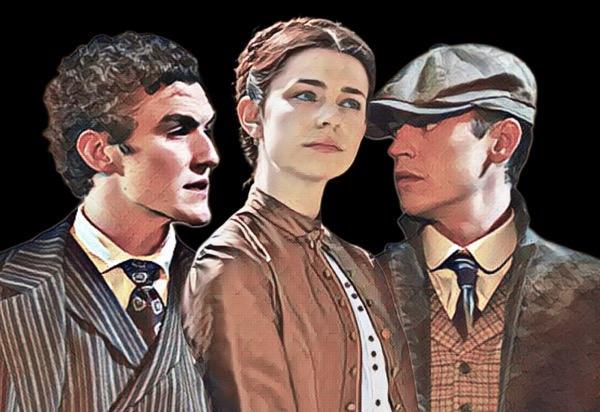
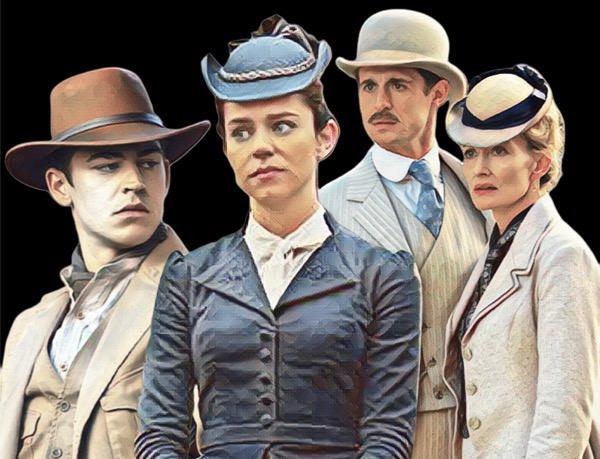
The character ultimately occupies a narrative role very different from Enola’s. Instead of functioning as a heroic figure who expands the Sherlock Holmes universe, Beatrice emerges as an emotional wound in the Holmes family’s past — a story of manipulation, resentment and late reconciliation. Her possible connection to Moriarty even raises a darker possibility: the idea that a Holmes might one day stand on the other side of the law.
Two Answers to the Same Question
Ultimately, Enola and Beatrice represent two very different ways of answering a question modern adaptations increasingly seem to ask: how can a woman be placed at the center of the Sherlock Holmes universe?
One answer creates a heroine who expands the myth. The other introduces trauma that helps explain it.
What remains unchanged is the simple fact that Arthur Conan Doyle never wrote a sister for Sherlock Holmes. Yet more than a century later, contemporary storytellers appear convinced that the Holmes family still contains too many blank spaces — perfect narrative gaps for new characters.
And, curiously enough, these new sisters reveal as much about our own era as they do about the detective of Baker Street.
Descubra mais sobre
Assine para receber nossas notícias mais recentes por e-mail.
 miscelana.com
Just finished watching “Young Sherlock,” and yes, I did notice that modern adaptations of Sherlock Holmes, even the one with Benedict Cumberbatch, also have a sister. Why do you think modern shows add a sister to the story and push the story of the family? All the shows are good, though.
CurtirCurtir