
When The King and I premiered in 1956, Hollywood was already working with a narrative that had passed through several layers of reinvention. At the center of the story is Anna Leonowens, a schoolteacher who lived at the court of Mongkut, also known as Rama IV, monarch of Siam, between 1862 and 1867.
After leaving Siam, Leonowens published memoirs describing her experience teaching the king’s many children. These accounts became extremely popular in the English-speaking world, although historians later noted that many episodes were exaggerated or even invented. Nevertheless, her version of events captured the Western imagination and opened the door to literary and theatrical adaptations.

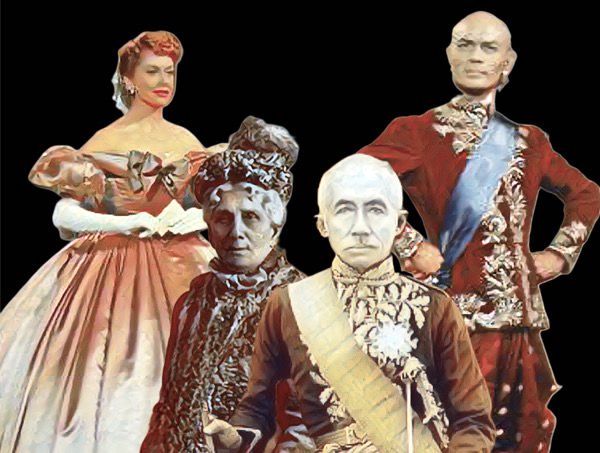
In 1944, writer Margaret Landon published the novel Anna and the King of Siam, inspired by those memoirs. The book quickly reached the screen in Anna and the King of Siam, starring Rex Harrison and Irene Dunne. It was the musical adaptation, however, that would transform the story into a lasting cultural phenomenon.
The success on stage
The musical The King and I premiered on Broadway on March 29, 1951, at the St. James Theatre, with music by Richard Rodgers and lyrics by Oscar Hammerstein II.
The production was written especially for Gertrude Lawrence, who played Anna, while Yul Brynner portrayed King Mongkut. The show became an immediate hit and ran for 1,246 performances, winning the Tony Award for Best Musical.
Brynner’s performance was one of the driving forces behind the success. His commanding presence, deep voice, and the visual decision to shave his head created a character that quickly became inseparable from the story itself.

The journey to the screen
The film adaptation arrived five years later, directed by Walter Lang and produced by 20th Century Fox.
Several actresses were considered for the role of Anna. Among them were Dinah Shore and Maureen O’Hara, both singers. Composer Richard Rodgers ultimately rejected those options, and the role went to Deborah Kerr.
Because Kerr was not a singer, her songs were recorded by soprano Marni Nixon, who later became famous in Hollywood for dubbing musical performances.
Yul Brynner returned to the role he had created on stage, producing a rare continuity between Broadway and cinema. His performance would earn him the Academy Award for Best Actor.

Rita Moreno and the power of Tuptim
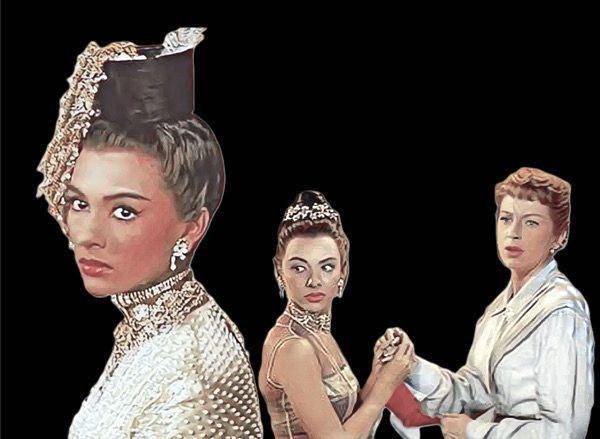
One of the film’s most memorable characters is Tuptim, played by Rita Moreno. In the story, she is a young Burmese concubine who falls in love with Lun Tha and attempts to escape palace life, creating one of the film’s most dramatic narrative threads.
Moreno, who would later win the Academy Award for West Side Story, has often reflected on this period as one in which Hollywood frequently cast her in ethnically coded roles. She once described herself as the industry’s “go-to ethnic.”
Even so, her presence in The King and I is essential. Tuptim performs the celebrated ballet sequence “The Small House of Uncle Thomas,” a visually elaborate number that reinterprets Uncle Tom’s Cabin through stylized dance. It became one of the film’s most ambitious and striking moments.
Today, Moreno also represents a living link to the film’s history. She is the only surviving credited cast member.
Recording the music and filming the spectacle
The production of The King and I was ambitious in every sense. The film used the experimental CinemaScope 55 format, designed to create an even more expansive visual experience.
The costumes designed by Irene Sharaff were especially elaborate. Deborah Kerr’s gowns could weigh up to 40 pounds because of their hoops, pleats, and layers. Under the intense studio lights, she lost more than twelve pounds during filming.
Recording the songs required careful coordination. Marni Nixon worked closely with Kerr for weeks, studying her facial expressions and speech rhythm so that the singing would perfectly match the on-screen performance.
Among the musical highlights are “Getting to Know You,” “Hello Young Lovers,” “Something Wonderful,” “A Puzzlement,” and “Shall We Dance?” The dance sequence between Anna and the king remains one of the most iconic moments in the history of film musicals.

Awards and success
When the film premiered in 1956, it was immediately a critical and commercial success.
At the 29th Academy Awards, it received nine nominations and won five, including Best Actor for Yul Brynner, Best Costume Design, Best Art Direction, Best Musical Score, and Best Sound.
Deborah Kerr was nominated for Best Actress, while the film also won the Golden Globe for Best Motion Picture – Musical or Comedy.
In addition to the awards, the film became one of the top box-office hits of the year.
How the film is viewed today
Over time, The King and I has also been revisited through a more critical lens.
The portrayal of Siamese culture, the Western gaze applied to the story, and the liberties taken with the historical figure of King Mongkut have prompted important debates. The film has long been banned in Thailand, where it is considered an inaccurate and disrespectful depiction of the monarchy.
These discussions do not diminish the film’s cultural importance, but they do reposition it. Today, the film is seen both as a masterpiece of the classic musical and as an example of how Hollywood represented other cultures during the mid-twentieth century.

70 years later…
Seventy years after its release, The King and I still occupies a unique place in the history of entertainment.
Few works have moved so successfully across literature, theater, and cinema, each adaptation expanding the story’s cultural reach.
At the same time, the film has become a reminder of how grand Hollywood spectacles could reshape complex histories into romantic narratives designed for mass audiences.
Celebrating its 70th anniversary means recognizing both sides of that legacy. The film remains a landmark of the classic musical tradition and a reflection of its time. Watching it today allows us to admire its music, performances, and spectacle while also reconsidering the historical stories it chose to tell—and those it left outside the frame.
Descubra mais sobre
Assine para receber nossas notícias mais recentes por e-mail.
 miscelana.com