
As published on Bravo Magazine
The relationship between cinema and music is as old as the history of moving images itself. Long before films could speak, they already sang. In early 20th-century screening rooms, pianists and small orchestras accompanied projections and helped build what we now recognize as one of the most powerful forces in audiovisual storytelling: emotion guided by music.
More than a century later, many of those scores have become part of collective memory. Just a few notes are enough for audiences to recognize a hero, a romance, or a moment of suspense. It is no surprise, then, that concerts dedicated to film music continue to attract audiences who often discover the world of concert music through these melodies.
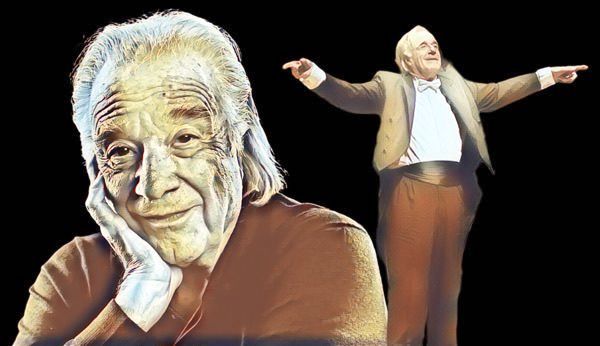
This bridge between symphonic tradition and popular culture is precisely what marks the opening of the 2026 season of the Bachiana Filarmônica SESI-SP. On March 10, at Teatro Bradesco in São Paulo, the orchestra will take the stage under the baton of João Carlos Martins with a program dedicated to classics from the big screen.
The repertoire spans several decades of cinema, bringing together themes such as Gonna Fly by Bill Conti from Rocky, the James Bond Theme by Monty Norman, and The Pink Panther by Henry Mancini, as well as the tango Por una Cabeza by Carlos Gardel and Alfredo Le Pera, immortalized in Scent of a Woman.
Singer Anna Akisue joins the concert performing songs associated with major film productions, including I Will Always Love You, made famous by Whitney Houston in The Bodyguard, and My Heart Will Go On, the theme from Titanic. In the final part of the performance, assistant conductor Roberto Tibiriçá Yokota will take over the baton so that João Carlos Martins can sit at the piano and perform themes by composers who defined contemporary film music, such as John Williams, Alan Silvestri, and Ennio Morricone.
On the eve of the concert, we spoke with the maestro about the importance of film scores, the composers who transformed movie music, and the role these repertoires play in bringing audiences closer to concert music.
BRAVO: The concert brings together film scores that marked generations. Is there any movie soundtrack that was particularly important in your life or musical formation?
Martins: From a melodic point of view, the film score that still moves this old maestro to this day is undoubtedly the score of Gone with the Wind. I experience it with deep emotion and surrender completely to the orchestral conception of the work. And we perform this piece with a spectacular arrangement made by our orchestrator José Antônio de Almeida.
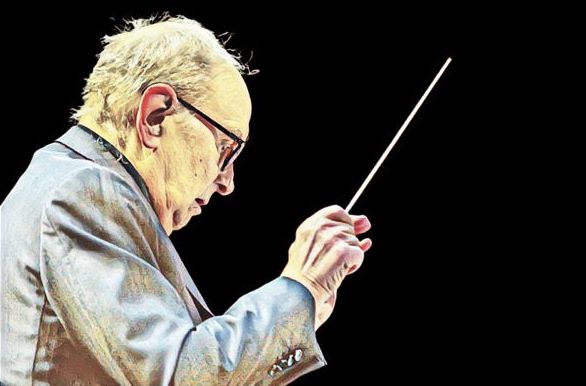

BRAVO: Among the great film composers — such as John Williams, Ennio Morricone, Henry Mancini, or James Horner — which do you consider the most revolutionary for orchestral music, and why?
Martins: The most revolutionary for orchestral music, without any doubt, is John Williams. And from a melodic point of view, in my opinion, certainly Ennio Morricone.
BRAVO: Many film scores function almost like contemporary symphonies. What changes when this music leaves the screen and is performed in a concert?
Martins: It is extremely important that musicians often called “classical” — I dislike that word, but classical musicians — have respect for film scores and the composers who dedicate themselves to movie music. Film music is not easy at all, because it must combine the musical element with the dramatic scene. Usually the composer has to observe very carefully what is happening on screen in order to imagine what can be composed. The composition and the visual scene must have complete integration.
BRAVO: Cinema has always had a very strong relationship with audience emotion. In your opinion, what makes a film score truly unforgettable?
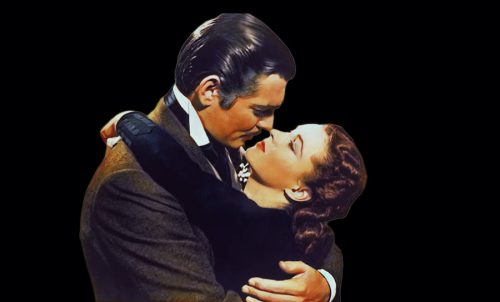
Martins: I prefer to give an example that makes it easy for everyone to understand. Take Gone with the Wind, for instance. If Clark Gable’s kiss with Vivien Leigh had no musical score, that kiss would lose 90 percent of its power. That alone shows what I think.
BRAVO: Concerts like this bring many people to classical music for the first time. Do you believe film music can be a gateway for new audiences to concert music?
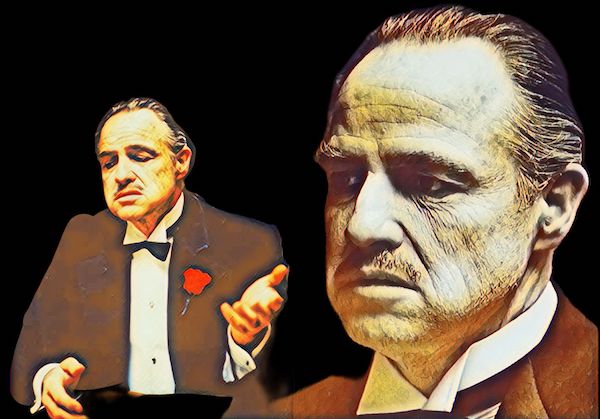
Martins: Absolutely. That is a very good question, because there is only one type of music: music of good taste. Sometimes people become familiar with classical music through good music in films. There are many examples of movies that use classical music in their narratives, such as The Godfather. And of course there are biographical films like Amadeus. How often does classical music help people understand a film score? And how often does a film score bring a listener into the fantastic universe of classical music? Many times classical music helps people understand a film. And many times film music brings a listener into that fantastic universe of classical music. It is classical music that helps us understand what classical music is.
Descubra mais sobre
Assine para receber nossas notícias mais recentes por e-mail.
 miscelana.com