
Over the past two decades, television has turned forensic science into one of the most widely explored genres in entertainment. Series centered on laboratories, autopsies and scientific investigations have become constant presences across both streaming platforms and broadcast TV. The impact of CSI, Bones and NCIS, for instance, helped cement the idea that the victim’s body itself can reveal the clues needed to solve crimes that initially appear impossible.
For that reason, when it was announced that Nicole Kidman would play the medical examiner Kay Scarpetta in the upcoming series Scarpetta, part of the audience’s first reaction was to wonder whether there was still room for yet another production in this already crowded territory. The answer lies in a detail that changes the perspective entirely. The character created by Patricia Cornwell did not emerge as a consequence of this television genre. In many ways, she helped create it.
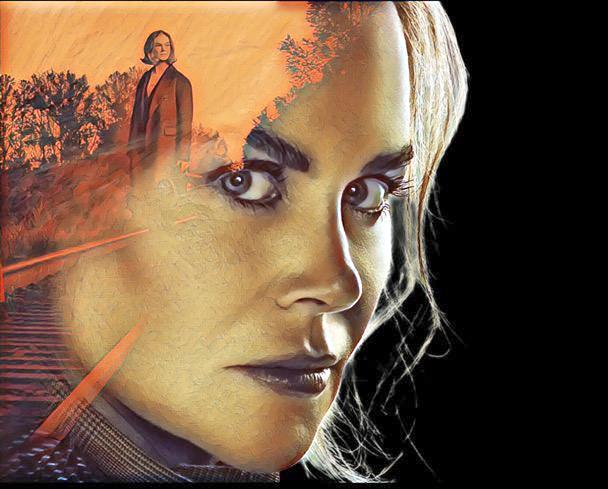
Kay Scarpetta first appeared in 1990 in the novel Postmortem. At that time, crime fiction was still largely dominated by the traditional detective figure who solved mysteries through interrogations, pursuits and intellectual deduction. Cornwell introduced a different narrative center by shifting the focus to the laboratory and the autopsy table. The examination of the body became the true starting point of the investigation. The corpse was no longer simply evidence but a silent witness capable of revealing details that no interrogation could uncover.
This narrative shift ended up influencing an entire generation of crime stories that followed. The contemporary fascination with forensic science, now so visible across television, owes part of its origins to Cornwell’s work. Over more than three decades, the Scarpetta series has grown to include more than twenty-five novels and millions of readers, establishing the character as one of the most important figures in modern crime fiction.
What truly distinguishes Scarpetta from many characters that appeared afterward, however, is the way science itself functions within the story. In many television series, the laboratory often behaves almost like a technological oracle. Results appear instantly, sophisticated software solves complex puzzles and every piece of evidence seems to point directly toward the answer.
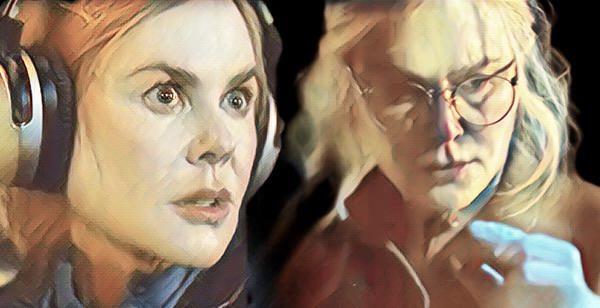
In Patricia Cornwell’s novels, science is slower, more imperfect and often frustrating. Scarpetta works within institutions shaped by politics, bureaucracy and power struggles. Scientific truth exists, but reaching it demands obsessive dedication, methodological rigor and considerable emotional resilience. This aspect makes the character less like an infallible hero and more like a professional constantly fighting to defend what she knows to be true.
Another layer further deepens the character. Kay Scarpetta is not simply a brilliant specialist. Throughout the novels, her personal life becomes an essential part of the narrative. Complicated family relationships, emotional losses and ethical dilemmas accompany every investigation. Her relationship with her niece Lucy, an extraordinarily talented yet emotionally volatile hacker, and her turbulent partnership with detective Pete Marino create a dramatic core that extends well beyond the classic “case of the week” structure.
This human dimension is one of the reasons the adaptation is so highly anticipated. In recent years, Nicole Kidman has built a distinctive presence within prestige television. Projects such as Big Little Lies, The Undoing and Nine Perfect Strangers have demonstrated her ability to portray intelligent, emotionally complex women shaped by internal conflicts and hidden histories. Kay Scarpetta seems almost like a natural continuation of that trajectory.
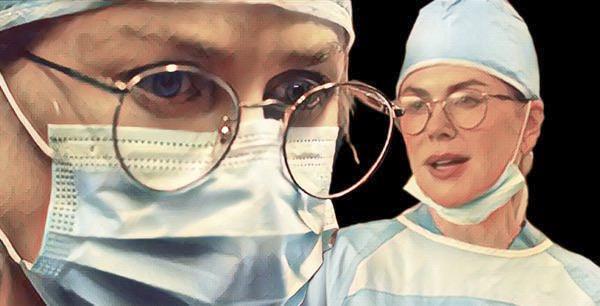
There is also a historical factor behind the growing interest in the series. Hollywood has been attempting to adapt Patricia Cornwell’s novels for more than twenty years. Several projects were announced and eventually abandoned before reaching the screen. Nicole Kidman’s involvement, not only as the lead actress but also as an executive producer, was the development that finally brought the adaptation to life.
The cast adds another symbolic element by bringing together two Academy Award winners. Jamie Lee Curtis plays Dorothy Farinelli, Scarpetta’s sister, a role that introduces new family tensions into the story. Interestingly, Curtis was for years one of the people most determined to see Cornwell’s novels adapted for television.
All of this explains why Scarpetta arrives on streaming platforms with expectations that go far beyond those of a typical crime series. At a time when the forensic genre often feels saturated with familiar formulas, the character created by Patricia Cornwell represents something rare. She was not created to imitate trends. She helped define them.
If the adaptation manages to preserve what made Kay Scarpetta unique in literature, the scientific rigor, the human dimension of the victims and the portrait of a woman determined to protect the truth amid institutional and emotional pressures, the series could accomplish something that few crime dramas achieve today. It could remind audiences not only why these stories continue to fascinate us, but also where the formula itself began.
Descubra mais sobre
Assine para receber nossas notícias mais recentes por e-mail.
 miscelana.com