
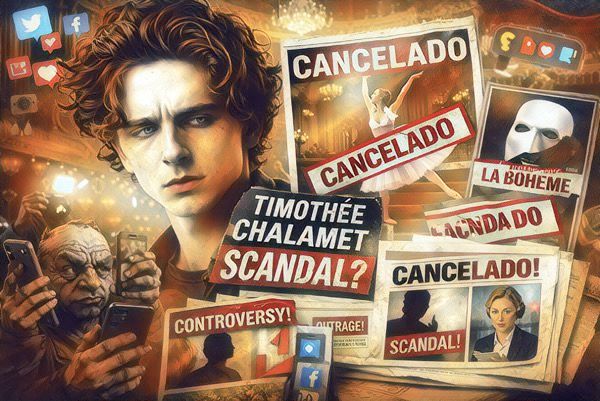
In recent days, a remark by Timothée Chalamet sparked a small cultural storm, arriving precisely at the end of an awards season that seemed to be heading toward his first Oscar for Best Actor. An interview in which he spoke about the future of movie theaters began circulating again, and going viral, to the point that he now appears across social media, magazines, YouTube channels, and TikTok as something of a persona non grata: an arrogant young actor who, for many, does not deserve what he so clearly wants: recognition from the Academy.
All of this because the actor commented that he would not want to work in an art form that needed to be “kept alive even though nobody cares about it anymore,” citing ballet and opera as examples. It was not the first time he had used this argument. In earlier interviews he had already mentioned opera as a reference for what he saw as a declining art form. This time, however, despite being the son and brother of former ballet dancers, he also included ballet in that comparison. And it struck a nerve with many people, myself included, as someone who loves ballet, opera, and cinema.
The metaphor was meant to sound like a warning about the risk of cinema losing its cultural centrality.
But what a miscalculation.
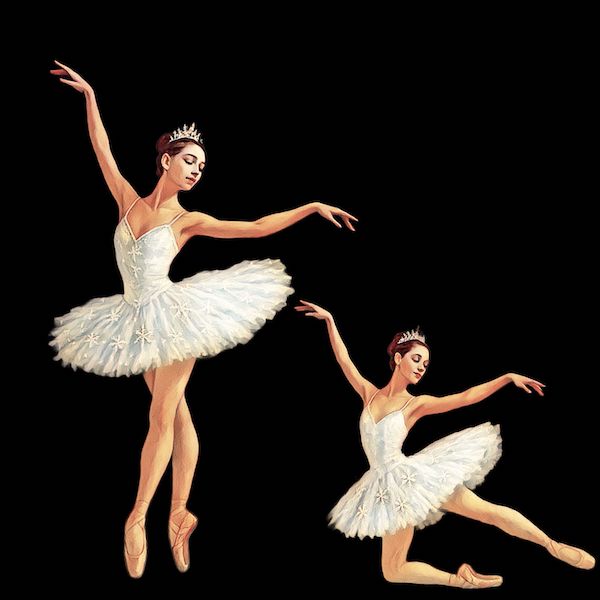
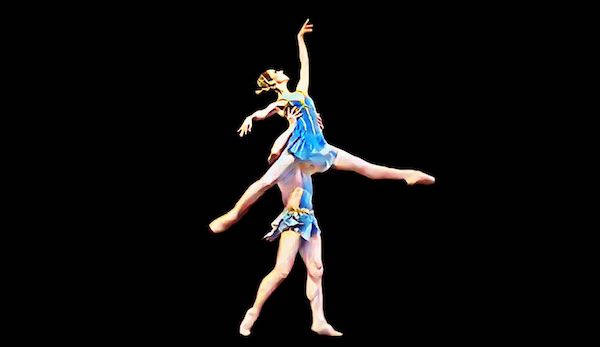
Still, it is possible to understand the starting point of Timothée’s argument. Since the rise of streaming, the film industry has been living with a constant anxiety. The question haunting Hollywood is simple and uncomfortable: what if cinema ceases to be the dominant form of popular entertainment?
The fear is not absurd. That is precisely what he seemed to be trying to argue. Cultural history is full of examples of art forms that have shifted position within the cultural ecosystem over time. In the nineteenth century, opera was mass entertainment. Premieres by composers such as Giuseppe Verdi or Giacomo Puccini drew enormous crowds. Today opera remains vibrant, but it occupies a different space, more institutional and specialized.
Even so, Timothee Chalamet’s metaphor fails, and it fails for several reasons.
First because it begins with a factual misunderstanding. The idea that “nobody cares” about opera or ballet simply does not correspond to reality. One only needs to look at what happens in theaters around the world. In Brazil, for example, when the Theatro Municipal of Rio de Janeiro opens ticket sales for a ballet or opera season, tickets frequently sell out within hours, especially when prices are accessible. And this in the so-called “land of samba.”
The same happens at historic venues such as Teatro alla Scala, the Royal Opera House, and the Metropolitan Opera House. The issue is not lack of interest but scale. A theater may hold a few thousand people. A film can reach millions.
The metaphor also fails for a deeper reason: it compares art forms that function in fundamentally different ways.
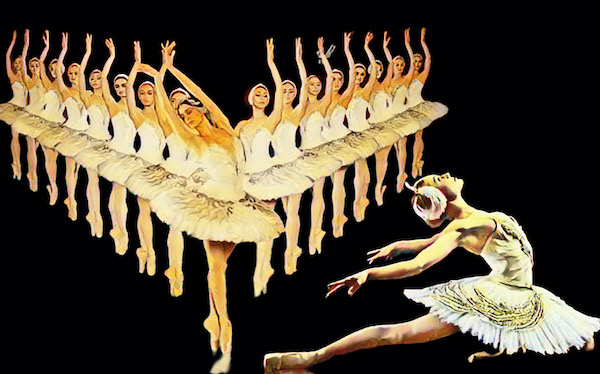
Opera and ballet are essentially living arts. Each performance is unique. A work created in the nineteenth century can acquire new interpretations every night depending on the artists on stage. The same ballet can move audiences differently with different performers, different companies, and different choreographic interpretations.
Take Swan Lake as an example. Created in 1877, the ballet continues to be staged all over the world. Yet no performance is ever the same. The interpretation of Odette changes with each ballerina, each company, each generation.
The same is true of opera. A production of La Traviata is never exactly the same, even when the libretto and score remain intact. The staging changes, the singers’ interpretations change, the dramatic rhythm of the work changes. The sets may be traditional or contemporary, but the work itself is recreated with every performance.
That capacity for transformation is precisely the opposite of a “dead” art.
Curiously, in constructing his metaphor, Chalamet left out one art form that could easily have been cited by the same reasoning: theater. Shakespeare’s plays, written more than four centuries ago, continue to be staged around the world. Yet no one suggests that theater is an art form “nobody cares about.” On the contrary, its vitality lies precisely in the infinite possibility of reinterpretation.
There is another irony in this comparison. Cinema, by definition, functions differently. A film is a fixed work. Once completed, it does not change. Audiences always see the same version. What changes over time is the reception, not the work itself.
This does not diminish cinema as an art. But it does show that comparing it to performing arts is structurally misguided.
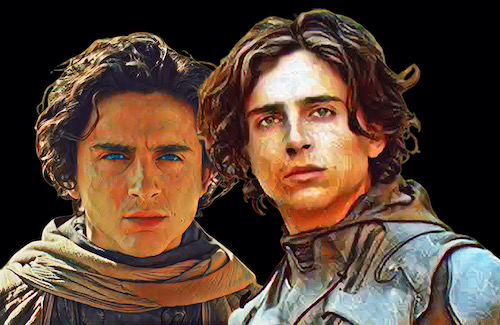
Chalamet’s unfortunate metaphor has yet another layer of complexity. In speaking of art forms that supposedly survive on old repertory, he seems to ignore that contemporary cinema, especially Hollywood, increasingly depends on pre-existing intellectual property: franchises, remakes, sequels, and reboots. One need only recall that the actor himself recently starred in major productions based on existing material, such as Dune and Wonka.
If there is today a cultural industry particularly dependent on the past, it may well be Hollywood itself.
The threat facing cinema does not come from repeating repertory but from changing patterns of consumption. For the first time in its history, the seventh art faces the possibility of losing its original space of exhibition. The shift from movie theaters to living rooms, driven by streaming, puts into question the model that sustained cinema for more than a century.
Opera and ballet, on the other hand, depend precisely on what cinema may lose: the physical encounter between artists and audience. These arts require theaters, orchestras, bodies in motion, voices projected through space. They cannot be fully replaced by a screen in someone’s home.
This does not mean that opera and ballet are free from challenges. Like many long-standing artistic traditions, they carry issues inherited from the historical contexts in which they emerged. For a long time they were criticized for lack of racial, social, and aesthetic diversity and for reflecting cultural norms of the past.
Yet even these limitations are being addressed. Dance companies and opera houses around the world have sought to expand the diversity of their casts, rethink repertories, and incorporate new narratives. Contemporary choreographers reinterpret classical works, opera directors relocate stories into modern contexts, and artists from diverse backgrounds now occupy spaces that were once denied to them.
In other words, these arts continue to evolve.
Perhaps the flaw in Timothée Chalamet’s metaphor lies less in his intention than in its simplification. The actor tried to express a legitimate anxiety about the future of cinema. But in doing so he resorted to an image that reveals more about contemporary cultural assumptions than about the reality of these art forms.
Opera and ballet continue to exist not out of nostalgia, but because they still move audiences. Because they still find their public. Because they continue to reinvent themselves.
If there is today an art form that may risk losing its original space, that art form might be cinema.
But if the question is whether anyone still cares about opera or ballet, the answer remains simple.
#icare
Descubra mais sobre
Assine para receber nossas notícias mais recentes por e-mail.
 miscelana.com