
When watching Young Sherlock, the sense of familiarity is immediate. Even with new characters, changes to the Holmes family history, and a clearly modern approach, the detective feels both recognizable and different. That is because the series does not rely on a single source. Instead, it blends three distinct traditions of the character that have shaped how different generations imagine Sherlock Holmes.
The result is a Sherlock who does not belong exclusively to the original canon of Arthur Conan Doyle, nor entirely to recent adaptations. Rather, the series creates a synthesis between the nineteenth-century literary detective, the adventurous cinematic figure popularized by Guy Ritchie, and the emotionally complex character that gained new life on British television in the twenty-first century.

The Sherlock of Conan Doyle
At its core, the series still draws from the Sherlock Holmes created by Conan Doyle beginning in 1887. Even as a younger version, the show preserves essential elements of the original character.
Sherlock remains defined by extraordinary intelligence, by his almost obsessive ability to notice details others miss, and by his unusual relationship with the social world around him. He understands patterns, logic, and human behavior with near-scientific precision, yet struggles to navigate emotions and personal relationships.
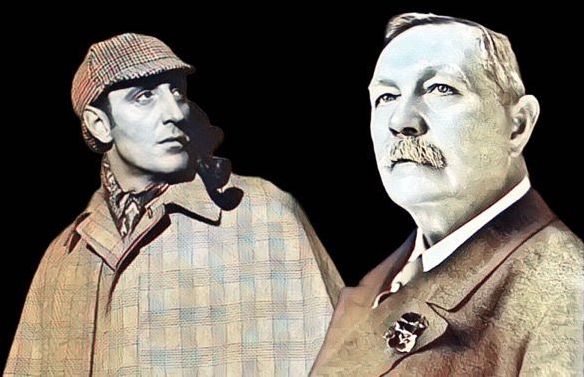
This contrast between intellectual brilliance and social isolation has always been one of the most fascinating aspects of the character. In Young Sherlock, those traits appear in formation, as if the series is showing the origins of the detective who will one day live at fiction’s most famous address: Baker Street.
The Sherlock of Guy Ritchie
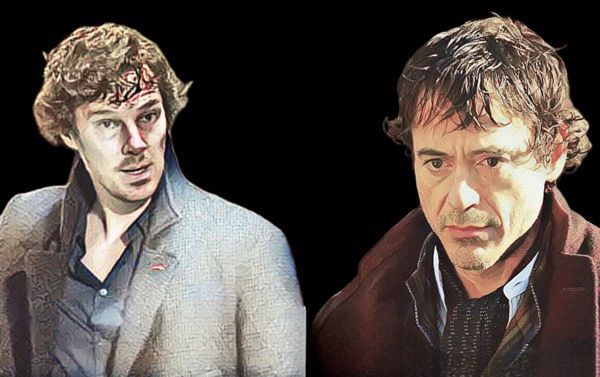
If the intellectual foundation comes from Conan Doyle, the physical energy and visual style of the series clearly echo the films directed by Guy Ritchie, especially Sherlock Holmes and Sherlock Holmes: A Game of Shadows.
It was this version, played by Robert Downey Jr., that redefined the detective for modern audiences. Ritchie’s Holmes was far more dynamic, constantly drawn into chases, fights, and large-scale adventures, with a narrative rhythm much faster than that of earlier adaptations.
That influence is clearly visible in Young Sherlock. The series favors quick editing, sarcastic humor, and a stylized Victorian world full of motion and tension. The young Sherlock is not only a brilliant mind. He is also a character who runs, fights, improvises, and physically engages with the mysteries he encounters.

The Emotional Sherlock of the BBC
A third influence can also be felt: the series Sherlock, starring Benedict Cumberbatch.
That adaptation was instrumental in exploring something the original stories rarely developed in depth: the emotional and psychological dimensions of the character. Over the course of its seasons, the show examined the cost of Sherlock’s genius, his difficulty forming human connections, and the complex friendships and rivalries that shape his life.
In Young Sherlock, that emotional dimension appears primarily through personal relationships. The supposed death of his sister Beatrice, the tensions within the Holmes family, and the complicated friendship with Moriarty all introduce emotional layers that help explain how the young detective might eventually become the colder, more analytical figure audiences already know.
A Sherlock for the Twenty-First Century
This combination of influences helps explain why Young Sherlock feels both new and familiar. The series does not simply recreate Conan Doyle’s Sherlock Holmes, nor does it merely imitate modern adaptations.
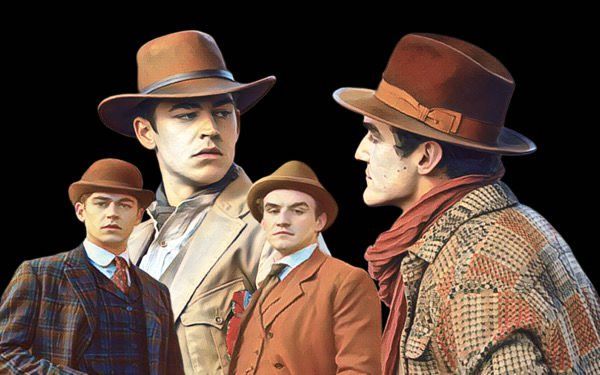
Instead, it builds a meeting point between different versions of the character.
The intellect comes from literature.
The energy comes from cinema.
The emotional complexity comes from contemporary television.
In the end, that blend reveals something important about the character’s longevity. Sherlock Holmes continues to be reinvented because every generation finds a new way to see him. And perhaps it is precisely this capacity for reinvention that has kept the detective of Baker Street alive for more than a century.
Descubra mais sobre
Assine para receber nossas notícias mais recentes por e-mail.
 miscelana.com