
For decades, the center of police narratives on television was occupied by detectives. The classic investigator, armed with intuition, interrogations, and car chases, dominated the genre for most of the twentieth century. Science appeared only as support. A report. An exam. A technical step within the investigation.
That logic began to change in the 1990s, when writer Patricia Cornwell introduced readers to medical examiner Kay Scarpetta, the protagonist of a series of novels that began with Postmortem. In Cornwell’s books, the crime does not begin with a chase or an interrogation. It begins on the autopsy table. The body stops being merely evidence and becomes a witness.
With the premiere of Scarpetta, starring Nicole Kidman, interest in the character created by Patricia Cornwell is rising again. But long before the series reached television, other forensic heroines had already shaped the genre.
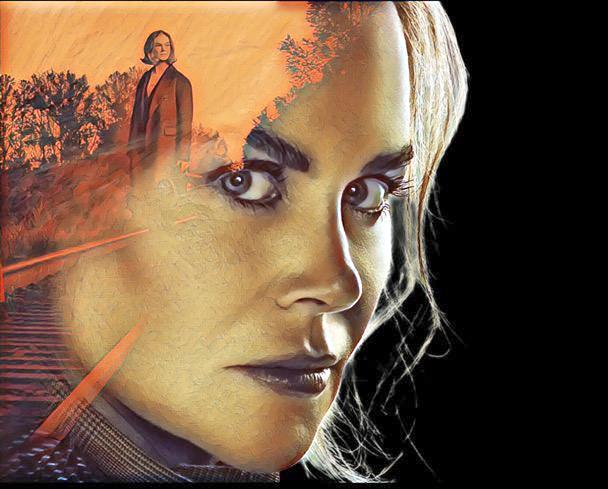
Decades later, television would adopt exactly this perspective. Forensic science became a central element of crime drama, and a new generation of protagonists emerged in laboratories, morgues, and forensic analysis rooms. That is why, when the series Scarpetta, starring Nicole Kidman, finally premieres, it will enter a landscape already populated by several characters who can be seen as narrative “sisters” of Kay Scarpetta.
They are not direct adaptations of Cornwell’s novels. But they all operate from the same fundamental premise: the body tells the story of the crime.
Jordan Cavanaugh and the emotional side of forensic medicine
Among all the characters that emerged in this universe, perhaps the closest to Cornwell’s model is Jordan Cavanaugh, the protagonist of the series Crossing Jordan, which aired from 2001 to 2007.
Played by Jill Hennessy, Jordan is a medical examiner who believes that every victim deserves to have their story reconstructed with precision. The series always begins from the same idea that drives the Scarpetta novels: the answers lie in the body.
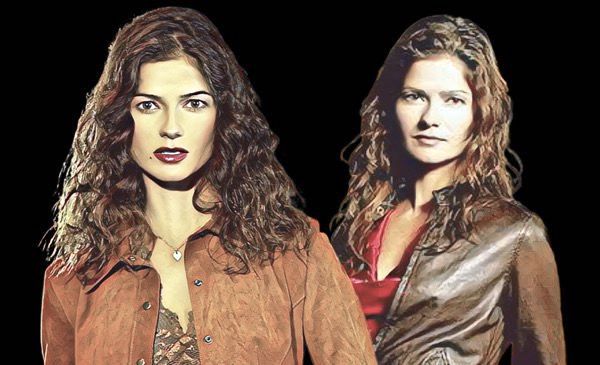
There is, however, a difference in tone. While Kay Scarpetta is a disciplined scientist, almost austere in her approach, Jordan Cavanaugh is impulsive and emotional. She frequently leaves the laboratory to investigate directly in the field, turning forensic medicine into a more active and visibly dramatic television experience.
Temperance Brennan and science as spectacle
Another key figure in this lineage is Temperance Brennan, from the series Bones.
Brennan is a forensic anthropologist who reconstructs crimes from bones and human remains. Inspired by the books of anthropologist Kathy Reichs, the series blended detailed science with humor and team dynamics, transforming the laboratory into a space of television spectacle.
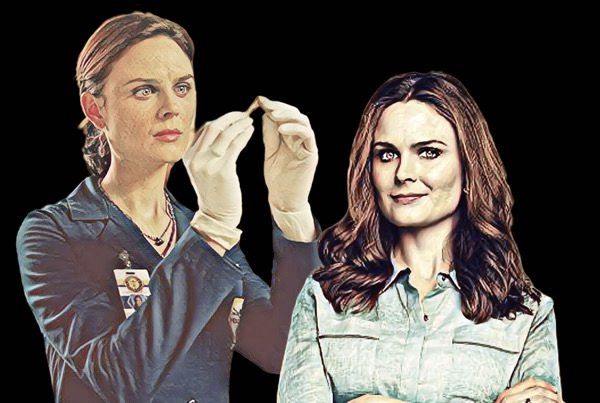
Although the tone is lighter than that of Patricia Cornwell’s stories, the narrative principle remains the same. The truth of the crime is hidden in microscopic fragments that only a specialist can interpret.
Megan Hunt and the personal drama of the medical examiner
The series Body of Proof pushed this tradition even further to the center of the narrative by introducing Dr. Megan Hunt, played by Dana Delany.
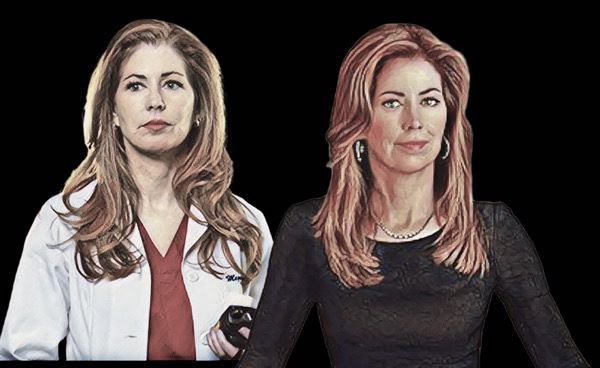
A former neurosurgeon, Hunt becomes a medical examiner after an accident ends her surgical career. The result is a brilliant, obsessive, and emotionally complex protagonist, traits that clearly echo the character model Cornwell had popularized with Scarpetta.
As in the novels, forensic science appears here not only as a technique, but as a kind of moral vocation.
Maura Isles and the logic of science
Another striking example is Dr. Maura Isles, from the series Rizzoli & Isles.
Maura is an extremely rational medical examiner whose scientific approach complements the police work of detective Jane Rizzoli. The series builds much of its dramatic strength from the contrast between the two characters: one guided by the logic of physical evidence, the other by investigative instinct.
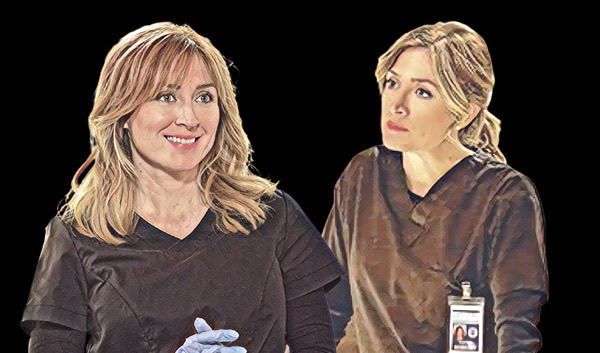
This balance between science and police investigation has become one of the most enduring formulas of the genre.
Abby Sciuto and science as pop culture
Even characters who are not medical examiners in the strict sense belong to this same tradition. Abby Sciuto, from the series NCIS, became one of the most recognizable forensic scientists on television.
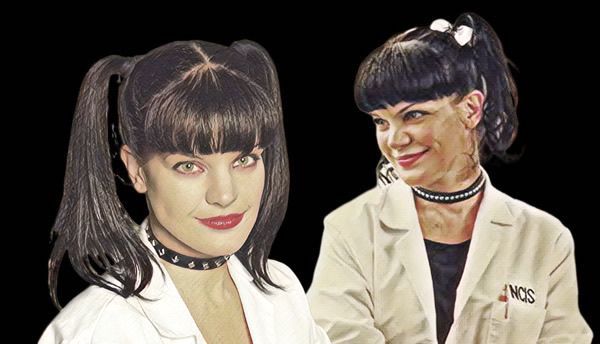
With her gothic style and eccentric personality, Abby turned the laboratory into something almost pop within the crime narrative. Yet her dramatic function still revolves around the same central idea that drives all these characters: interpreting physical evidence to reveal the truth behind a crime.
The arrival of Scarpetta
What is striking is that many of these characters appeared after Kay Scarpetta had already become a global publishing phenomenon. In the 1990s, Patricia Cornwell’s novels sold millions of copies and helped popularize the idea that forensic science could be just as fascinating as traditional detective work.
For that reason, the premiere of Scarpetta, starring Nicole Kidman, carries a certain symbolic weight.

For decades, television built characters who explored a territory opened by literature. Now, at last, the very medical examiner who helped transform the autopsy into a narrative device will arrive on screen.
After years of following her television “sisters,” audiences will finally meet the character who helped make forensic science a central protagonist of modern crime storytelling.
Descubra mais sobre
Assine para receber nossas notícias mais recentes por e-mail.
 miscelana.com
2 comentários Adicione o seu