
Throughout its first season, Scarpetta builds its narrative by moving between two timelines separated by nearly three decades. In the present, we follow medical examiner Kay Scarpetta, played by Nicole Kidman, as she investigates a new series of murders. In parallel, the story returns to the late 1990s, showing the early cases that shaped both her career and her personal history.
These two timelines ultimately converge in the final episode — revealing an important twist: there are actually two killers in the story.
The series draws loosely from elements of Postmortem and Autopsy, both written by Patricia Cornwell, but it builds an original plot that connects crimes separated by almost thirty years.
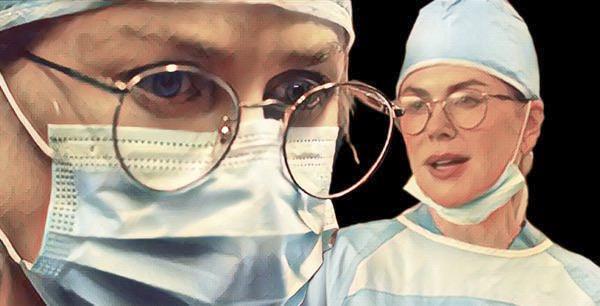
The murders in the past
In the 1998 storyline, five women are murdered. The case that launches the investigation is the killing of ER surgeon Lori Petersen, followed by the murders of Cecile Tyler, Brenda Steppe, and Patty Lewis. The series also introduces a victim with direct ties to another character: Hannah Turnbull, the sister of journalist Abby Turnbull.
Scarpetta, working alongside homicide detective Pete Marino and FBI profiler Benton Wesley, eventually discovers that the killer is Roy McCorkle, a local 911 dispatcher who chose his victims based on their voices.
The revelation closes the case in the past — but its consequences continue to shape the characters decades later.
The murders in the present
In the present-day storyline, two women are murdered.
The first is Gwen Hainey, a biomedical engineer at Thor Labs who was involved in advanced biotechnology research and suspected of selling U.S. biotech secrets to Russia.
The second victim is runner Cammie Ramada, whose death is initially ruled an accident, although the investigation quickly suggests otherwise.
The link between the two victims leads to Thor Labs, a company developing technology to 3D-print human organs. Both women had received biosynthetic skin grafts produced by the company.
This technological connection becomes a key clue in Scarpetta’s investigation.

The killer in 2026
In the finale, the identity of the present-day killer is revealed.
The murderer is Officer August Ryan, a police officer who has appeared throughout the series and who has been present in Scarpetta’s orbit since the 1990s investigation.
Ryan is not simply a murderer — he is a copycat. His crimes echo the violence of the earlier murders.
His obsession begins in childhood when he witnesses his uncle committing a sexual assault. That night, the uncle distracts him by placing a penny on a train track. The boy tries to retrieve it and burns his arm on the hot metal.
That moment becomes a ritual he repeats decades later. Pennies appear at the murder scenes — and even on Scarpetta’s dining table — functioning as a symbolic signature.
Another key detail is that Ryan was part of a medical test group connected to Thor Labs, where he received a skin graft after the childhood accident. That is likely where he encountered his future victims.
The final confrontation
In the season’s climax, Ryan breaks into Scarpetta’s home and confesses to the murders.
His motive is disturbingly simple. He claims he committed the crimes to impress “just the right gal.” That person, he says, is Scarpetta herself.
The confrontation that follows is brutal. Ryan tries to strangle her, she fights back, throws him down the stairs, and ultimately kills him with a baseball bat.
The scene ends with Scarpetta crushing his skull while he lies on the floor.

Maggie, Reddy, and a buried secret
Another major storyline involves Maggie Cutbush and Dr. Elvin Reddy, a long-time professional rival of Scarpetta.
In the 1990s, Scarpetta wrongly accused Maggie of hacking her computer during the Peterson case investigation. The real culprit was Reddy, who had tampered with evidence in an attempt to undermine her career.
Years later, Reddy has become the state’s health commissioner — effectively Scarpetta’s superior — while Maggie reappears as a liaison between them.
But there is an even more sensitive secret connecting them.
When Roy McCorkle died in the 1990s, Scarpetta killed him in self-defense. Marino covered it up, and Scarpetta falsified parts of the autopsy findings to protect herself.
In the present, Maggie suggests she has evidence against Reddy and offers Scarpetta a deal: help bring him down, and Maggie will keep Scarpetta’s past buried.
Scarpetta and Benton
The finale also leaves the status of Scarpetta’s relationship with Benton Wesley, played by Simon Baker, unresolved.
The series strongly implies that Benton has been having an affair, although it never clarifies when the relationship began. One of his cryptic remarks — that he enjoys observing pain in others — is also left unexplained.
Janet’s suspicion about Marino
Another conflict arises when Janet raises doubts about the relationship between Scarpetta and Pete Marino.
According to her, Marino may be secretly in love with Scarpetta and could have manipulated events that led to Benton leaving her life.
In the novels by Patricia Cornwell, this possibility remains largely subtextual. Marino clearly admires Scarpetta deeply, but their relationship never develops into a romantic one.
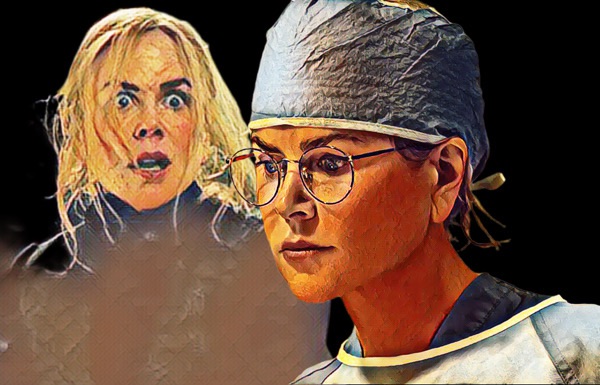
Who witnessed the final scene?
The final scene introduces the biggest mystery of the season.
Just after killing Ryan in self-defense, Scarpetta realizes that someone has entered the house and witnessed everything.
The series cuts before revealing who it is.
It could be Maggie. It could be Lucy. But another possibility makes narrative sense: Pete Marino.
If Marino is the one who arrives, it would reinforce the long-standing loyalty between the two characters. He could help present the incident as self-defense while quietly concealing the true extent of the violence.
The killer is dead. The case appears closed.
But the final shot makes it clear that Scarpetta’s story is far from over.
Descubra mais sobre
Assine para receber nossas notícias mais recentes por e-mail.
 miscelana.com