
Although over the past fifty years, Meryl Streep has become the great reference point for talent and artistic prestige in Hollywood, in a culture increasingly fascinated by numbers, rankings, and statistics, there is a legend she has not yet surpassed: Katharine Hepburn.
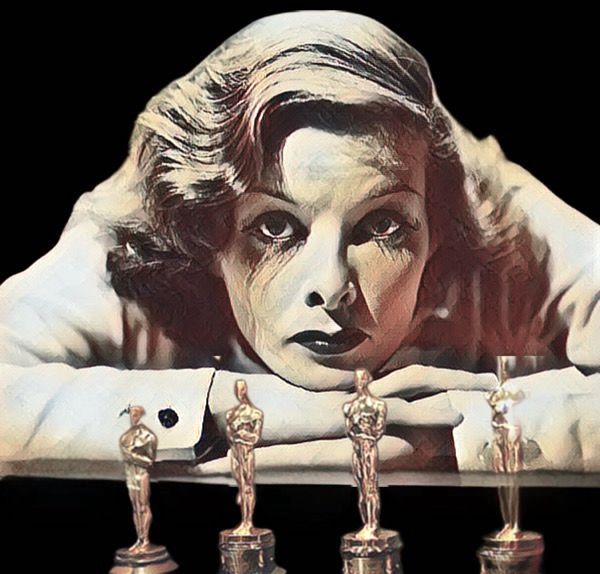
Hepburn remains the most awarded actress in the history of the Academy Awards. She won four Best Actress statuettes, a record that stretches across nearly a century of cinema and that no other performer has been able to match. More than that, she also remains one of Hollywood’s great enigmas, a figure who may never be fully deciphered. In an industry built on applause, campaigns, and celebration, few artists were as radically independent as she was.
That independence appears almost ironic when one looks at the very record that made her legendary.

I’ll say it again: Katharine Hepburn won four Oscars. And never showed up to receive a single one of them.
Over the course of a career that spanned five decades, Hepburn was nominated for the Oscar twelve times, a number that by itself reveals the scale of her presence in Hollywood. Even so, among the giants of acting, no one has surpassed her four wins. The actor who came closest was Jack Nicholson, with three statuettes, a number shared by performers such as Daniel Day-Lewis, Frances McDormand, Ingrid Bergman, and Streep herself. Yet no one reached four.
At the top of that list, however, Hepburn still stands alone.
The actress whom Hollywood would ultimately consecrate as one of its greatest legends always kept a nearly philosophical distance from the industry and its rituals. For her, the work came first. Public celebration, emotional speeches,s and the glamour of awards ceremonies were merely background noise.
This attitude was not a calculated gesture.
It was simply who she was.
A childhood that shaped a woman outside the rules
Katharine Houghton Hepburn was born in 1907 in Hartford, Connecticut, into a family that was already unconventional for its time.
Her father was a physician who advocated sexual education and public health. Her mother was a suffragist activist who fought for women’s right to vote. At home, the daughters were raised with the same freedom and rigor as the sons, something extremely rare in the early twentieth century.
That upbringing produced a woman who grew up believing that independence was not rebellion but a natural right.
Life, however, brought tragedy early. When Hepburn was thirteen, her older brother, to whom she was deeply attached, died in a traumatic accident. The shock marked her forever and helped shape a trait that would become central to her personality: an almost stubborn emotional resilience.
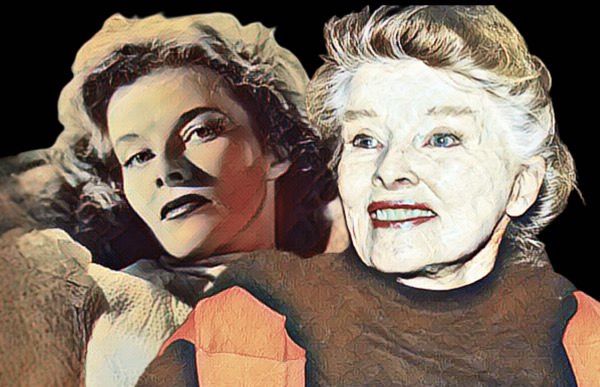
The audacity of being herself
When she arrived in Hollywood in the early 1930s, Hepburn was already considered different.
Not only because of the way she spoke or her cutting intelligence, but also because of the way she presented herself to the world.
She wore trousers, something still considered scandalous for women in public. In several studios, stories circulated of executives hiding her clothes to force her into skirts. Hepburn simply waited until her trousers were returned.
She also never hid her personal life.
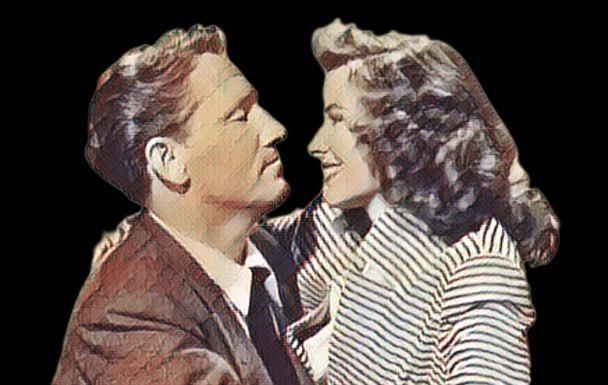
For decades, she maintained a relationship with actor Spencer Tracy, one of the most famous love stories in Hollywood history. Tracy was married and never divorced, and Hepburn lived that relationship discreetly but without denying its existence.
At a time obsessed with public morality and tight control over the image of stars, such a stance was almost revolutionary.
How she became Hollywood’s greatest actress
Hepburn’s career had something rare in Hollywood: it was not linear.
She arrived in films with force and won her first Oscar early for Morning Glory. But only a few years later, she was labeled “box office poison,” a phrase used by the press to suggest certain stars had lost their commercial value.
Instead of disappearing, Hepburn did something unthinkable.
She bought the rights to the stage play that would become The Philadelphia Story and built a film project around herself. The movie was a major success and completely reshaped her career.
In the decades that followed, she became a dominant presence in American cinema, moving between sophisticated comedy, historical drama, and complex character roles.
The four Oscars: were they deserved?
Hepburn won Best Actress four times for Morning Glory, Guess Who’s Coming to Dinner, The Lion in Winter, and On Golden Pond.
The inevitable question among film historians has always been whether those awards truly reflect Hepburn’s greatness.
In part, yes. But not entirely.
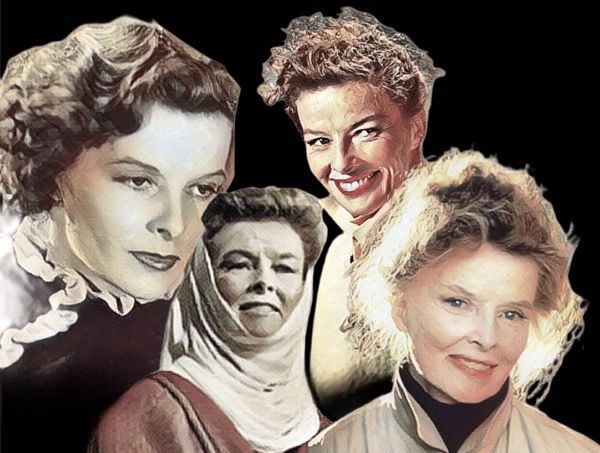
Some of her most influential performances, such as in The Philadelphia Story or Bringing Up Baby, were not rewarded. In other cases, the Oscars seemed to recognize not just a single performance but an entire career.
The last one, for On Golden Pond, clearly carried that sense of farewell.
The actress who never went to the party
Like I said before, despite her nominations and victories, Hepburn never attended the Oscar ceremonies to receive her awards.
She simply stayed home.
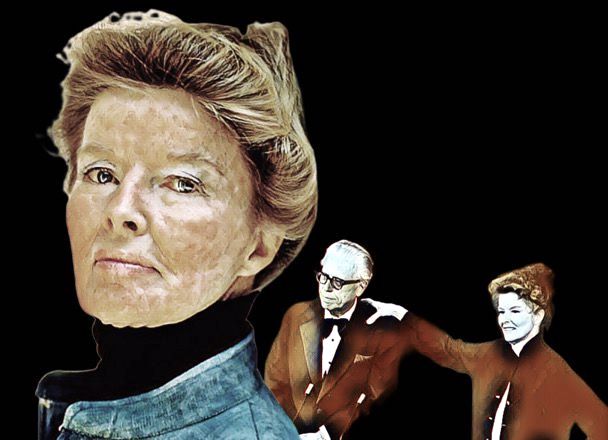
The only time she appeared at the ceremony was in 1974, when she came onstage to present an honorary award to producer Lawrence Weingarten.
Her remark that night perfectly captured her characteristic wit.
“I’m living proof that a person can wait forty-one years to be unselfish.”
It was the first and only time Hepburn ever stood on that stage.
What she really thought about the Oscars
Katharine Hepburn never campaigned, never delivered acceptance speeches, and never behaved like someone who needed the Academy’s validation.
In interviews, she would calmly say that awards were part of the business, but not the reason to make films.
For her, the true test of an actor was whether the work survived time.
When Hepburn died in 2003 at the age of ninety-six, her record was still intact. Decades later, it remains exactly where it was.
Perhaps because, in the end, no one understood Hollywood — and the very idea of stardom — better than she did.
Perhaps because, in the end, Katharine Hepburn never needed to go pick up the Oscar.
The history of cinema simply brought it to her.
Descubra mais sobre
Assine para receber nossas notícias mais recentes por e-mail.
 miscelana.com