
The great success of Scarpetta, with Nicole Kidman leading the cast, has revived memories of the many female medical examiners who populated television over the past decades. Kay Scarpetta, who was something of a pioneer, at least in crime fiction, reached an even broader audience because she was born from a real-life experience of her creator, Patricia Cornwell.
For decades, readers of crime novels have come to associate Scarpetta with a kind of realism that was unusual in the genre. In Cornwell’s books, investigations do not rely merely on intuition or narrative coincidences, but on laboratory tests, medical reports, and the meticulous observation of the human body. This precision did not appear by accident. Before becoming one of the most popular authors in contemporary crime literature, Cornwell spent years working in an environment few writers know so closely: a real medical examiner’s office.
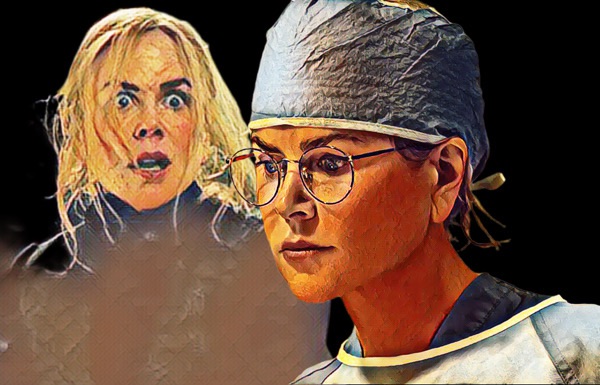
In the early 1980s, Cornwell worked at the Office of the Chief Medical Examiner in Richmond, Virginia, in the United States. There she served as a researcher and technician in a department responsible for investigating suspicious deaths. Her duties included organizing documentation, reviewing reports, and assisting with the archive of autopsies conducted by the institution’s medical examiners. It was in this environment — surrounded by reports, forensic photographs, and highly detailed clinical descriptions — that the writer gained direct access to the everyday reality of forensic medicine.
This daily contact with the reality of death investigations had a profound impact on her writing. While many suspense authors relied on fictional police officers or detectives to drive their stories, Cornwell realized that the true center of many investigations lay in laboratories and morgues. The autopsy, after all, is often the moment when the story of a crime begins to be reconstructed.
From this observation emerged Kay Scarpetta, the medical examiner who would become the protagonist of one of the most influential literary series in the crime genre. Scarpetta first appeared in Postmortem, published in 1990, a novel that quickly attracted attention for its unusual level of technical detail. The procedures described in its pages — from fiber analysis to the interpretation of injuries — reflected real forensic practices, something rarely seen in fiction at the time.
Cornwell’s experience in Richmond also helped shape the character herself. Scarpetta is not merely an investigator; she is a scientist. Her work depends on microscopes, laboratory tests, and the careful interpretation of physical evidence. This approach helped turn the character into a landmark within the genre and contributed to redefining the type of female protagonist present in crime literature.
Over the following decades, the influence of this scientific approach spread beyond books. When television series began to explore investigations based on forensic evidence, many followed a path that Cornwell had helped popularize years earlier. One of the clearest examples is CSI: Crime Scene Investigation, whose narrative structure revolves precisely around the scientific analysis of crime scenes.
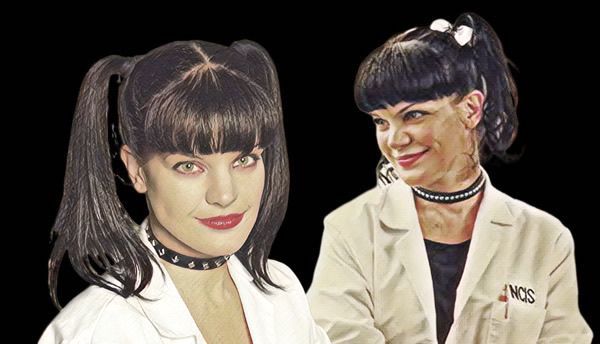
Television, of course, amplified and dramatized these procedures, transforming complex examinations into visually spectacular moments. Still, the central idea — that science can reconstruct the story of a crime — was already present in Cornwell’s books long before it became a television format.
Decades after her creation, Kay Scarpetta remains one of the most enduring characters in contemporary crime fiction. And part of the reason lies precisely in this unusual origin. Unlike many fictional detectives who emerged solely from their authors’ imagination, Scarpetta was shaped by a real environment, where every autopsy report tells a story and every detail may reveal the truth about a death.
It was inside a morgue, therefore, that one of the most remarkable characters in crime literature began to take shape. And perhaps it is precisely this closeness to reality that explains why, more than thirty years later, Kay Scarpetta’s investigations still feel so convincing to readers — and now also to viewers.
Descubra mais sobre
Assine para receber nossas notícias mais recentes por e-mail.
 miscelana.com