
Tonight is Oscar Night 2026. If the atmosphere feels a little like the World Cup — again — you are not imagining it. And it was not always like this.
From a discreet dinner to the cinema’s annual ritual
Today, it seems impossible to imagine the cultural calendar without the Oscars ceremony. For a few hours, a film award show dominates the global conversation, mobilizes fans, sparks heated debates on social media and generates headlines that cross time zones. Yet this centrality did not exist from the beginning. The Academy of Motion Picture Arts and Sciences created the award in 1929 as a small, almost intimate event, conceived more as a corporate celebration of the industry than as a public spectacle.
The first ceremony took place in 1929 at the Hollywood Roosevelt Hotel in Los Angeles before about 270 guests. There was no suspense, because the winners were already known. The evening lasted little more than fifteen minutes. At that moment, the Oscars were not the culmination of a film season nor a cultural obsession. They were simply an elegant dinner bringing together producers, actors, and directors to celebrate the growth of the American film industry.
Over the following decades, the prize gradually gained importance within Hollywood, but it was still far from being a global event. The decisive transformation would come only in the 1950s, when a new technology changed the relationship between the public, celebrities, and major cultural events.


Television turns the Oscars into a spectacle.
The turning point came in 1953, when the ceremony was broadcast on television in the United States. From that moment on, the Oscars ceased to be a private Hollywood celebration and became a national spectacle. For the first time, millions of viewers could follow the speeches, surprises, and emotional moments live.
Television introduced a crucial element to the narrative of the awards: suspense. Unlike the early years, when winners were announced before the ceremony, the live broadcast created its own dramaturgy. The Oscars began to be built as a major annual show, with rhythm, anticipation, and dramatic tension.
In the decades that followed, the expansion of international broadcasts consolidated the awards’ global dimension. As Hollywood became the symbolic center of the world film industry, the Oscars assumed the role of its most prestigious showcase. The ceremony did not merely honor films; it defined cultural narratives, consolidated careers, and turned actors into myths.
The Oscars at the height of television
Between the 1970s and the late 1990s, the Oscars experienced what many consider their cultural peak. The ceremony was one of the most-watched programs on American television and dominated international media coverage. It was the era when celebrity culture solidified, blockbuster films reached enormous audiences, and the red carpet became a spectacle in its own right.
Some numbers help illustrate this scale. In 1973, for example, the broadcast reached about 85 million viewers in the United States, one of the largest audiences ever recorded. Decades later, in 1998, when Titanic dominated the season and won eleven statuettes, the Oscars drew about 57 million American viewers, the modern ratings record for the ceremony.
This period marked the moment when the Oscars truly became the most important annual event in the film industry. The combination of hugely popular films, global stars,s and massive television coverage created a kind of collective ritual that crossed borders and generations.

When television audiences began to disappear
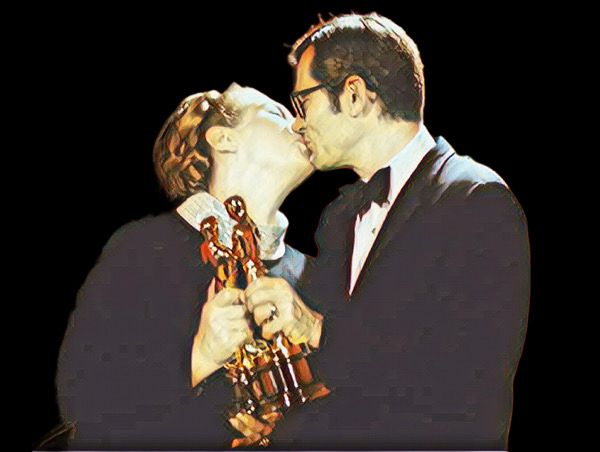
Beginning in the 2010s, a recurring narrative began to emerge: that audiences had lost interest in the ceremony. Television ratings did indeed decline. In 2018, for the first time, the American audience fell below 30 million viewers. The lowest point came in 2021, when the ceremony drew about 10.5 million viewers in the United States, the smallest audience in its history.
These numbers fueled a debate about the relevance of the Oscars in the twenty-first century. Yet the explanation is more complex than simple public disinterest. The decline reflects a structural transformation in media consumption. Live television has lost ground to streaming, on-demand clips, and content circulating through social media.
Even massive events such as the Super Bowl and major music awards have experienced similar shifts. Linear television audiences have declined, but the cultural circulation of these events has remained enormous.
The Oscars in the age of social media
It is precisely in this context that social media has played a crucial role in sustaining and even revitalizing the cultural presence of the Oscars. Although fewer people watch the ceremony from beginning to end on traditional television, millions follow the event in real time through digital platforms.
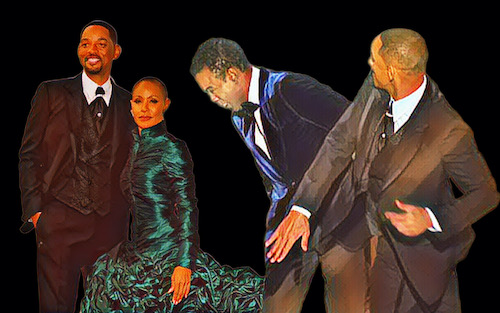
Speeches are shared instantly, memes spread within minutes, and unexpected moments become global phenomena. The episode in which Will Smith slapped Chris Rock in 2022 dominated the internet worldwide for days. The debate about diversity, summarized by the hashtag #OscarsSoWhite, also emerged online and forced the Academy to rethink its inclusion policies.
The dynamics of the ceremony itself have adapted to this new environment. Today, the Oscars function simultaneously as a television broadcast, a digital event, and a pop culture spectacle. The conversation does not end when the ceremony is over. It continues through short videos, reactions, analyses, and memes that keep the event alive for days.
Paradoxically, the Oscars remain the most influential award in cinema precisely because they have managed to cross the transition between two media systems. Television created the spectacle. The internet has kept it alive.
Brazil at the Oscars: when the ceremony became a national rooting moment
The transformation of the Oscars into a global cultural event can also be observed in how different countries follow the ceremony. In Brazil, for decades, the awards were seen mainly as a distant Hollywood spectacle. There was curiosity and admiration for the stars and nominated films, but rarely the feeling of direct participation in that narrative.
That relationship began to change in the 1990s, when Brazilian cinema started appearing more frequently in the race for what was then called Best Foreign Language Film. The nomination of O Quatrilho, directed by Fábio Barreto, in 1996 marked an important turning point.
A few years later, the impact would be even greater with Central Station, directed by Walter Salles Jr. In 1999, the film was nominated for Best Foreign Language Film and placed Fernanda Montenegro among the nominees for Best Actress. For weeks, the Brazilian press and public followed her campaign with an intensity usually reserved for sporting finals.

The emotional connection between Brazil and the Oscars deepened even further with City of God, directed by Fernando Meirelles. In 2004, the film received four nominations, including directing, adapted screenplay, cinematography, and editing. Although it did not win any statuettes, its presence in major categories reinforced the perception that Brazilian cinema could compete among the world’s most prestigious productions.
But the story did not end there. In 2025, the emotional bond between Brazilian audiences and the Oscars gained new intensity with I’m Still Here. In addition to earning Fernanda Torres a nomination for Best Actress, the film secured Brazil’s victory for Best International Feature Film.
And 2026 consolidated this shift on an even larger scale. The Secret Agent, directed by Kleber Mendonça Filho, arrived at the Oscars nominated for Best Picture, Best International Feature Film, and Best Casting in the new casting category, while Wagner Moura received a historic nomination for Best Actor. In the same year, Adolpho Veloso was nominated for Cinematography for Train Dreams.
From that moment on, the Oscars began to be followed differently in Brazil. Whenever a Brazilian artist or film appears among the nominees, the ceremony takes on the atmosphere of a collective rooting moment.
The Oscars on Brazilian television
In Brazil, the history of the Oscar broadcast also follows the evolution of television and the audiovisual market itself. For decades, the ceremony was shown on free-to-air television, mainly by TV Globo, which aired the event with specialized commentary and considerable anticipation among film fans.
The relationship between the Oscars and Brazilian television, however, changed over time. In certain moments during the 1980s and early 1990s, the ceremony left Globo’s schedule and was broadcast by SBT, reflecting the competition between open-air networks for major international events.
Regardless of the network, the broadcast helped establish a curious national tradition: watching the ceremony overnight.
From the 2000s onward, with the expansion of pay television in Brazil, the Oscars gradually moved toward specialized film channels. TNT took over the broadcast in Latin America.
Today, the Oscars continue to be shown in Brazil mainly on TNT, with simultaneous streaming on HBO Max.

The next leap: the Oscars in the YouTube era
The history of the Oscars has always been deeply tied to transformations in media. The ceremony began as a private dinner within the film industry, became a global spectacle thanks to television, and is now preparing for another structural change. The next major leap has already been scheduled for the end of the decade.
The Academy announced that starting in 2029, the Oscars ceremony will be broadcast globally on YouTube. The decision represents a historic shift for an event that has been tied to American television for more than seven decades. Since 1953, when the ceremony was first televised, the Oscars have built their reputation as one of the great annual spectacles of popular culture. For much of that time, the broadcast in the United States was handled by the ABC network, which has aired the ceremony since 1976.
Choosing YouTube reveals how the Academy itself recognizes the transformation of the media ecosystem. Television ratings may have declined in recent years, but the cultural reach of the Oscars remains enormous when digital consumption is considered. Speeches, performances, and unexpected moments from the ceremony circulate immediately on social media, often reaching millions of views within hours.
By migrating to a global video platform, the Academy attempts to align the official broadcast with the way audiences already consume the event. Instead of depending exclusively on live television audiences, the Oscars position themselves within a digital environment capable of reaching viewers across time zones, devices, and viewing habits.
In a sense, this change closes a cycle that began in the 1950s. Just as television transformed a small industrial ceremony into a global spectacle, the internet and digital platforms may once again redefine the scale of the awards. The Oscars, which were born in a hotel ballroom before a few hundred guests, are now preparing to exist fully on a potentially global stage.

The future of cinema’s most important award
The history of the Oscars shows how an event can reinvent itself over nearly a century. The prize began as a discreet industry gathering in a Hollywood hotel ballroom, became one of the greatest television spectacles of the twentieth century, and is now evolving into a fully digital phenomenon.
Despite fluctuations in ratings in recent years, the ceremony continues to occupy a singular place in the cultural imagination. No other film award carries the same symbolic weight, the same ability to redefine careers, or the same power to concentrate, even if only for a few hours, the attention of the industry and audiences around a single stage.
In the twenty-first century, the Oscars no longer depend solely on television. They live as well in the circulation of images, commentary, and debates that travel across the internet in real time. Speeches are shared instantly, unexpected moments become global phenomena, and every detail of the ceremony is reinterpreted by millions of viewers around the world.
If in the past the event was defined by the audience of a single channel, today its true scale lies in the multiplication of screens that comment on, reinterpret, and prolong every moment of the ceremony. The Oscars began as a dinner for a few hundred guests. Nearly a century later, they have become a global cultural ritual that continues to reinvent itself with each new media era.
And in places such as Brazil, whenever a national film or artist enters the race for the statuette, that ritual gains an extra layer of collective emotion. For a few hours, the ceremony stops being only an American industry award and becomes something many viewers now experience as the cultural World Cup of cinema.
Descubra mais sobre
Assine para receber nossas notícias mais recentes por e-mail.
 miscelana.com