
Over the years, few Oscar winners have undergone such a harsh historical reassessment as Shakespeare in Love. What in 1998 seemed like the charming victory of a witty, theatre-loving film has gradually turned, in the eyes of a younger generation of moviegoers, into almost a symbol of everything wrong with the Academy Awards. For many viewers who did not live through the moment, Shakespeare in Love has become a cultural meme, often cited as the supposed example of “the worst film ever to win Best Picture.”
That late reputation has several explanations, but none of them really have to do with the film itself.
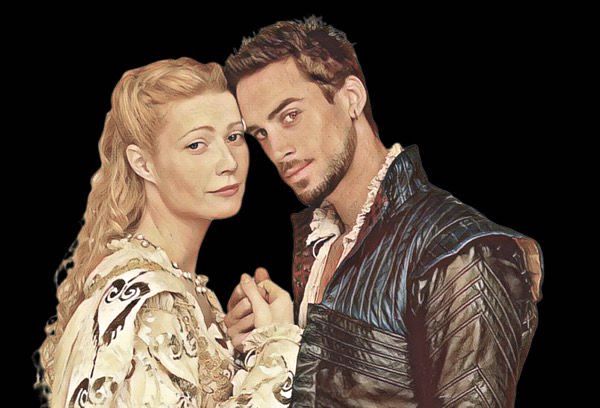
First, there is the unavoidable shadow of Harvey Weinstein, whose aggressive awards campaign helped turn Shakespeare in Love into the unexpected winner of the 1999 Academy Awards. Then there is Gwyneth Paltrow’s controversial Best Actress victory over formidable contenders such as Fernanda Montenegro and Cate Blanchett. And finally, there is the broader shift in how the 1990s are remembered, a decade that today is often revisited with a more cynical understanding of Hollywood’s internal politics.
The result is that Shakespeare in Love has become less a film and more a symbol. A symbol of Weinstein’s rise. A symbol of ruthless Oscar campaigning. A symbol of a victory considered undeserved over Saving Private Ryan. All of this is true to some extent. But none of it explains why the film still works.
The premise of Shakespeare in Love remains delightfully simple. In late sixteenth-century London, a young William Shakespeare suffers from writer’s block while trying to write a new play for the theatre. The project is titled Romeo and Ethel, the Pirate’s Daughter, a name that already signals the film’s playful tone. Everything changes when he meets Viola de Lesseps, a young aristocratic woman obsessed with theatre who disguises herself as a man to perform on stage, where women are forbidden to act. The romance between them becomes the inspiration for what will eventually become Romeo and Juliet.
The idea is both absurd and perfect. Turning the creation of one of the greatest tragedies in literature into a romantic comedy could easily have been a disaster. Yet the screenplay, written by Marc Norman and refined by the recently deceased playwright Tom Stoppard, one of the most respected figures in modern British theatre, finds exactly the right tone between literary homage, metatheatre, and sophisticated humor.
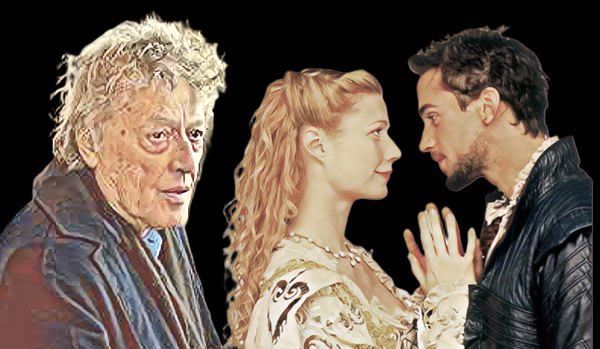
Much of the film’s charm lies in the way it plays with the world of Elizabethan theatre. Shakespeare borrows phrases from everyday conversations that will later appear in his plays. Historical figures appear in lightly exaggerated versions. And the narrative itself functions like a play within a play, constantly blurring the boundaries between life, theatre, and artistic invention.
Ironically, the film itself rarely happened.
The project began circulating in Hollywood in the 1980s and spent years struggling to find financing. At one point, Julia Roberts was attached to play Viola and reportedly insisted that Daniel Day-Lewis play Shakespeare. When the actor declined, the project collapsed and returned to development limbo.
It was only years later, once Miramax became involved, that Shakespeare in Love finally moved forward. The role of Shakespeare ultimately went to Joseph Fiennes, then largely unknown, whose theatrical background and romantic intensity fit perfectly with the idea of a young, impulsive, and passionate playwright. Opposite him, Gwyneth Paltrow played Viola in a performance that at the time was widely seen as delicate and charming, even if today it is remembered mostly for the Oscar it won.
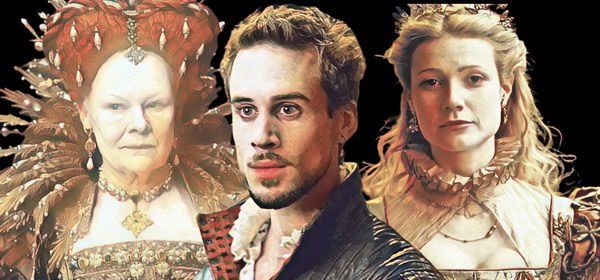
The supporting cast helped make the film even more delightful. Geoffrey Rush played theatre manager Philip Henslowe with a blend of desperation and comic timing that became one of the film’s engines. Colin Firth appeared as the arrogant aristocrat Lord Wessex. And Judi Dench delivered a tiny but unforgettable turn as Queen Elizabeth, a performance lasting only a few minutes but enough to earn her an Academy Award.
When it premiered at the end of 1998, Shakespeare in Love was embraced by critics and audiences alike. The film grossed more than 280 million dollars worldwide, an extraordinary result for a romantic period comedy centered on theatre and literature. Its witty screenplay, lively rhythm, and unabashed romanticism appealed to a far larger audience than anyone initially expected.
It was at this moment that Harvey Weinstein’s Oscar campaign began in earnest. Miramax’s strategy was intense, aggressive, and extraordinarily effective. While Steven Spielberg’s Saving Private Ryan appeared destined to dominate the awards season, Shakespeare in Love was promoted as the film that celebrated the love of cinema, writing, and theatre. The result was one of the most famous upsets in Oscar history.
At the 1999 ceremony, Shakespeare in Love won seven Academy Awards, including Best Picture.
Gwyneth Paltrow’s Best Actress win immediately became the most controversial moment of the night. The category included extraordinary performances. Cate Blanchett had stunned audiences with her commanding portrayal of the young Queen Elizabeth. Fernanda Montenegro had delivered one of the most moving performances of the decade in Central Station. Over time, a near consensus formed that Blanchett should probably have won.
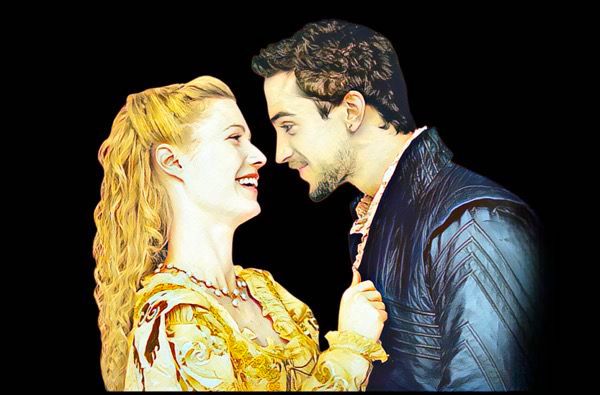
There has also long been a Hollywood story that the role of Viola was originally associated with Winona Ryder, fueling a rivalry between the two actresses that became part of Hollywood folklore. Whether fully accurate or not, the story reinforced the perception that Paltrow’s victory reflected the power of Miramax’s campaign more than an uncontested artistic triumph.
Years later, when the revelations about Harvey Weinstein exposed the system of abuse that underpinned much of his power in Hollywood, the entire Miramax era was reexamined. Shakespeare in Love was inevitably pulled into that moral reassessment. The film began to stand as a symbol of a corrupted awards system. A generation that had not experienced the cultural excitement of its release started to treat it as a historical mistake.
Yet watching the film today produces a curious feeling. Shakespeare in Love remains exactly what it always was: a smart romantic comedy full of sparkling dialogue and deeply in love with the theatre. Tom Stoppard’s script remains brilliant. The narrative structure is still elegant. And the film still possesses something Hollywood increasingly struggles to produce, which is an adult romance treated with literary intelligence and humor.
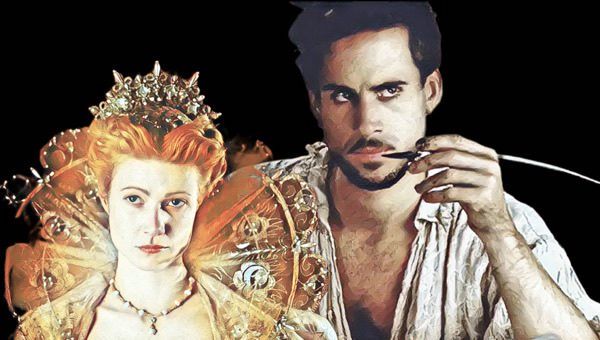
No, Shakespeare in Love was not better than Saving Private Ryan. That argument remains difficult to sustain. But the alternative does not have to be turning it into a cultural catastrophe.
Between the exaggerated triumph of 1999 and the reflexive disdain of today lies a more reasonable position. Shakespeare in Love is not one of the greatest Best Picture winners in Oscar history. But it is still a good film. And perhaps more importantly, one of the very few sophisticated romantic comedies that Hollywood managed to turn into a global cultural phenomenon.
Descubra mais sobre
Assine para receber nossas notícias mais recentes por e-mail.
 miscelana.com