
After building one of television’s most influential universes of the past decade with Yellowstone, Taylor Sheridan seemed to have firmly defined his narrative territory. His stories often revolve around ranches, family dynasties, battles over land, and characters who live by the rigid moral codes of the American West.
With The Madison, however, Sheridan appears to be attempting something slightly different. In the first three episodes of the new Paramount+ production, the creator replaces some of the violence and political intrigue that defined Yellowstone with a more intimate drama structured around three intersecting themes: grief, criticism of contemporary urban life, and the tensions between generations.
The story begins with a ritual that seems almost deceptively simple. Preston and Paul Clyburn, brothers played by Kurt Russell and Matthew Fox, meet in Montana to fish together in the Madison River valley. The opening sequence establishes the contemplative tone of the series. Between jokes, brotherly teasing, and philosophical reflections about nature and memory, the two men embody a kind of almost archaic masculinity, deeply tied to land and tradition.
That routine is shattered when the small plane carrying them back to the ranch is caught in a violent storm and crashes into a mountain. Their deaths become the central rupture of the narrative. From that moment on, The Madison turns its attention to the consequences of the tragedy for the rest of the family.

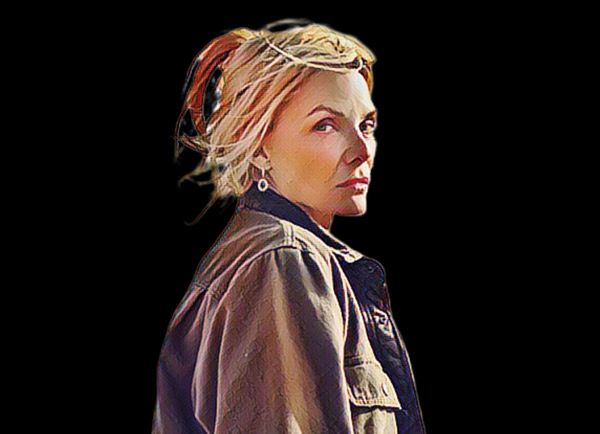
At the center of this story stands the series’ true protagonist. Michelle Pfeiffer plays Stacy Clyburn, Preston’s widow, a woman who spent forty years living comfortably in New York City and must now confront the sudden loss of her husband. Her decision to move to the family ranch in Montana becomes an attempt to reorganize her life while navigating the rawness of grief.
Across these first episodes, Sheridan builds the narrative around that emotional process. Stacy arrives in Montana as someone completely out of place in that environment. The ranch, the rhythms of rural life, and the customs of the West contrast sharply with the urban world she has always known.
This opposition between city and countryside quickly becomes one of the series’ defining themes. New York is portrayed as frenetic, dangerous, and superficial, a place where even a walk down Fifth Avenue can turn threatening. Montana, by contrast, emerges almost as a moral refuge, a landscape where silence, nature, and routine offer a possible path toward healing.
That perspective echoes the worldview Sheridan previously explored in Yellowstone. The difference is that here the conflict is less about territory and power and more about emotional survival after devastating loss.
The third element shaping these early episodes is generational conflict. Stacy’s daughters and granddaughters represent a younger, hyperconnected generation shaped by urban life and digital culture. Their discomfort in Montana highlights a widening gap between modern sensibilities and the more traditional values associated with the rural West.
The series explores this tension through both drama and dark humor. Stacy oscillates between nostalgia for the life she shared with her husband and frustration with what she perceives as the excesses of younger generations, while her granddaughters struggle to adapt to a world that feels entirely foreign to them.
Visually, The Madison maintains several of Sheridan’s signature elements. The cinematography repeatedly returns to sweeping landscapes of Montana, turning rivers, mountains, and open fields into silent characters within the story. Nature becomes both backdrop and emotional counterweight to the chaos of the city the family has left behind.
Yet the true emotional center of the series remains Michelle Pfeiffer. With a restrained and elegant performance, she anchors the drama even when the script occasionally leans on sentimental aphorisms about life, nature, and family. Stacy Clyburn is at once a woman devastated by loss and someone slowly attempting to rebuild a sense of self.
In its opening episodes, The Madison reveals itself as a layered drama combining grief, criticism of urban life, and generational tension. Whether Sheridan can balance these themes throughout the season remains to be seen. But one thing is already clear: in this story, the American West is no longer only a territory of conflict. It is also a landscape of memory, mourning, and the possibility of renewal.
The series also carries a tribute to Robert Redford, whose influence on modern portrayals of the American West is impossible to ignore. The premiere nods directly to A River Runs Through It, the beloved film about two brothers whose lives revolve around fly-fishing in Montana. In The Madison, the Clyburn family even gathers to watch the movie, and the premiere ends with a dedication to Redford, who died in 2025. The homage feels fitting: long before Sheridan’s neo-westerns dominated television, Redford had already framed Montana’s rivers, landscapes, and quiet male rituals as a place where grief, family, and memory flow together. In many ways, The Madison plays like a spiritual echo of that tradition.
Descubra mais sobre
Assine para receber nossas notícias mais recentes por e-mail.
 miscelana.com