
For more than a decade, Tommy Shelby has become one of the most recognizable figures in contemporary television. The dark overcoat, the razor-sharp flat cap, the still gaze of someone who always seems to be calculating the next move. Since Peaky Blinders first aired in 2013, the Birmingham gangster has occupied a curious place in the cultural imagination. He is remembered at once as a tragic anti-hero, a brilliant strategist, a family patriarch and, for many viewers, almost a romantic hero.
The arrival of Peaky Blinders: The Immortal Man on Netflix brings back a question that has always been present in the series, even when audiences preferred to ignore it. Tommy Shelby was never exactly a good man. And perhaps he was never truly a man acting for the sake of his family.
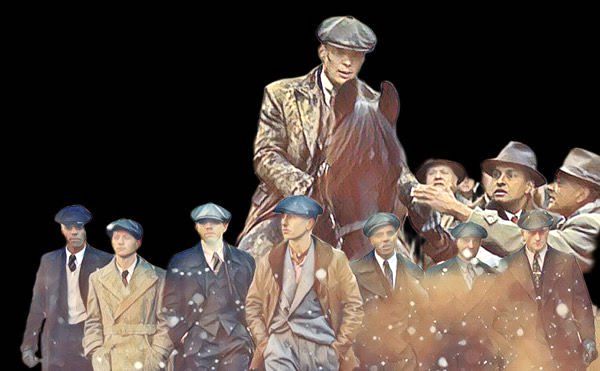
Throughout the six seasons of the show, Tommy repeatedly insisted that everything he did was meant to protect the Shelbys. The phrase became part of the character’s mythology. Yet the story that unfolds on screen is far more ambiguous. Tommy builds a criminal empire, manipulates allies and enemies with the same cold precision, exposes his brothers and relatives to constant danger and makes decisions that frequently end in tragedy for the very people he claims to protect.
None of this diminishes the fascination of the character. On the contrary. Much of Tommy Shelby’s power comes precisely from that mixture of intelligence, trauma and brutality. He is a survivor of the First World War who never truly left it behind. The war shaped the way he sees the world, turning strategy, violence and paranoia into tools of survival. For Tommy, Birmingham never stopped being another battlefield.
This is where the new film appears to deepen the character’s story. In recent interviews, Cillian Murphy spoke about one of the film’s central ideas: generational trauma. He says he believes such trauma can be stopped, but also admits that Tommy may not be capable of doing so. The reason is simple and devastating. Tommy abandons his son.
This idea helps explain the presence of Duke Shelby in the new story. In the film, Duke is already leading the Peaky Blinders while his father lives in isolation, writing his memoirs and trying to distance himself from the life he built. Duke emerges as the successor to the criminal empire, the man who occupies the space Tommy leaves behind.
Yet there is a problem in presenting Duke as the direct heir to Tommy’s trauma. In the series itself, the two barely share any time together. Duke only appears in the sixth season and his relationship with Tommy never truly develops. He did not grow up alongside his father, did not witness the decisions that shaped the Shelby family and was never part of the dynamics that defined the clan throughout the series.

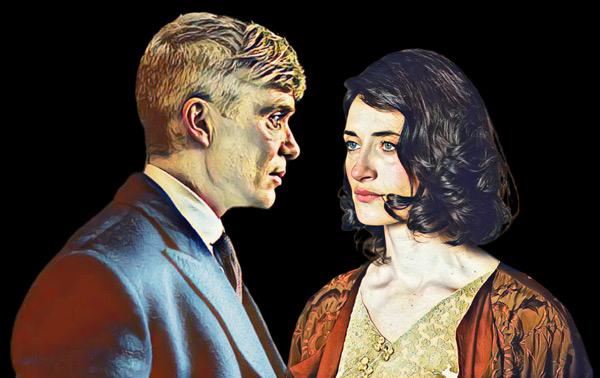
If there is a true emotional heir to Tommy Shelby’s story, that role belongs elsewhere. It belongs to Charles Shelby, the son he had with Grace Shelby, the great love of his life. And it is precisely this son who moves away from him by the end of the narrative.
At the close of the sixth season, Charles leaves Birmingham with Lizzie Shelby, who decides to abandon the Shelby world altogether. Tommy remains behind, trapped in the life he built and unable to follow his son. The detail is revealing because it exposes a central contradiction in the character. The man who always claimed to act in the name of family ends the story separated from the very child who represented his deepest connection to the past.
That contradiction becomes even clearer in the way Tommy directs his emotional energy in the final season. The emotional center of the story is not Charles, but Ruby Shelby, Lizzie’s daughter. Ruby’s death becomes an obsession for Tommy and sends him spiraling into guilt, superstition and grief. It is as if he projected onto her a form of innocence or redemption he could never find within himself.
While Tommy consumes himself with the loss of Ruby, Charles quietly disappears from the story. The son who could have represented the continuation of the life Tommy once imagined with Grace is the very one he ultimately loses.
Seen from this perspective, Duke’s centrality in the film raises an interesting question. Is he truly the dramatic heir to Tommy Shelby’s story, or merely the functional successor to the Peaky Blinders empire? Those are not the same thing. Duke may inherit the organization, but the emotional legacy of Tommy’s life may lie elsewhere.
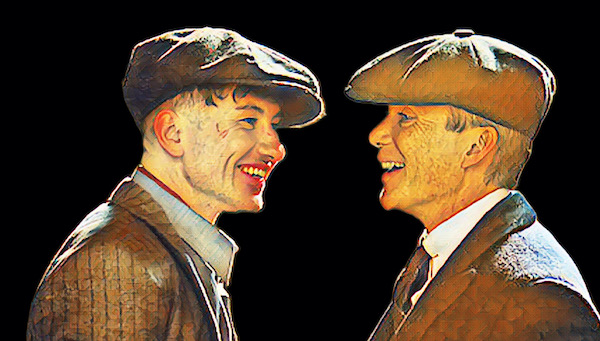
This ambiguity also casts new light on the film’s title. The “immortal man” may not simply refer to Tommy Shelby as a legendary figure. The real immortality might belong to the system of power and violence he created — a world that continues to exist even when he tries to leave it behind.
All of this leads to an inevitable question in this new moment of Cillian Murphy’s career. After the global success of Oppenheimer and the arrival of a new generation of fans, many viewers may approach The Immortal Man without having revisited the full journey of Tommy Shelby.
Will those new fans recognize who he really was?
Or will they see only the myth that has grown around him — the elegant gangster who became a cultural icon across social media?
Perhaps the film will serve as a reminder of something the series always understood. Tommy Shelby was never a hero. He was a man of extraordinary intelligence, deeply wounded and capable of building an empire out of chaos.
But in the end, the most uncomfortable question remains. Tommy Shelby built power, wealth and legend. The one thing he may never truly have built was a family.
Descubra mais sobre
Assine para receber nossas notícias mais recentes por e-mail.
 miscelana.com
2 comentários Adicione o seu