
As published on Bravo Magazine!
When Misty Copeland appeared onstage at the 2026 Academy Awards wearing the Firebird costume designed by Geoffrey Holder for Dance Theatre of Harlem, the moment carried a meaning that went far beyond the visual beauty of an iconic costume. The image condensed more than a century of dance history while also speaking directly to the context of that evening’s musical performance. Copeland appeared during the number I Lied To You, a central song from the film Sinners, and her costume transformed the performance into a symbolic gesture of continuity between different traditions within African American culture.
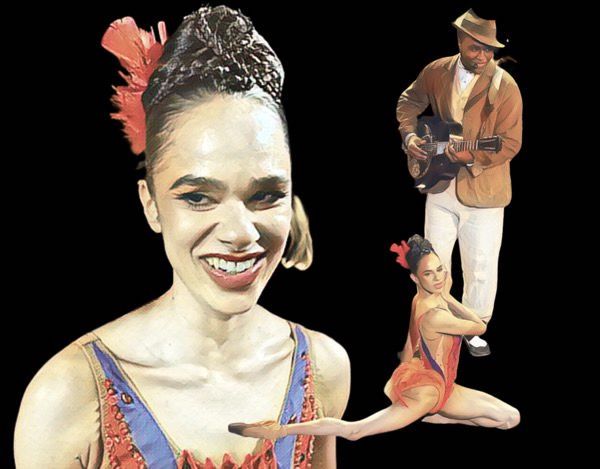
In the film, the music appears in a sequence that evokes the influence of blues and the cultural forms that emerged in Black communities in the American South. Sinners builds part of its atmosphere around that sonic and historical universe, reminding audiences how blues and its many offshoots shaped not only American popular music but also a broader cultural aesthetic that runs through cinema, literature, and the performing arts. By placing Copeland within this presentation, the producers created a visual link between that musical tradition and another artistic form that carries its own long history of struggle for representation: ballet.
The costume worn by Copeland belongs to a visual lineage deeply connected to one of the most fascinating characters in the classical repertoire. Since the premiere of The Firebird in 1910, with music by Igor Stravinsky and choreography by Michel Fokine for the Ballets Russes, the mythical bird has become a central figure in the imagination of modern ballet. The work emerged during a moment of aesthetic reinvention in dance and quickly established a powerful iconography. The burning red tones, stylized feathers, and a silhouette that seems to extend the ballerina’s movement through space transformed the Firebird into a symbol of energy and metamorphosis.
The role was first performed by Tamara Karsavina, who worked closely with Stravinsky during rehearsals for the premiere. The composer attended rehearsals frequently to explain the complex rhythms of the score, often playing difficult passages repeatedly on the piano for the dancers. Fokine’s choreography also represented a significant break with the traditions of ballet. Unlike the princesses and sylphs that dominated the stage at the time, the Firebird was not exactly a human character but a magical and rebellious force. Fokine imagined movement that was powerful and difficult to control, with deep bends of the torso and exaggerated gestures that challenged the classical ideal of delicate grace. This conception transformed the role into something radically new for ballerinas of the period.

The premiere took place on June 25, 1910, at the Palais Garnier in Paris and was immediately met with enthusiasm. Critics celebrated the extraordinary unity between music, scenography, and choreography, while leading figures in Parisian cultural life quickly recognized Igor Stravinsky’s talent. The success secured his position as composer for Sergei Diaghilev’s company and opened the path for works that would define twentieth-century musical modernism, such as Petrushka and The Rite of Spring.
Over the decades, the character continued to be reinvented by different companies and choreographers. The version created by George Balanchine for the New York City Ballet in 1949, with sets and costumes by Marc Chagall and ballerina Maria Tallchief in the title role, became one of the most enduring productions in the American repertory. Other choreographers explored more experimental interpretations, including Maurice Béjart’s political version in 1971, which transformed the Firebird into a revolutionary symbol.
The connection between Misty Copeland and this character is not merely symbolic. She herself danced the role during her career with American Ballet Theatre. In 2012, the company presented a new version of the ballet created by choreographer Alexei Ratmansky, who sought to recover elements of the original Russian tradition while offering a contemporary interpretation of the work. Copeland performed the Firebird in that production, emphasizing the physical and almost feral dimension of the character, a role that demands rapid jumps, sudden attacks, and a stage presence that oscillates between mythical creature and classical ballerina.
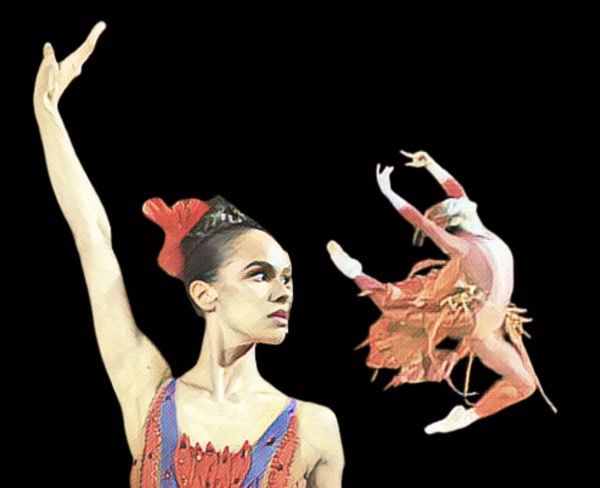
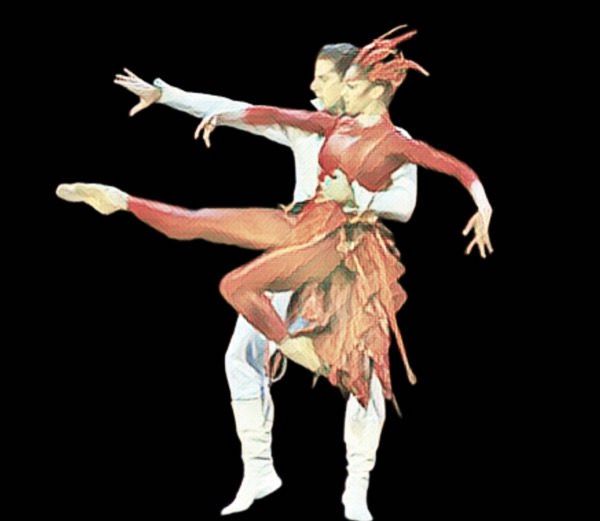
That experience makes the image created at the Oscars even more significant. Copeland did not simply appear wearing a historic costume. She brought to the stage a character that belongs to her own artistic repertoire. By wearing the costume designed by Geoffrey Holder for Dance Theatre of Harlem, the ballerina also evoked a specific tradition within Black American dance.
Within the broader history of the ballet, the version created in 1982 for Dance Theatre of Harlem holds particular importance. Choreographer John Taras transported the Russian folk tale into a lush Caribbean setting, maintaining Stravinsky’s music while reimagining the story’s visual world through a different cultural geography. Geoffrey Holder designed sets filled with giant orchids, vines, and tropical flowers, while the costumes blended visual references from multiple cultural traditions.
The premiere of the production became a milestone for the company founded by Arthur Mitchell. Ballerina Stephanie Dabney, who originated the Firebird role in that production, quickly became an iconic figure in the company’s history. The ballet was hailed by critics as an immediate success and soon entered the core repertory of Dance Theatre of Harlem, touring internationally and even receiving a national PBS television broadcast.
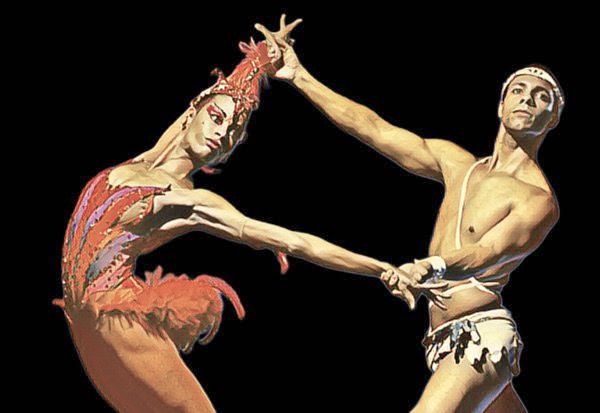
Other ballerinas in the company continued to reinterpret the role over the decades, including Charmaine Hunter, Christina Johnson, Kellye Saunders, Tai Jimenez, Bethania Gomes, and Paunika Jones. Each brought new nuances to this symbolic creature that seems to hover constantly between the human and the mythical.
The ballet remained one of the company’s most celebrated works until 2004, shortly before a six-year hiatus that interrupted Dance Theatre of Harlem’s activities. When the company resumed performances in 2010, its roster was not yet large enough to mount such an expansive production again. For that reason, the recent revival of the ballet became a particularly meaningful event.
In recent years the company began a process of reconstructing the production in partnership with the University of North Carolina School of the Arts. The revival was supervised by Leo Holder, Geoffrey Holder’s son, who helped recreate the original sets and costumes. The production returned to life through performances and tours that include Detroit, Paris, Norfolk, and the company’s traditional New York City Center season.
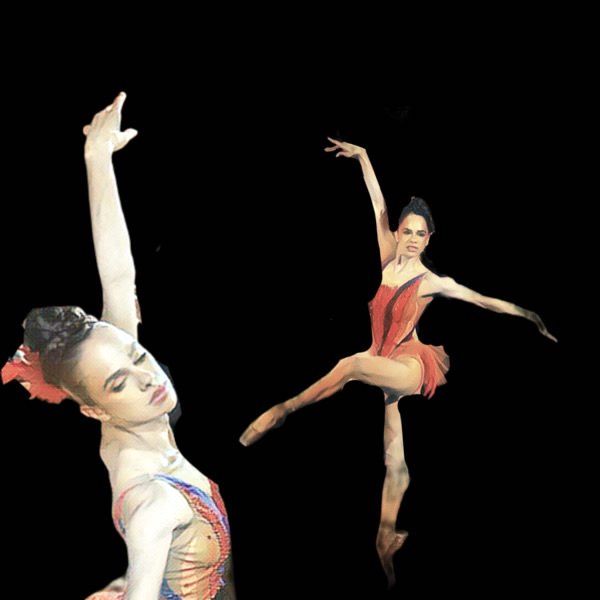
It is within this context that Copeland’s appearance at the Oscars gains even greater symbolic weight. By wearing the Firebird costume on that stage, she evoked not only a classical character but also a specific tradition of cultural reinvention within American ballet. While the music of Sinners evoked the heritage of blues and the African-descended traditions that helped shape American music, Copeland appeared as a figure representing the transformation of that heritage into other artistic languages.
The Firebird has always been a symbol of transformation. In the ballet’s narrative, it represents energy, freedom, and the power to rise again from its own ashes. By appearing in that costume at the 2026 Oscars, Misty Copeland turned a brief musical performance into a quiet reflection on cultural legacy and historical continuity. The Firebird that appeared on that stage was not merely a reference to the classical repertory. It was also a reminder that the history of the arts is built through constant dialogue between different traditions and that sometimes a single costume can carry an entire cultural lineage.
Descubra mais sobre
Assine para receber nossas notícias mais recentes por e-mail.
 miscelana.com