
The second season of Cross comes to an end confirming something that, throughout its run, did not always seem guaranteed: it not only sustains the success of the first season, but pushes the series into more ambitious, more unstable and ultimately more compelling territory. After a debut season that worked as a solid introduction to both character and world, this new chapter takes greater risks by expanding the scale of the narrative and challenging the limits of the procedural format itself.
The premise is straightforward, but never simple. Alex Cross, played by Aldis Hodge, finds himself pursuing an adversary who resists easy definition. Rebecca Luz, portrayed by Jeanine Mason, leads a systematic campaign of murders targeting powerful men connected to a child trafficking network. What could have been just another serial killer storyline gradually reveals itself as something far more complex, as the series makes clear that these crimes are not isolated acts, but symptoms of a system sustained by wealth, influence and institutional protection.

At the center of this machinery is Lance Durand, played by Matthew Lillard, a billionaire whose public image as a philanthropist conceals his active role within this criminal network. Cross’s investigation draws him into a world where the boundaries between legality and complicity become increasingly blurred, forcing him to confront not only the perpetrators but the very system meant to hold them accountable.
This is where the season finds its most compelling tension, but also its weaknesses. At times, the narrative edges toward fatigue, particularly when it leans too heavily on familiar conspiracy-thriller beats and on a villain whose repetition risks becoming grating. There are moments when the story feels close to losing itself in its own ambition. And yet, it never quite does.
What ultimately sustains Cross is not just its plot, but the way its characters inhabit that plot. And here the series gets it exactly right. Aldis Hodge does not simply play Alex Cross, he defines him. There is a presence, a control and a humanity in his performance that feel increasingly rare within the genre. He conveys authority without rigidity, intelligence without detachment, and a vulnerability that never undermines his strength. This is a detective who thinks, feels and hesitates, and it is precisely that complexity that makes him so compelling.
Alongside him, Alona Tal provides a dynamic that anchors the emotional core of the series. Their chemistry is one of the most consistent strengths of the season, creating a space where conflict unfolds not only through action, but through relationship. There is tension, but also recognition, and that balance keeps the series from collapsing into mere stylized violence.
And then there is Luz.

Jeanine Mason builds a character that resists any simplistic reading. A killer, certainly, but also a victim, a strategist and a direct product of trauma that the series refuses to trivialize. The detail that her name, Luz Porras, was slightly adjusted in the Brazilian dub to avoid unintended reactions is almost incidental in light of the character’s depth. What matters is how she is constructed. Luz does not simply enact violence, she organizes it, turning it into a system of meaning shaped by mythology, memory and an almost desperate need to impose order on the chaos that created her.
The result is unexpected. Rather than rejection, she generates alignment. And that may be both the season’s greatest risk and its greatest achievement.
The finale reconfigures all of these tensions. The revelation that her own aunt was responsible for handing her mother over to the system that killed her fundamentally reshapes her arc. Their confrontation carries an unavoidable tragic weight, culminating in a death that offers no resolution, only another layer of loss. Luz’s leap from the bridge appears to be an ending, but the suggestion that she survives transforms it into something else entirely: a suspension rather than a conclusion.
Meanwhile, Alex Cross’s story reaches its most radical breaking point. Even with evidence against Durand, the institutional machinery closes ranks. Politicians, business figures and agents of the state work to prevent the truth from having real consequences, and the decision to cover up the case exposes the limits of the system once and for all. Cross, who has operated within that structure, realizes that there is no longer any space for belief.
By turning in his badge, he does not simply leave the police force, he abandons the very framework that has defined him.
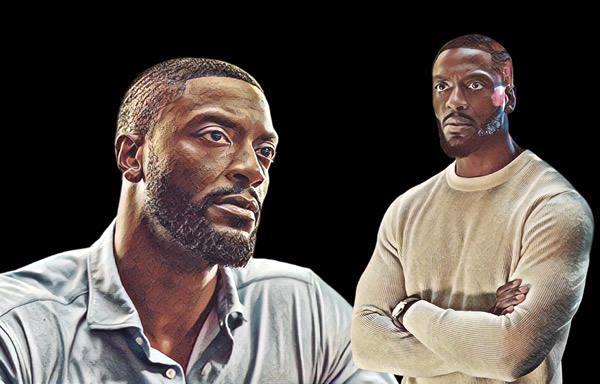
Season three, already confirmed and currently in development with the involvement of James Patterson, emerges directly from this rupture and may represent the most significant shift the series has attempted so far. With Cross no longer operating within the law, the narrative is poised to move away from its procedural roots into something far more serialized and unpredictable, where justice is no longer institutional but deeply personal. At the same time, the lingering presence of Luz, whose survival is strongly implied, opens the door for a dynamic that could redefine the series itself, not simply as a confrontation between detective and criminal, but as a collision between two different responses to a broken system.
In the end, Cross season two is, paradoxically, both more uneven and more addictive. There are moments when the story threatens to unravel, when certain elements feel repetitive, when excess creeps in. But there is also something that ultimately prevails.
The series hooks you.
And it does so because, despite everything, it finds something essential: a perfectly cast lead, a dynamic that works and a villain the audience simply does not want to let go.
Descubra mais sobre
Assine para receber nossas notícias mais recentes por e-mail.
 miscelana.com