
The rise of a phenomenon and the trap of success
When Robert Pattinson appeared as Cedric Diggory in Harry Potter and the Goblet of Fire, there was already a quiet indication of something bigger. He was not yet a leading man, but he carried the kind of presence the industry quickly recognizes in actors capable of sustaining entire narratives. That potential fully materialized a few years later with Twilight, the phenomenon that turned him into a global star and, at the same time, into a prisoner of his own image.

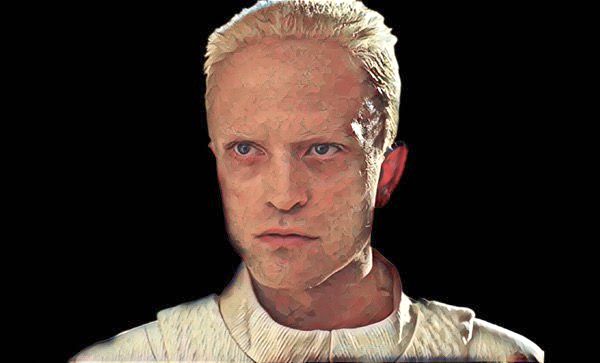
The The Twilight Saga cemented Pattinson as one of the most popular actors in the world, but also placed him within a very specific type of stardom. Edward Cullen was not just a character, it became a label. And as often happens in Hollywood, immediate success came with a silent threat: the difficulty of being taken seriously afterward.
Reinvention as strategy
Ending a franchise of that scale often leads actors toward similar commercial projects. Pattinson chose the opposite path. Instead of repeating the formula that made him famous, he dismantled his own image, working with directors who demanded something entirely different.

With David Cronenberg in Cosmopolis, he began a transition marked by alienated, difficult characters. In The Rover, he became rougher and more physical. The turning point came with Good Time, where his performance redefined critical perception. Then The Lighthouse, alongside Willem Dafoe, cemented that reinvention.
Returning to blockbusters with Tenet and The Batman
Before The Batman, Pattinson appeared in Tenet, directed by Christopher Nolan, proving he could return to large-scale cinema without being defined by it. His performance showed control, precision, and presence within a massive production.
With The Batman, this trajectory fully crystallized. Under Matt Reeves, he created a psychologically complex Bruce Wayne, blending arthouse sensibility with blockbuster scale.


Mickey 17, The Drama and his current phase
In Mickey 17, directed by Bong Joon Ho, Pattinson leads a bold and unconventional sci-fi project, reinforcing his reputation as an actor capable of carrying ambitious visions.
In The Drama, alongside Zendaya, he continues expanding his reach, confirming his place among the most relevant actors of his generation.


A generational contrast with Timothée Chalamet
His work with Timothée Chalamet in The King highlighted two different paths to stardom. While Chalamet represents a more fluid trajectory, Pattinson’s path is defined by rupture and reconstruction.
Public image and control
His relationship with Kristen Stewart during Twilight shaped his public image, but later he redefined that exposure. With Suki Waterhouse, he maintains a far more private life, aligning with his controlled career choices.


Awards and recognition
Although he has not yet received an Oscar nomination, Pattinson is increasingly part of that conversation, balancing critical acclaim and global appeal.
Dune and what comes next
His role in Dune: Messiah marks another turning point. It positions him within one of the most ambitious franchises in contemporary cinema, alongside Timothée Chalamet and Zendaya, reinforcing a career built not on repetition, but on transformation.
Descubra mais sobre
Assine para receber nossas notícias mais recentes por e-mail.
 miscelana.com