
In 2016, when Radiohead released A Moon Shaped Pool, it felt like a quiet return. There was no radical aesthetic break like Kid A, nor the overt political tension of Hail to the Thief. What emerged instead was something harder to define. An album that seemed to move carefully, as if each song had been built from an emotional place that was still unsettled. No wonder, I included it on my 10 Albums About Grief.
Ten years later, that impression not only remains but deepens. A Moon Shaped Pool may be the band’s most human album. Not in the sense of simplicity, because nothing in Radiohead’s universe is simple, but in the way it reveals fragility without excess. It is a record that breathes.
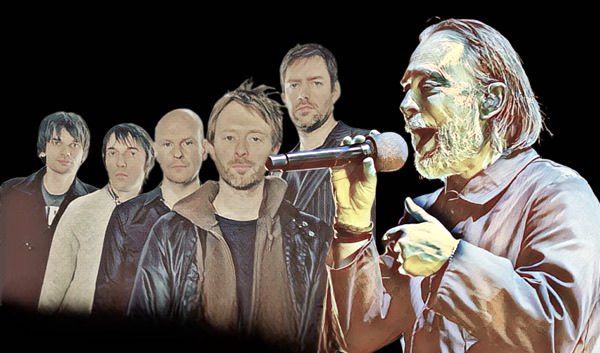
Part of that feeling comes from its very construction. Many of the songs had existed for years, some for decades, like True Love Waits, which haunted the band’s history before finally finding its definitive form. Others, like Burn the Witch, had been in development since the Kid A era. What the album does is not present something new, but reorganize time. It revisits the band’s past through the lens of a new emotional experience.
And that experience is impossible to ignore. Although it was never explicitly framed as a breakup album, it is difficult to listen to A Moon Shaped Pool without sensing the shadow of Thom Yorke’s separation from Rachel Owen. There is a constant feeling of loss, but not in a dramatic or explosive way. What defines the album is something rarer: an almost exhausted acceptance, as if the impact has already passed and what remains is only the echo.
Musically, this translates into a more restrained approach. The string arrangements by Jonny Greenwood are not decorative but structural. They carry the emotional weight of the album, creating a texture that moves between the classical and the unsettling. There is something distinctly chamber-like about it, bringing the music into a more intimate, almost domestic space, even when it expands.
At the same time, the album does not completely abandon the unease that has always defined Radiohead. Burn the Witch still pulses with political tension, reflecting on groupthink and systems of power. The Numbers echoes environmental concerns that, in retrospect, have only grown more urgent. But these themes appear diffused, as if the outside world were being filtered through a more intense inner experience.
Perhaps that is why the album was once described as restrained. Today, that restraint feels less like limitation and more like intention. A Moon Shaped Pool does not seek to impress.
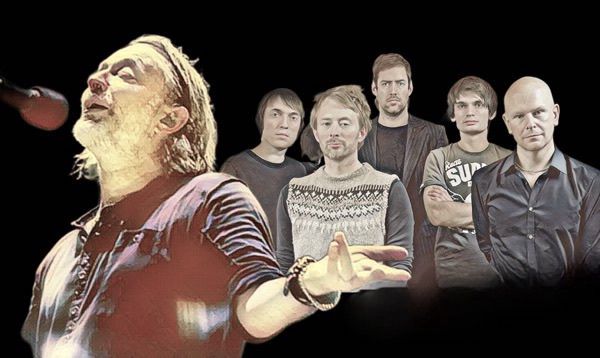
Ten years later, it occupies a curious place within Radiohead’s catalog. It is not the most revolutionary, nor the most immediate. But it may be the most lasting. An album that does not reveal itself on first listen, or even the tenth. It requires time, and perhaps that is why it has aged so well.
There is also something symbolic in the fact that it remains, for now, the band’s last album. In a decade marked by side projects, film scores, and collaborations, A Moon Shaped Pool stands as the last major collective gesture from Radiohead. And that changes how it is read. What once felt like a chapter now feels like a suspended point.
Not exactly an ending, but a pause long enough to alter the meaning of everything that came before.
If Radiohead returns with new music, this album will inevitably be reframed as a transition. If not, it already functions as something even rarer. An unintentional ending, yet a deeply coherent one.
In the end, that may be what makes A Moon Shaped Pool so singular within the band’s catalog. It does not try to answer anything. It simply accepts.
And sometimes, that is harder than any rupture.
Descubra mais sobre
Assine para receber nossas notícias mais recentes por e-mail.
 miscelana.com