
The initial risk: adapting Shakespeare in the 1990s
In 1996, adapting Romeo + Juliet did not feel like a bold choice. It felt like a mistake. Keeping William Shakespeare’s original text intact while placing the story in a world of guns, television, and visual excess sounded like an idea destined to fail. That is precisely what made the film impossible to ignore.
I have been a fan of Baz Luhrmann since Strictly Ballroom, a film that appears modest at first glance but already reveals a very precise visual identity, even with a limited budget compared to what followed. With the exception of Australia, I have rarely seen him miscalculate. It was with Strictly Ballroom that he launched what he would later define as the Red Curtain Trilogy, completed with Moulin Rouge!, where his stylized and musical vision fully comes into focus.
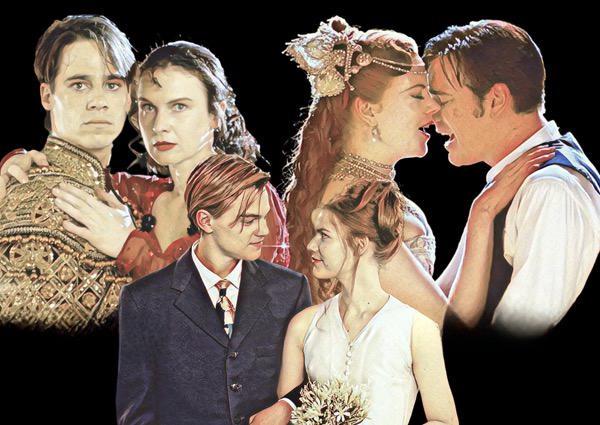
At that point, adapting William Shakespeare felt almost reckless. This was only his second feature and his first major Hollywood project, yet he chose to preserve the original late-16th-century text while relocating the story into a contemporary world shaped by urban violence, pop culture, and media imagery. The anachronism was not incidental. It was the entire premise.
A world of its own: anachronism as language
Baz Luhrmann does not modernize Shakespeare. He creates a world in which Shakespeare already belongs to the present.
The Montagues and Capulets are no longer Renaissance noble families but rival corporate dynasties. Swords are replaced by guns that retain the names of their original counterparts. Verona becomes Verona Beach, a fictional space saturated with contemporary symbols. And still, the Elizabethan language remains untouched.
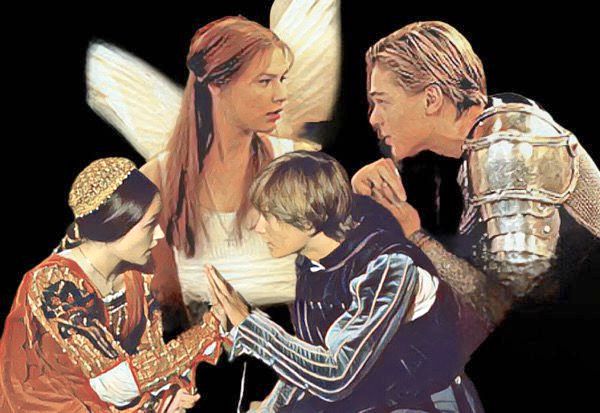
This tension between language and image is what sustains the film. It is also what distinguishes it from other adaptations. While filmmakers like Franco Zefirelli, Laurence Olivier and Kenneth Branagh created historical distance to accommodate Shakespeare’s texts, Luhrmann builds a self-contained universe with internal rules so consistent that the anachronism stops feeling disruptive and begins to feel inevitable.
The real risk of Romeo + Juliet was never that it might seem excessive. It was that it might not be understood.
The moment the film reveals itself
I approached the film with openness, driven by my love for Shakespeare and for Luhrmann, but also with a degree of skepticism. That hesitation lasts only minutes. The opening is fast, almost overwhelming, as if the film demands immediate acceptance of its rules.
And then everything slows down.
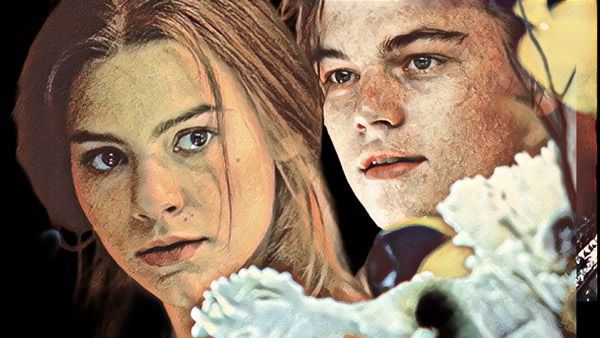
At the party, set to I’m Kissing You by Des’ree, the film finds its emotional center. The experience shifts from intellectual to sensory. The excess reorganizes itself, and the story takes hold.
Music as emotional architecture
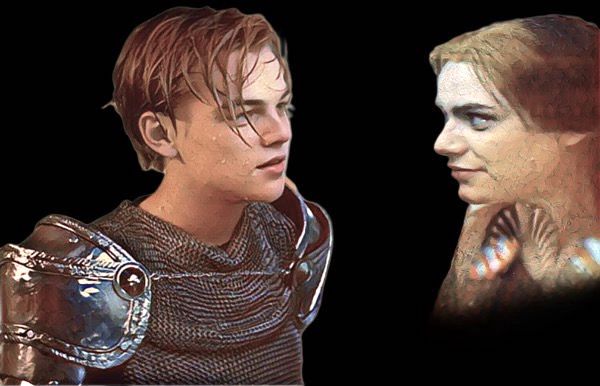
The score, composed by Craig Armstrong alongside Nellee Hooper and Marius de Vries, is one of the film’s structural pillars. Its delicate orchestration coexists with a soundtrack that includes artists such as Radiohead and Garbage, creating a direct bridge between the emotional intensity of the text and the sound of the 1990s.
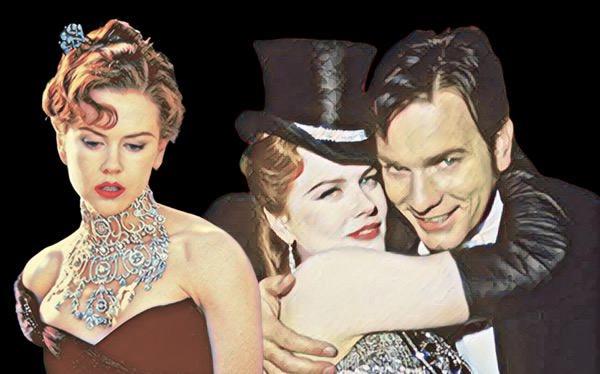
There is also a revealing connection to Moulin Rouge!. The song Come What May, which would later become the defining love theme of Satine and Christian, was originally written for Romeo + Juliet. It was ultimately replaced by I’m Kissing You, a decision that shaped the film’s tone, but that unused piece resurfaced years later as a clear extension of this earlier creative experiment. In that sense, Romeo + Juliet also operates as the emotional blueprint for what Luhrmann would later refine.
The cast and the choices that shaped the film
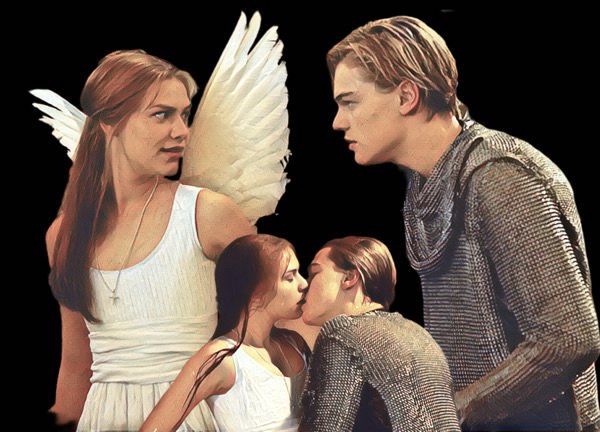
Behind the scenes, the casting process reveals how different this film could have been. Before Leonardo DiCaprio was cast, actors such as Christian Bale and Heath Ledger were considered. DiCaprio not only secured the role but helped convince the studio by traveling at his own expense to Sydney to shoot test footage.
His Romeo is restless, impulsive, emotionally exposed. He does not recite Shakespeare. He seems to think in it.
On Juliet’s side, Natalie Portman was initially cast at just 14, but was replaced when the age gap became an issue. Claire Danes, then 16 and coming from television, brought a different energy.
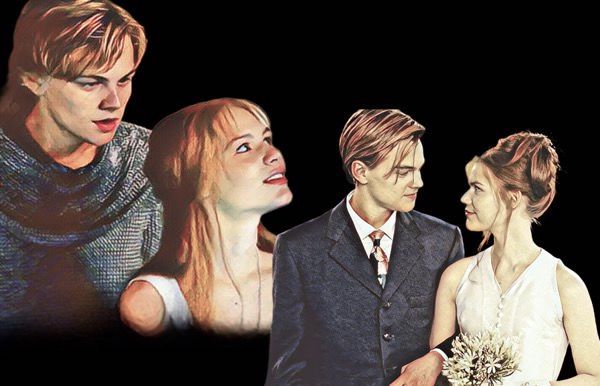
Danes is a strong actress, but there is a noticeable imbalance here. Her delivery preserves the theatrical cadence of Shakespeare’s language, which works on stage but does not always align with the film’s heightened yet contemporary world. DiCaprio, by contrast, seems to instinctively understand how to make that Elizabethan language feel immediate and modern. Their chemistry is undeniable, but his Romeo ultimately feels more fully realized than her Juliet.
When the adaptation goes further than the original
One of Luhrmann’s boldest choices is turning monologues into dialogue. It may read as heresy to purists, but here it becomes proof that adaptation is not submission, but interpretation.
The most devastating example is the ending. By allowing Juliet to awaken before Romeo dies, Luhrmann alters the structure of the tragedy. In Shakespeare, there is a kind of cruel protection in ignorance, but here, there is awareness, and, most of all, powerlessness.
The tragedy is no longer only inevitable, but witnessed. It is impossible not to cry along, even knowing from the start how it would end.
Success, criticism, and reassessment
From an industry standpoint, the film was a significant success. Produced on a budget of around 14.5 million dollars, it grossed approximately 147 million worldwide and opened at number one in the United States, with strong international performance, particularly in Australia.
Critical reception at the time was sharply divided. Some praised its visual boldness and performances, while others resisted its excess and its break from traditional Shakespearean expectations. Roger Ebert was among those who expressed skepticism, while others recognized that the film’s strength lay precisely in its willingness to take risks.
Over time, that perception shifted. The film became widely used as an entry point to Shakespeare and was reassessed as one of the most influential adaptations of his work, winning four BAFTAs, including Best Direction, and receiving an Academy Award nomination.
Why Romeo and Juliet
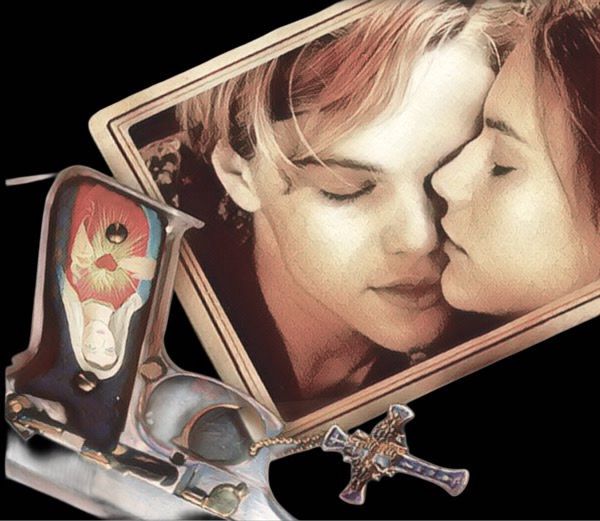
The choice of Romeo and Juliet was not accidental. Luhrmann has said that he wanted to understand how Shakespeare would make films. Drawing from the idea that Elizabethan theatre was built on excess, noise, and competition for attention, he found in this story the ideal structure to support a radical approach.
It is a narrative that almost everyone already knows. That familiarity allows for formal experimentation without losing the audience.
At its core, it is a tragedy about youth, impulse, and intensity. And perhaps that is why, thirty years later, Romeo + Juliet still resists easy resolution. It remains less a consensus than an experience.
Descubra mais sobre
Assine para receber nossas notícias mais recentes por e-mail.
 miscelana.com
1 comentário Adicione o seu