
Peaky Blinders: The Immortal Man is the film that brings the BBC series to a close, following Tommy Shelby in a new political and personal phase, set against the backdrop of the period leading up to World War II. The story revisits his struggles with power, the legacy of the Shelby family, and the lasting trauma of war, but has divided both fans and critics over the impact of its ending.
Because there is a kind of relationship with certain works that makes any attempt at analysis inevitably partial. Not because of a lack of critical perspective, but because, at some point, involvement surpasses observation and begins to occupy a more intimate, almost personal space. Peaky Blinders has always operated within that territory. And perhaps that is why it is necessary to begin with an acknowledgment that does not weaken the critique, but makes it more honest: once you become attached to this story at this level of intensity, there is no longer any real distance, nor any true possibility that its ending will meet the expectations that have been built over the years. Writing about Peaky Blinders: The Immortal Man, therefore, does not come from the outside. It comes from within.
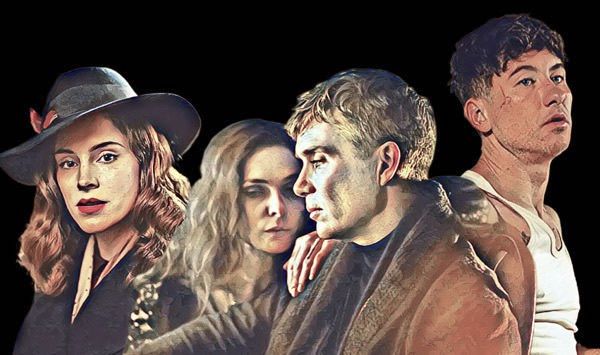
From its beginnings as a production by the BBC to its global expansion after arriving on Netflix, Peaky Blinders always seemed to move toward a very clear destination. More than a series, it was conceived as a trajectory that would ultimately find its conclusion in cinema, with an arc that begins in the scars of World War I and moves toward the threshold of World War II. The story of the Shelbys was never just about crime or social ascent, but about men who returned from war unable to truly come back, carrying trauma that shaped every decision, every silence, and every act of violence. There was, therefore, a promise of closure that was not only narrative, but symbolic.
For a number of reasons — some structural, others deeply human, such as the loss of Helen McCrory, which irreversibly altered the emotional core of the story — that plan did not materialize as originally conceived. And Peaky Blinders: The Immortal Man emerges precisely from that rupture. Not as the promised ending, but as the possible one.
The result is a film that seems to exist in a strange, almost in-between space. It makes no effort to introduce its world to new viewers, assuming from the very beginning that its audience is already familiar with every layer of that story. At the same time, it fails to deliver to its most loyal audience the emotional weight one would expect from a farewell built over so many seasons. It is a film for insiders, yet paradoxically one that does not fully reward that loyalty.
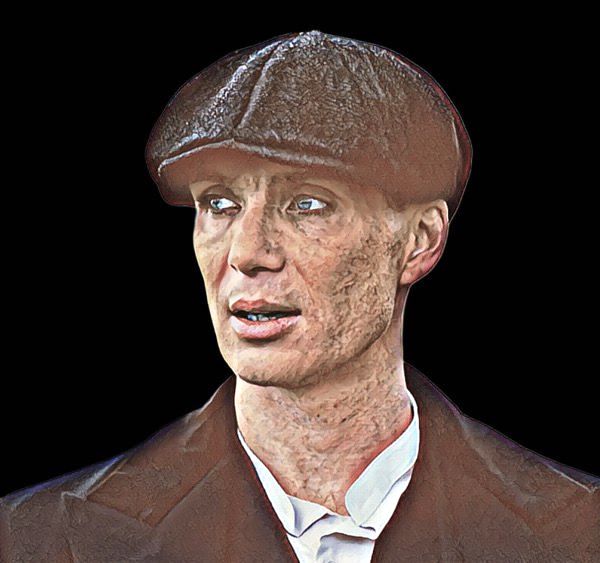
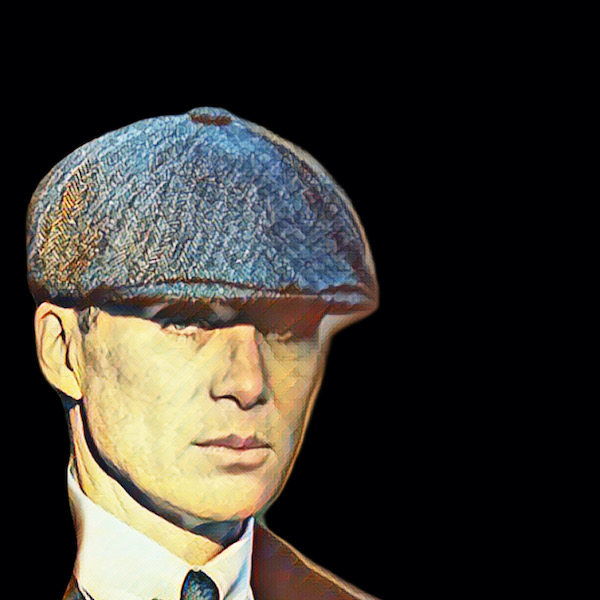
Cillian Murphy returns as Tommy Shelby with a natural ease that no longer impresses, but comforts. There is something almost automatic in the way he inhabits the character, as if there were no longer any separation between actor and figure. That sense of recognition, however, does not translate into emotion. On the contrary, it reinforces the feeling that we are watching something already familiar, almost reiterated, as if the film relies more on memory than on the creation of new impact.
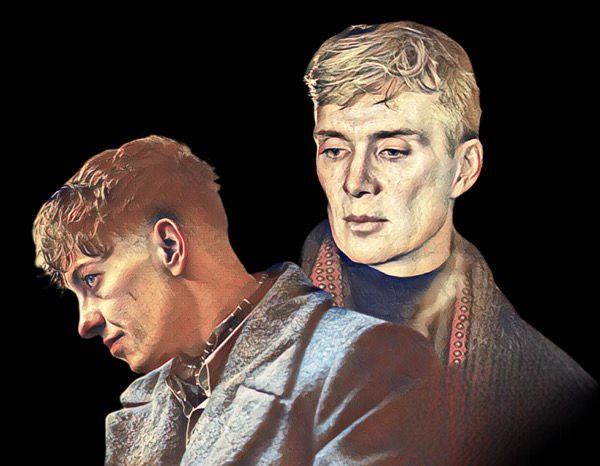
Meanwhile, Barry Keoghan brings to Duke a vulnerability that the series never had time to develop. It is an interesting presence, especially considering how late the character was introduced into the narrative, but one that carries a weight the script does not fully support. There is a clear intention of continuation, of passing the torch, but it never fully materializes with the necessary strength.
The prevailing sensation throughout the film is that of watching an extended season finale episode whose previous chapters have, somehow, been omitted. And this sensation is not only structural, but emotional as well. Peaky Blinders was always a series built on accumulation, on the progressive weight of choices, on the way every decision reverberates far beyond the moment in which it is made. The film, by contrast, often seems to skip these steps. Conflicts arise without time to mature, decisions occur without proper grounding, and moments that should carry consequence appear as merely functional resolutions. It is not simply a matter of pacing, but a break in the very narrative logic the series taught its audience to recognize and expect.
The plot unfolds in a moment of historical transition, with Europe already immersed in tensions that signal the coming of World War II, and finds Tommy Shelby in an almost spectral state, removed from the center of power he once controlled with precision. The film begins with Tommy attempting to reorganize what remains of his influence while dealing with the political consequences of past alliances, particularly those that brought him close to British fascist movements. At the same time, there is an effort to reposition the Shelby family within this new context, with Duke gradually being introduced as a possible continuation of that legacy.
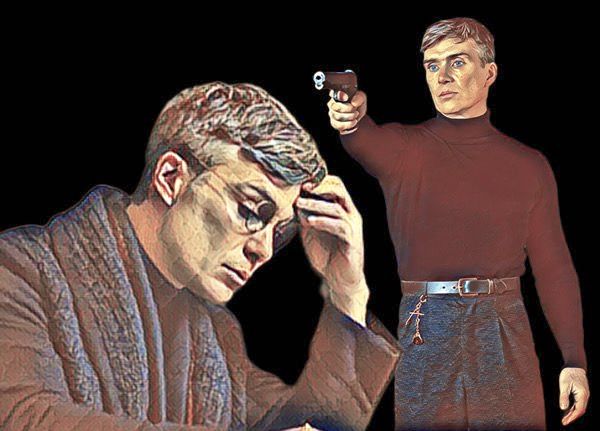
This movement, however, does not unfold with the organic quality the series always prioritized. The script alternates between political conflicts — involving figures orbiting power and disputes that should carry greater historical density — and personal conflicts that never fully deepen. External threats emerge and resolve quickly, decisions feel more like narrative obligations than dramatic inevitabilities, and there is a constant sense that important parts of this story have been left offscreen. The result is a film that does not merely accelerate, but at times seems to disregard the very emotional timing it spent six seasons building.
The prevailing sensation throughout the film is that of watching an extended season finale episode whose previous chapters have, somehow, been omitted.
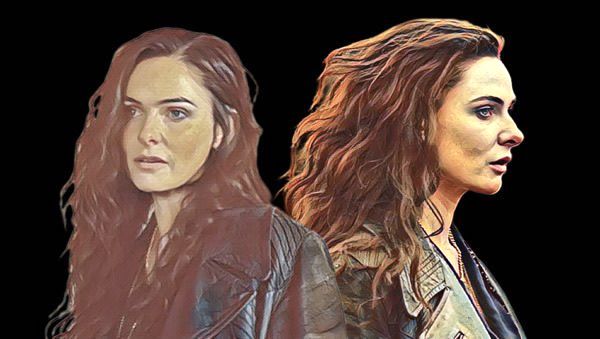
Within this context, certain narrative choices stand out even more for how artificial they feel within a universe that was always grounded in internal coherence. The introduction of Zelda’s so-called “twin sister,” constructed with an almost mystical aura, as a kind of witch-like presence that moves through the narrative, not only clashes with the more grounded tone that defined the series, but also reveals itself as a simplistic dramatic shortcut for conflicts that demanded greater depth. More than that, it reduces Rebecca Ferguson to an underused device, wasting an actress of considerable presence in a role that never finds a meaningful purpose within the story.
One of the film’s central axes lies in Tommy’s attempt to confront, albeit belatedly, the trauma that has always defined him. His symbolic return to the war tunnels — the space where his psyche was shaped — functions as a gesture of confrontation, almost a reckoning with the origin of everything. It is here that the film tries to concentrate its dramatic weight, connecting past and present in a single movement. Yet once again, the power of the idea is undermined by the lack of surrounding development.
At the same time, the film hints at a reconfiguration of power within the family, with Duke being tested and observed, while Tommy seems to oscillate between control and a certain exhaustion. There are also mentions of his legitimate son, Charles, now fighting on the front lines, which should carry significant emotional weight, but remains merely informational, without real emotional reverberation.
It is impossible not to think about what might have been. A more direct continuation of the storyline involving Oswald Mosley, for instance, would not only make sense within the arc established by the series, but would also expand the historical weight of this ending. Its absence — or at least the lack of contextualization for those less familiar with the period — reinforces the sense of something missing. Still, Tim Roth brings a necessary energy as an antagonist, even if the film itself struggles to fully sustain it.
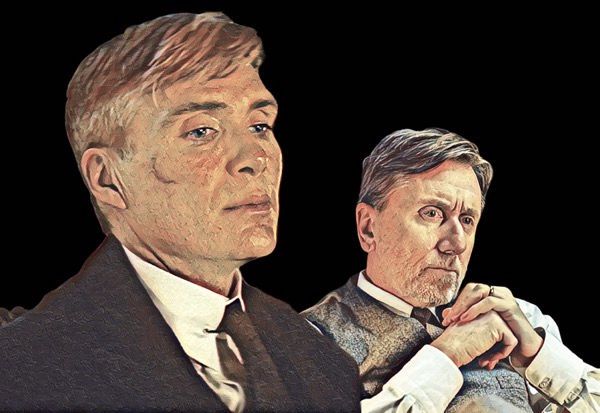
Perhaps the biggest issue, however, is not what is missing in terms of plot, but what is missing in terms of emotion. We know about Arthur, but little or nothing is said about other characters who were fundamental to the series, like Lizzie, or Ada’s children (after all she is a member of the Parlament and is assassinated in broad daylight but no one comes to the funeral, nor journalists or police?), so many figures who helped build this world simply disappear or are reduced to passing references. This absence is not only narrative, but emotional. And when the emotional core disappears, the impact inevitably dissolves.
This directly affects how the film handles Tommy himself. His apparent indifference toward his living son, contrasted with the ongoing weight of Ruby’s death, feels unsettling, even if it aligns with the idea that he was never truly a hero. Still, there is something off in this choice, as if a necessary emotional bridge were missing — something that might have made this behavior less abrupt, or at least more comprehensible within the journey we followed for so long.
Curiously, some of the film’s most effective moments are those that speak directly to the audience’s memory. When Tommy remarks that “music and pub don’t go together,” it serves as a clear nod to fans of the first season, a recognition of trajectory that functions almost as an internal code. Likewise, his symbolic return to the tunnels carries powerful meaning, representing a delayed confrontation with what has always defined him. These moments work, but they rely almost entirely on the viewer’s memory to carry their weight, as if the film continually leans on the past to compensate for what it cannot fully build in the present.


What makes all of this more complex is knowing that there was a more ambitious — and potentially more devastating — original plan. The idea of ending the story on the brink of World War II, directly connecting Tommy’s fate to a new global cycle of violence, would have given this conclusion a much broader historical and emotional dimension. The changes in direction — caused by cast departures, deaths, and the pandemic— did not just alter the narrative path, but reduced its symbolic reach.
As a result, the ending that once felt inevitable — Tommy Shelby’s death as a form of peace — unfolds without the emotional impact it should carry. Not because the idea itself is misguided, but because the emotional groundwork to support it is not fully there. The farewell exists, but it does not resonate.
There is talk of a possible continuation with a new generation, an attempt to expand the universe beyond Tommy. But a question remains, less as a curiosity and more as an unease: without him, without the magnetic force that sustained the series from the beginning, is there enough left of Peaky Blinders to justify its continuation?
And perhaps there is one final question, almost ironic, that the film leaves hanging without ever answering. Was Tommy Shelby’s book ever completed? Will it be published? Will it be read? Or, like so many other promises within this ending, does it exist only as an idea, as a possibility that never fully materializes?
Perhaps the answer lies within the film itself. Because in the end, what lingers is not only the sense of an ending that falls short, but something deeper and harder to ignore. A sense of emptiness. As if, in reaching its conclusion, the story had not only lost its protagonist, but a fundamental part of what once made it matter.
Descubra mais sobre
Assine para receber nossas notícias mais recentes por e-mail.
 miscelana.com
2 comentários Adicione o seu