
Throughout Peaky Blinders, Thomas Shelby builds more than an empire. He shapes the way his own story can be remembered, which includes not only decisions and strategies, but also what is deliberately left unsaid. It is within this framework that Finn Shelby’s absence stops being a minor detail and starts functioning as a symptom, because what the film The Immortal Man chooses not to show ultimately reveals one of its rare internal misalignments.
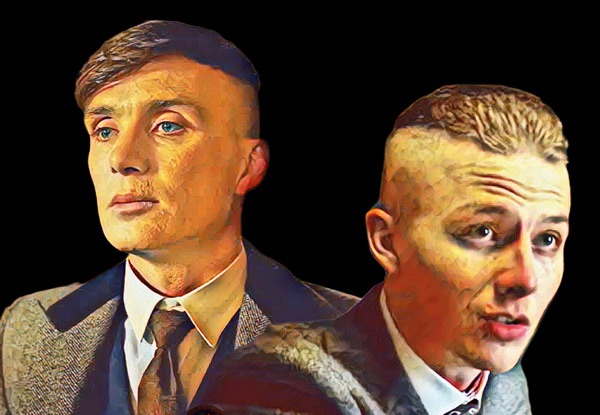
From the beginning, Finn occupies a position that never fully aligns with the logic of his older brothers. When the story starts in 1919, he is still a child, and this immediately alters the perception of the family’s past. If Finn is around ten or eleven years old, then the death of their mother and their father’s abandonment did not happen in a distant, almost mythical past, as it often feels from Thomas and Arthur’s perspective. These events are relatively recent and were directly experienced by him.
This seemingly simple detail creates a meaningful fracture. Finn is not just the youngest; he is the only one who was still in formation when the family structure collapsed. While Thomas, Arthur, and John are defined by the war and everything that followed, Finn carries traces of an earlier emotional timeline, one in which loss had not yet been fully transformed into a survival strategy. This helps explain why he remains, throughout the series, in a peripheral position, protected and yet excluded, as someone who belongs to the family but not to the logic that sustains its power.
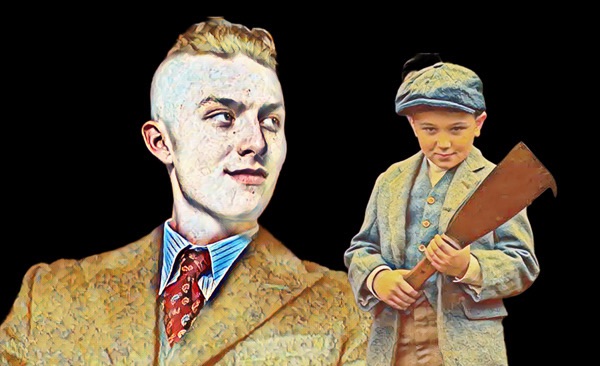
When Finn makes the mistake that compromises the plan against Oswald Mosley, the most immediate reading points to failure or immaturity, but the series had already laid the groundwork for this imbalance. He grows up inside the Shelby empire without being fully integrated into its rules, without undergoing the same tests, without understanding the weight of the decisions that his older brothers have normalized. The issue, therefore, is not simply the mistake itself, but the absence of proper formation within that world.
His reaction to his father’s return reinforces this pattern. Finn and Arthur are the two who respond to the attempt at reconnection, revealing not only vulnerability but also an emotional attachment that Thomas no longer allows himself to feel. Both are once again led to disappointment, in a movement that could have marked a turning point for Finn, but that the series does not fully develop.
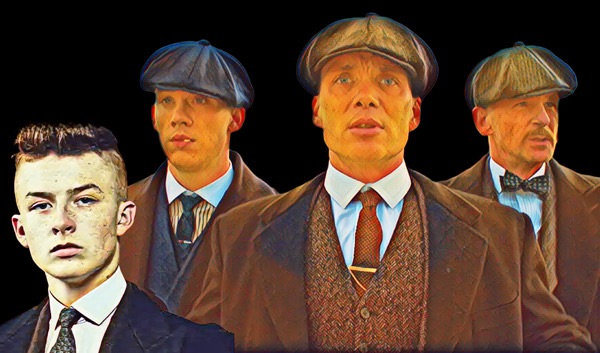
It is in the sixth season that this trajectory reaches its clearest rupture, when Finn is expelled from the family. The decision is consistent with the internal logic of the show, since Thomas has never treated family ties as unconditional protection. Still, there is a relevant shift in how this rupture is executed, because it is not Tommy who directly enforces it. The action is carried out by Duke, which alters the symbolic weight of the moment and weakens the idea that decisions of this magnitude always belong to him.
This detail becomes even more significant because the series never shows how Thomas processes his brother’s betrayal. There is no direct confrontation, no visible emotional reckoning, no indication of how this rupture is absorbed into his trajectory. What could have been one of the most complex moments in the Shelby dynamic is instead treated from the margins.
From that point on, Finn’s disappearance becomes complete. He is no longer mentioned, he triggers no reaction in Arthur, and he is not revisited by Ada, who so often functions as a critical conscience within the family. This silence is particularly striking in a series that has consistently handled the emotional consequences of major decisions with precision.
The result is a narrative gap that is rarely discussed with the same intensity as other aspects of the show, perhaps because the aesthetic strength and overall consistency of Peaky Blinders sustain the story even when certain elements are left underdeveloped. Still, in Finn’s case, this is not merely a detail that slips through unnoticed, but a storyline built across multiple seasons that never receives a resolution that matches its setup.

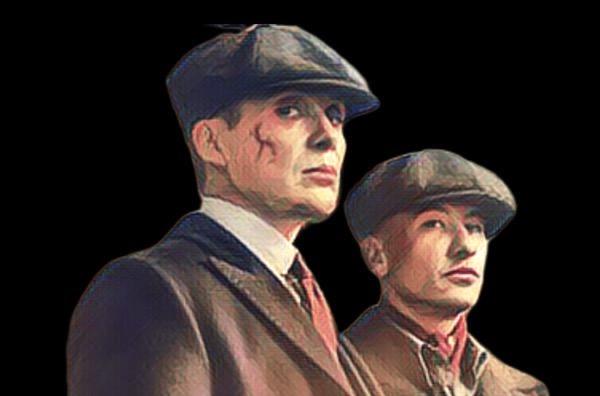
This absence, however, also opens up a possibility. Unlike other characters, Finn’s fate is not definitively sealed. He does not disappear through death, but through exclusion, which keeps him, even offscreen, within the narrative’s range of possibilities.
The introduction of Duke makes this tension more visible, as he occupies the role of heir within Thomas’s logic and establishes, even indirectly, a contrast with Finn. On one side, someone aligned with the structure and discipline that sustain the family’s power. On the other hand, someone is excluded from that same structure without ever having been fully integrated into it.
In this sense, Finn’s absence stops being just a flaw and starts carrying potential. If the story continues, his return would not take the form of reconciliation, but of disruption. Not as belonging, but as opposition. And perhaps that is what makes this silence so unsettling, because it does not close the story; it simply interrupts it at a point that still demands an answer.
Descubra mais sobre
Assine para receber nossas notícias mais recentes por e-mail.
 miscelana.com