
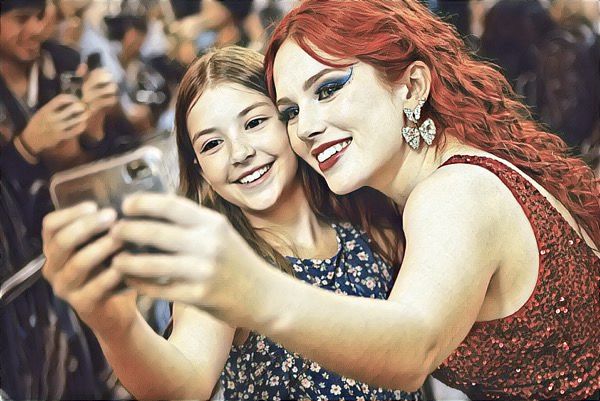
What has changed today is that some have begun to name these boundaries clearly, while others, throughout history, have simply reacted to them. Long before Chappell Roan turned restrictions on who can approach her into a public stance, that fragile line between admiration and intrusion had already shaped the lives of many public figures. Let’s revisit a few of them.

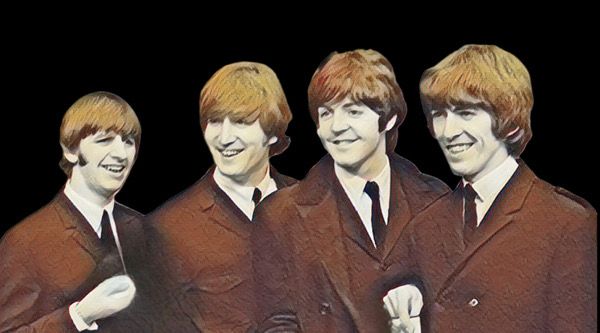
The Beatles
At the height of Beatlemania, contact with fans stopped being interaction and became a collapse. They could no longer hear their own music on stage, were chased through airports and hotels, and lived under constant pressure. Their decision to stop touring in 1966 emerged directly from this impossibility of coexistence, one of the earliest and clearest examples of how overwhelming devotion can make a genuine connection impossible.
Michael Jackson
The relationship with fans reached an even more extreme level. Crowds fainted, barricades broke down, and every movement required complex security operations. Direct contact became rare not as an artistic choice, but because the artist’s physical presence triggered reactions that were difficult to control.
Madonna
At the peak of her fame, Madonna often spoke about losing something simple yet essential: the ability to move through the world anonymously and observe it. The intensity of public reaction imposed security constraints that removed her from that everyday experience. In this case, distance is not a rejection of others, but a direct consequence of the scale of attention she herself generated.


Prince
Prince maintained a highly controlled relationship with access to his person. He limited interviews, avoided unnecessary exposure, and cultivated a public presence that existed almost exclusively within performance. Outside of it, contact was restricted, filtered, and often nonexistent.
Taylor Swift
For years, she was a symbol of closeness with fans, but that dynamic shifted after repeated invasions of privacy and stalking incidents. Today, access is tightly controlled and mediated by security teams, showing how lived experience reshapes the boundaries of openness.
Billie Eilish
She began with a very direct relationship with her audience, but later imposed limits after situations in which physical and emotional contact crossed into unsafe territory. The adjustment happens in real time, shaped by the intensity of exposure.

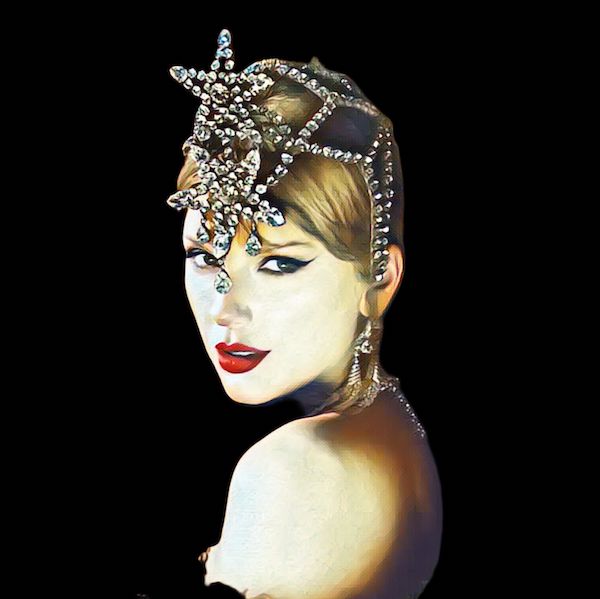
Adele
She prefers to concentrate her relationship with fans within the space of the performance. Outside of it, she avoids the constant dilution of the experience into recordings and spontaneous interactions, preserving a clear boundary between stage and private life.
Lorde
From the beginning, she has chosen a more distant presence, with sporadic communication and limited exposure. The boundary does not emerge as a reaction, but as a structural choice within her career.
Sia
She transforms protection into a visual concept. By hiding her face, she reduces recognition and, consequently, direct approach, creating a barrier between the person and the persona.
Chappell Roan
She represents a more explicit stage of this conversation. By publicly defining what she considers acceptable or not in fan interactions, she shifts the issue from a moral judgment to a space of clear, negotiated boundaries.
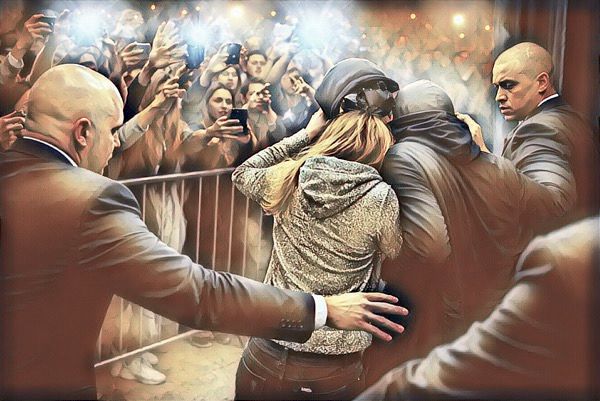
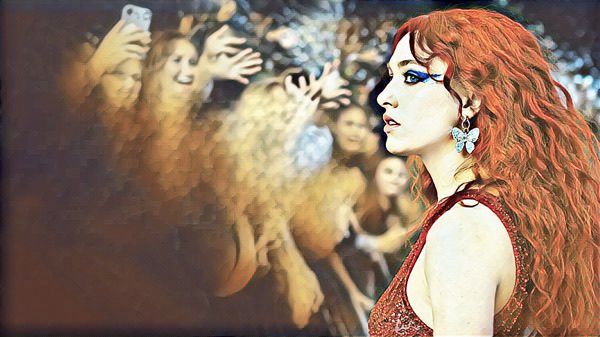
Looking at these cases, it becomes clear that this is not about antipathy, but about adaptation to contexts in which unrestricted access is no longer sustainable. At many levels of the industry, this extends into backstage environments, where artists limit who can approach them, establish strict behavioral rules, and, in some cases, create extreme protocols that regulate even eye contact and interaction.
This is another chapter of the same story, revealing how control over access has become central to the construction of contemporary celebrity.
And it is within this almost invisible shift that distance stops appearing as a choice and begins to reveal itself as a condition.
This theme resonates directly with what emerges in my text on The Beatles Anthology, particularly when I dismantle the idea of a sudden phenomenon to reveal the long process behind Beatlemania. If there, I discussed how the scale was built; here, we see what happens when it exceeds any possible structure, transforming the meeting between artist and audience into something that must, inevitably, be regulated.
Descubra mais sobre
Assine para receber nossas notícias mais recentes por e-mail.
 miscelana.com
1 comentário Adicione o seu