
There is something particularly ironic about the fact that 13 Going on 30, a film about skipping stages of life, is about to return nearly 30 years later, as if time itself had decided to play with its premise. The reboot currently in development at Netflix is not just another nostalgic gesture attempting to reactivate a shared emotional memory, but a move that, in some ways, seems to invert the original trajectory by proposing that this story be revisited from a different cultural moment.
The project still keeps many of its details under wraps, but it is already known that it will not be a direct sequel, as fans once hoped. Jennifer Garner, who defined Jenna Rink for an entire generation and is now in her 50s, returns only as an executive producer, while a new pair takes on the central roles. That alone signals an important shift in perspective. This is not about revisiting that universe exactly as it was, but about reconfiguring it, which inevitably requires rethinking what that story once conveyed and what it can mean now.
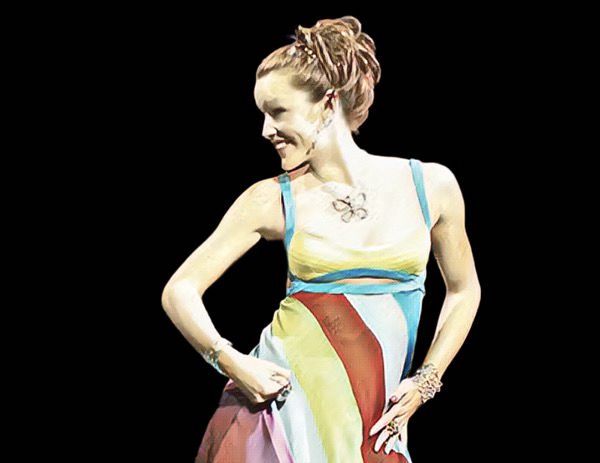
It is also not difficult to understand why Netflix chose to invest in a reboot. At a time when streaming platforms compete for attention through immediate recognition, titles that already belong to the collective imagination function as powerful shortcuts. 13 Going on 30 has never really disappeared, whether through television, streaming platforms, or digital culture, which has turned its scenes and references into a shared language. Revisiting this story with a new cast allows the platform to speak both to those who grew up with the original and to a generation that recognizes its codes without having lived through that context. More than revisiting a hit, this is about updating a cultural asset that has already proven its ability to endure.
This longevity, in fact, is not limited to film. The story has also been adapted into a stage musical, which premiered in the United Kingdom in 2025 and is expected to expand, reinforcing how its narrative continues to find new forms of circulation. Few titles from that period maintain this kind of continuous presence, which helps explain why, two decades later, it is still seen as a property worth reinterpreting. To understand why, it is worth returning to where it all began.
When it first arrived in theaters in 2004, the film seemed to fit easily into a very recognizable lineage. To me, it always worked as a kind of female version of Big, infused with the spirit of Freaky Friday, in which a teenager dissatisfied with the present projects a promise of happiness onto the future and, through a magical gesture that requires no explanation, wakes up living exactly that fantasy. The structure was familiar, almost comforting, and perhaps for that reason, it was initially perceived as something light, unpretentious, a romantic comedy designed to entertain.
But there was something more beneath it, even if quietly so.
By inhabiting the adult life she once wished for, Jenna discovers that this version of herself does not match what she imagined. The teenager who longed to be popular, admired, and successful encounters a woman who has drifted away from her parents, betrayed friends, and made choices that her younger self would hardly recognize as her own. The return to the past, which could have functioned as a purely comforting narrative device, gains another dimension as it becomes an attempt to reorganize one’s own trajectory with a new awareness, as if the film were less interested in fantasy and more in choice.
This dimension was not accidental. The very conception of the project came from this contrast between stages of life, between the perspective of someone still discovering the world and that of someone already carrying the consequences of their decisions. Screenwriters Cathy Yuspa and Josh Goldsmith developed the idea from this tension between being 13 and being 30, more interested in differences in perception than in any fantastical device, which helps explain why the film still holds up beyond its distinctly early-2000s aesthetic. At 13, the future feels distant but full of possibilities; at 30, the present is shaped by achievements and yet still haunted by the sense that it could have been otherwise.
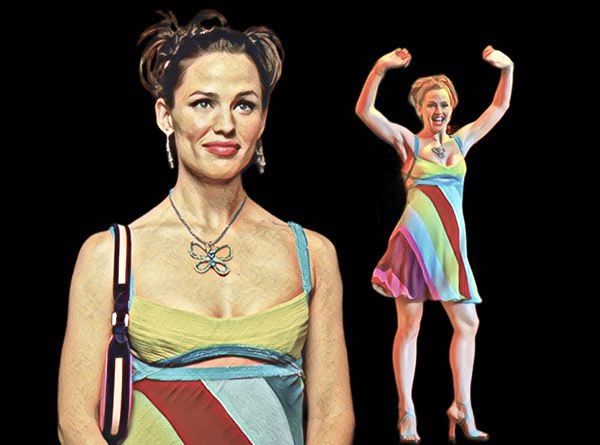
That aesthetic, it is worth remembering, was essential to the fantasy. The world of fashion magazines, the centrality of New York as a place of fulfillment, the association between visibility and success, all of this built a very clear idea of what it meant to “make it.” The adult life presented there was both recognizable and aspirational, which made Jenna’s disillusionment all the more meaningful. It also helped that, by being set in the early 2000s while looking back at the 1980s, the film constructed an irresistible soundtrack along with a visual identity that anchored it firmly in memory.
More than anything, it helped that the film contained a moment that crystallized this collective memory almost instantly: the iconic sequence set to “Thriller” by Michael Jackson. More than just a memorable scene, it works as a synthesis of the film, placing a rigid, performative adult environment in contrast with the spontaneity of someone who still sees the world through the freedom of a teenager, creating a moment in which everyone around is forced to drop the act and simply participate.
Thinking about the reboot necessarily involves understanding what, today, could occupy that same place.
The essence of the story will likely remain, because its central conflict is still recognizable. The desire to escape the present, the frustration of facing a future that does not match expectations, and the attempt to correct one’s own path are still universal experiences. What changes is the context in which all of this unfolds, and that is precisely where the greatest challenge lies.
The world of print magazines no longer holds the same symbolic weight, the idea of success is no longer linear, and the relationship with age itself has changed. Turning 30 no longer carries the same sense of definition it once did in the early 2000s, which completely shifts the starting point of the story. If there was once a relatively clear path between adolescence and adulthood, today that path has become fragmented, unstable, and open to constant revision.
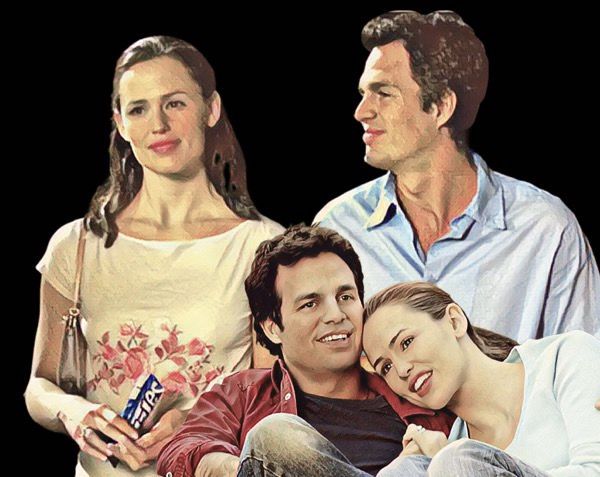
This means the reboot cannot simply update surface-level references. Replacing magazines with social media or adapting the professional setting to a digital logic does not solve the central issue, because what is truly at stake is the very idea of the future. The scene that once functioned as a moment of collective release would now require a different kind of identification, something capable of crossing generations, creating a brief sense of awkwardness before turning into shared participation.
Perhaps that is the most interesting question raised by this new version. Not who Jenna will be now, but what it means, today, to want to become someone in the future. Because, at its core, 13 Going on 30 was never really about growing up. It was about discovering that growing up does not eliminate doubts; it simply reorganizes them.
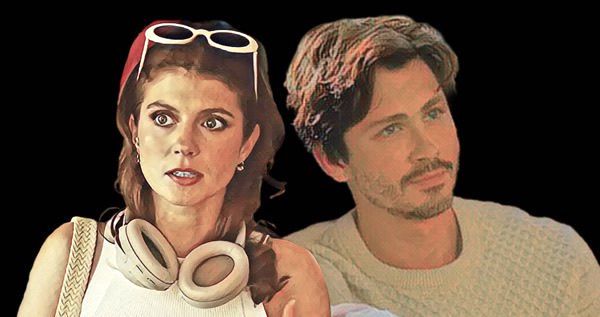
If the reboot, which will star Emily Bader and Logan Lerman, understands that, it may find its own path. If not, it risks relying only on the memory of a time when the future felt easier to imagine.
Descubra mais sobre
Assine para receber nossas notícias mais recentes por e-mail.
 miscelana.com