
Sigmund Freud would likely not appreciate the simplification implied in the phrase “Freud explains,” since the foundation of his thinking is precisely to show that very little in life has simple answers. Still, it is hard not to turn to psychoanalysis when faced with a fantasy that crosses generations and repeatedly appears in cinema: the idea that growing up solves things.
My surprise, a positive one, came when a younger generation reacted passionately to the news of a reboot of 13 Going on 30, a romantic comedy that, ironically, is now approaching its own 30th anniversary and is already seen as a classic. This is not a continuation, as the original actors are now in very different stages of life, but a new version. Retelling a familiar story, after all, is something we carry from childhood, when we ask to hear the same story over and over again, and Hollywood has built an entire industry on this behavior.
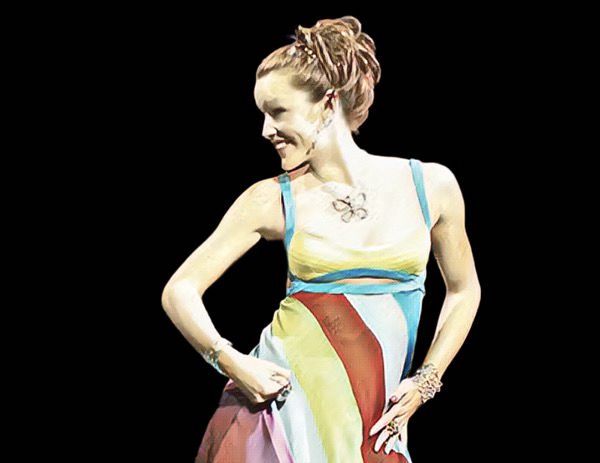
Some stories repeat themselves so often that they stop feeling like a coincidence and begin to reveal something about us. For decades, cinema has returned to the same idea: the teenager who wants to grow up quickly, who feels the present is not enough, and imagines that, in the future, everything will finally make sense. The problem is that, when that future arrives, usually through some magical device, it solves nothing. More often than not, it complicates things.
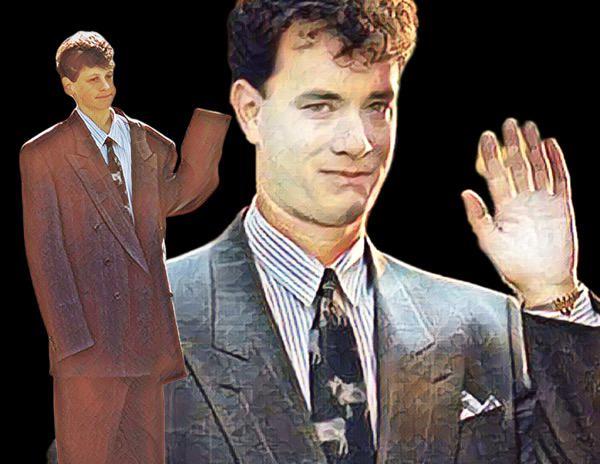
This kind of story appears in different films, with small variations. In Big, a boy wakes up as an adult. In 13 Going on 30, a teenager wakes up at thirty, living the life she always wanted. In Freaky Friday, mother and daughter swap bodies and must deal with each other’s lives. In 17 Again, a man returns to adolescence carrying the weight of the choices he made. In all these cases, the fantasy is not just about growing up. It is about believing that growing up will fix things.
Perhaps what is really at stake in these films is not simply growing up, but the possibility of rewriting one’s own story. The fantasy is not just reaching the future, but reaching it with the chance to do things differently, to correct choices, to avoid mistakes, to become someone closer to who one imagined being. There is a silent promise of control over one’s own path, as if it were possible to revisit the past with the awareness of the present.
This idea is deeply seductive because it touches on something very familiar. Who has never thought about how they would have done things differently if they had, back then, the mindset they have today? Cinema simply transforms this thought into a narrative and takes it to its limit, allowing the character to experience, even if temporarily, this corrected version of themselves.
There is also a recurring element in these films that often goes unnoticed, but helps explain why these stories stay with us: music.
There is almost always a scene in which the character, already immersed in this new reality, is carried by a song. Not as background music, but as a moment of connection. It is there that they experience, even if only briefly, a sense of belonging to the life they once desired.
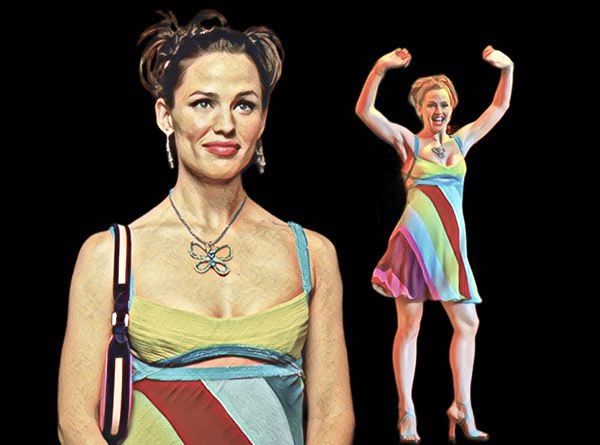
In 13 Going on 30, the sequence set to Thriller does exactly that. Jenna is out of place, uncomfortable, trying to understand the world around her, until the music enters and reorganizes the scene. What was once awkwardness becomes fluidity, her body finds its place, the way others see her shifts, and for a few minutes, she does not just occupy that space, she seems to belong to it. It is no coincidence that this is the film’s most remembered scene.
In Big, the giant piano plays a similar role, creating a language that requires no explanation. In Freaky Friday, music becomes a bridge between identities, a way of crossing discomfort. These moments function almost like a pause within the narrative, an instant in which desire seems, finally, to make sense.
And perhaps that is exactly why these scenes remain so vivid in memory. Because, for a few moments, everything seems to fall into place.
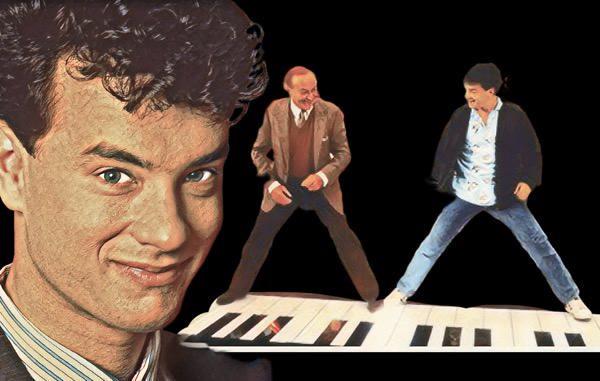
The starting point is always similar: there is a discomfort with the present. Adolescence appears as a time of waiting, insecurity,y and the feeling of not fully belonging anywhere. Growing up becomes a solution, a shortcut to finally feeling in control. These films turn that desire into reality. And that is precisely when the conflict begins.
When the characters reach adulthood, what they find is not absolute freedom, but responsibility, loneliness, and difficult decisions. What once seemed like a solution reveals itself as just another way of dealing with problems. In 13 Going on 30, for instance, the protagonist realizes she has become someone she does not recognize, or worse, someone she would not want to be.
This shift is important because it shows that these stories are not simply about respecting life’s stages. What they reveal is that the idea we create of adulthood when we are younger is, more often than not, a fantasy. And when that fantasy is lived too soon, it loses its power.
What psychoanalysis helps us understand
Psychoanalysis helps explain why this kind of story works so well. There is a very human tendency to believe that the future will resolve what feels confusing in the present. Adolescents, in particular, often project onto the idea of being an adult a kind of answer to everything.
But what these narratives show is that conflicts do not disappear; they simply change form. What once seemed distant and organized becomes more complex when it is actually lived.
There is also a question of timing. Some experiences only make sense when lived at the right moment. Anticipating them may create the impression of maturity, but it does not replace the real process of growing up. It is as if it were possible to appear ready without actually being ready.
Even without explicitly using these concepts, these films stage exactly this process, which may be why they remain so present and so easily recognizable.
When fantasy stops being just fantasy
For a long time, a magical device was necessary for a teenager to experience adulthood. Today, that is no longer the case.
Social media, early exposure, and the pressure to construct an image mean that children and teenagers begin to live, increasingly early, projected versions of themselves. The mirror is no longer only physical; it becomes the screen. And it is there that identity, recognition, and belonging begin to be built.
In this context, what was once merely a cinematic idea starts to resemble real life. With one important difference: in films, there is almost always a chance to go back. In life, not always.
What these films are really saying
Here is the central irony: the desire in these films is not exactly for the future, but for the possibility of going back. Return is the element that runs through almost all of these narratives and is perhaps the most revealing. Because it is what brings the sense of control, of reorganizing one’s path. The character returns to childhood or adolescence with a new perspective, more aware, more adjusted, ready to live the time they once wanted to skip.
This return does not function as punishment, but as a way of reorganizing experience.
It points to something deeper. There is no shortcut to growing up. There is no way to compress into a single gesture what depends on time, attempts, mistakes, and repetition. Experience cannot simply be accessed; it must be lived.
It is possible to read these stories as a warning not to want to grow up too quickly, but perhaps they are more than that. What is at stake is not a rule, but a limit. It is not that one should not live the future ahead of time; it is that, in the end, one cannot.
The desire to grow up is part of who we are and is not a mistake, but the idea that the future will fix everything is an illusion that appears at different moments in life. Once again, Hollywood knows this. Perhaps that is why these stories continue to work. Because, in some way, we have all wanted to arrive too soon. And, at times, we have also wanted to go back, but with the awareness that only exists afterward.
Descubra mais sobre
Assine para receber nossas notícias mais recentes por e-mail.
 miscelana.com