
The arrival of Emergency Radioactive on Netflix quickly climbed into the global Top 10, reaching third place among the most-watched series in late March. It is not sustained solely by curiosity surrounding a true story, but by the sense that certain events never fully end; they simply return in new forms when they reenter public debate. Emergency Radioactive is based on one of the most serious radiological accidents ever recorded outside a nuclear plant and transforms an episode often reduced to numbers into a narrative that brings people, choices, and consequences back to the center.
What happened in Goiânia in 1987
In September 1987, two scrap collectors found an abandoned radiotherapy device in a deactivated clinic in Goiânia. Inside the equipment was a capsule containing cesium-137, a highly dangerous radioactive material that, at the time, seemed merely curious, almost fascinating, especially because of the bluish glow it emitted in the dark.
The device was dismantled and parts were taken to a junkyard, where the capsule was eventually opened. The glowing powder began to circulate among family members, friends, and neighbors, shared without any understanding of the risk, touched by hand, carried into homes, spread as something rare and intriguing. What seemed harmless quickly turned into a chain of contamination that reached hundreds of people.
The scale of the disaster only began to reveal itself when severe symptoms appeared, and healthcare professionals realized they were facing something that did not fit any familiar diagnosis. At that moment, Brazil was not prepared to deal with an accident of this nature outside a controlled environment.

How the situation was contained
The response required an unprecedented mobilization of health authorities, military forces, and nuclear specialists. Entire areas were isolated, houses demolished, and personal belongings treated as radioactive waste. People were taken to screening centers, often without fully understanding what was happening, while teams worked to map the extent of the contamination.
The decontamination process was long and complex. Tons of material were collected and stored in facilities designed to contain radiation. The episode was ultimately classified as one of the most serious radiological accidents in the world, particularly due to its human impact outside a nuclear plant.
The consequences that continue to reverberate
Four people died directly as a result of contamination, including the young girl Leide das Neves, who became the most emblematic face of the tragedy. Hundreds experienced different levels of exposure, with physical and psychological effects that extended for years.
The impact went beyond health. Residents of Goiânia faced stigma, rejection in other cities, and a diffuse fear that reshaped social relationships and the perception of the place itself. The city came to carry a mark that cannot be confined to the immediate aftermath of the accident.
The series builds on this dimension by showing that the consequences do not end when the material is contained. They remain in memory, in identity, and in the way the story continues to be told.
How and when the series emerged
Emergency Radioactive emerges at a moment when streaming platforms are expanding their investment in true stories with strong local identity and global reach. The choice of the cesium-137 case follows this movement, while also responding to a broader trend of revisiting tragedies through a contemporary audiovisual language, closer to thriller and psychological drama.
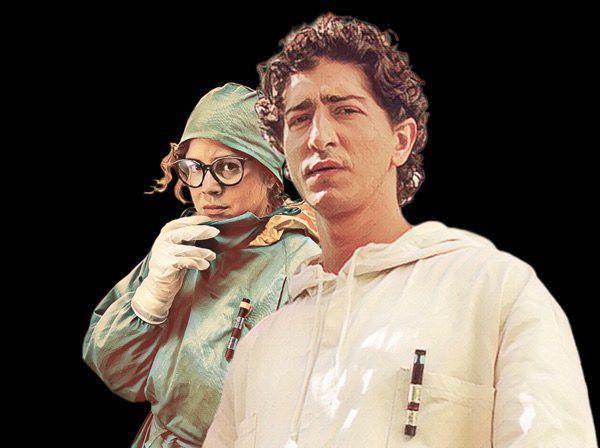
Conceived as a miniseries, the production reconstructs the days leading up to the discovery of contamination, follows the spread of the material, and observes the response of authorities. The narrative shifts between perspectives, following both victims and professionals involved in containing the disaster.

Cast and dramatic construction
The cast brings together well-known names from Brazilian audiovisual productions, with restrained and emotionally grounded performances. The series focuses on characters who react with confusion, denial, and, gradually, despair.
This choice reinforces the narrative’s intention by bringing the viewer closer to the characters’ experience, maintaining the sense that everything that happened could have unfolded in any similar context.
What critics are saying
Critical reception has been largely positive in terms of form, highlighting the series’s ability to build tension without relying on easy devices, while respecting the invisible nature of the threat. Comparisons with Chornobyl appear frequently, but almost always with an important caveat, since the Brazilian story stands on its own by exposing a more fragmented chain of negligence, making responsibility harder to assign to a single source.
At the same time, the series has faced criticism from representatives of the victims, who questioned the production for not being more directly consulted and criticized decisions such as the absence of filming in Goiânia. This reaction broadens the discussion and introduces an ethical dimension that goes beyond aesthetic analysis, but ultimately does not compromise the final result.
Why the series resonates now
The reach of the series suggests an immediate public interest, driven both by curiosity and by the rediscovery of an episode that, despite being widely documented, has never been fully absorbed.
By bringing the accident back into public conversation, Emergency Radioactive does not offer definitive answers or attempt to close the subject. What the series does is reactivate a memory that continues to produce effects, reminding us that certain events keep shaping the present long after they leave the headlines.
Descubra mais sobre
Assine para receber nossas notícias mais recentes por e-mail.
 miscelana.com