
When Emergency Radioactive arrived on Netflix and quickly became one of the most-watched productions worldwide, the story of Goiânia ceased to be only a Brazilian trauma and became a global narrative. That shift changes how the tragedy is told, reshapes its characters, and, above all, creates figures that did not exist exactly as portrayed. This is where the question of the “real Márcio” emerges, a name that, in practice, does not belong to a single individual but to a dramatic construction designed to give a human outline to a story that, in reality, was fragmented, diffuse, and structural.
The series is based on the 1987 accident, when a cesium-137 capsule was removed from an abandoned radiotherapy device in a decommissioned clinic. Two scrap collectors took the equipment to a junkyard, where the capsule was opened and revealed a glowing blue powder that sparked curiosity and fascination. That radioactive material was handled, shared, and carried into different homes, spreading contamination silently. What initially seemed like a curious object quickly became the center of one of the worst radiological accidents in the world.
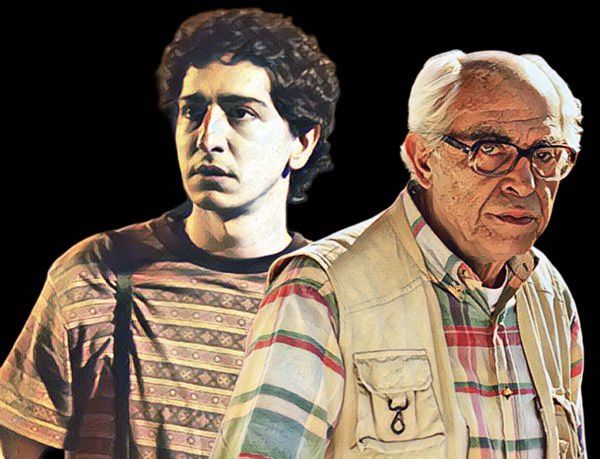
On the factual level, certain names remain unavoidable. Physicist Walter Mendes Ferreira was the one who identified the risk after analyzing a sample brought to the local Health Surveillance office, triggering authorities and enabling the first containment measures. That moment appears in the series, though adjusted in pacing and narrative centrality. It is from there that the story finds a technical and moral anchor, something the script expands by turning this figure into a more continuous protagonist than historical records suggest.
Among the victims, real history resists fiction with a force that requires no embellishment. Leide das Neves Ferreira, six years old, became the most recognized symbol of the tragedy after direct exposure to the radioactive material. Alongside her, Maria Gabriela Ferreira, Israel Batista dos Santos, and Admilson Alves de Souza also died as a result of contamination. The series preserves these names and their outcomes, even as it dramatizes relationships, dialogue, and situations to heighten emotional impact.
It is within this balance between fidelity and dramatization that the main adaptations emerge. The character “Márcio” does not correspond to a specific real person. He is a composite character, created from different individuals involved in the chain of events that led to the spread of radioactive material. By concentrating responsibility into a single figure, the series simplifies a complex network of decisions, omissions, and lack of knowledge. The result works narratively, but it alters the perception of blame, suggesting a linearity that never truly existed.
Other elements are also reshaped. The timeline is compressed to maintain narrative rhythm, encounters that were indirect in reality become direct, and some relationships are intensified to create dramatic tension. Technical procedures are generally respected but simplified so the audience can follow without prior knowledge. The institutional dimension of the disaster, involving regulatory failures, abandoned equipment, and the absence of clear communication about nuclear risks, is present but gives way to more recognizable individual trajectories.
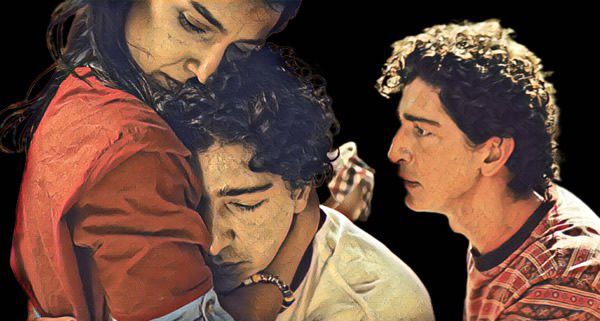
At the same time, the series succeeds in preserving what may be the most unsettling aspect of the real story: the fact that, at the beginning, no one fully understood what was happening. The fascination with the glowing blue powder, the circulation of the material among families and neighbors, and the delay in identifying the danger are not fictional inventions but central elements of the accident. What fiction does is organize these events into a more coherent narrative, even if it must reduce ambiguity to do so.
As for what followed, reality extends far beyond the final episode. Hundreds of people were contaminated, thousands underwent screening and monitoring, and entire areas had to be decontaminated or demolished. The consequences did not end in the years immediately after the accident. They stretched across decades, affecting the physical and mental health of victims and leaving deep social scars. International nuclear safety protocols were revised in response, and Brazil strengthened its systems for handling radiological emergencies.
Walter Mendes Ferreira himself continued his career in the field, becoming a reference in radiological emergency response and remaining connected to Brazil’s National Nuclear Energy Commission. His story, transformed into a character in the series, is one example of how fiction anchors itself in real figures while amplifying their narrative presence.
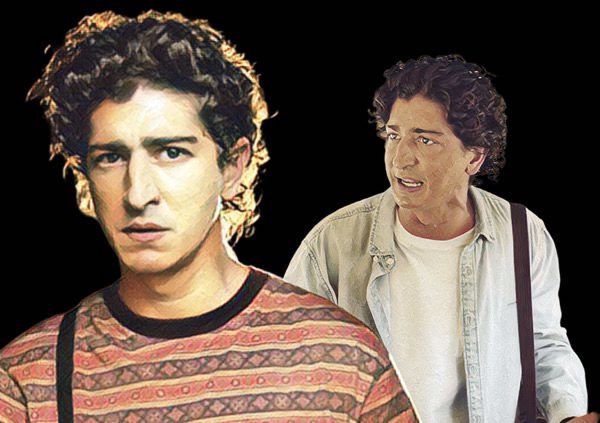
Within this adaptation process, Johnny Massaro plays a central role. A Brazilian actor with a well-established career across film, theater, and television, he had already gained attention in both auteur-driven and international projects before taking on this role. In the series, he portrays a character inspired directly by the professionals who worked on the front line, identifying and containing the accident, carrying the weight of representing not just an individual but a historical function. His performance sustains the emotional dimension of the narrative while serving as a bridge for audiences unfamiliar with the case.
The question of the “real Márcio,” therefore, does not have a simple answer because it begins from a premise constructed by the series itself. He does not exist as a single historical figure, but as a synthesis of events that, in reality, could never be reduced to one person. Fiction requires that synthesis to exist as narrative. Real history resists it, reminding us that disasters of this scale are always more complex, more diffuse, and more difficult to resolve than any script can suggest.
Descubra mais sobre
Assine para receber nossas notícias mais recentes por e-mail.
 miscelana.com