
In today’s digital landscape, riding the wave of interest generated by competing platforms is not just opportunistic; it’s strategic. And Netflix seems to understand that perfectly. Capitalizing on the reach and cultural momentum of Love Story – John F. Kennedy Jr. and Carolyn Bessette, a Disney production that dominated conversations and search trends through late March 2026, the platform chose this exact moment to unveil the first official image of Kennedy.
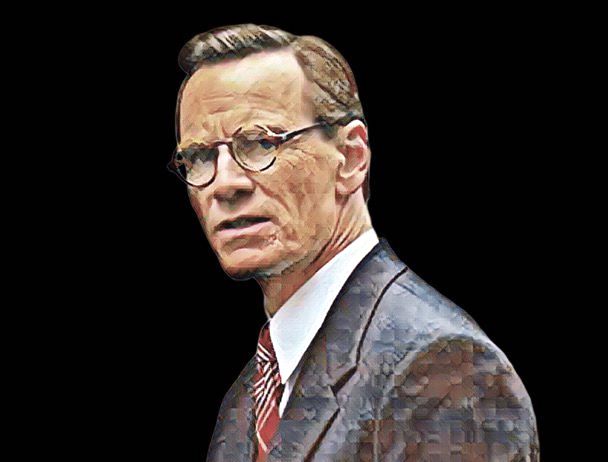
The choice could not feel more calculated. The face of this first reveal is Michael Fassbender as Joe Kennedy Sr., the patriarch who organized, financed, and engineered the family’s rise. This is more than an announcement. It is positioning. Kennedy does not intend to simply revisit a well-known dynasty, but to reframe the way we look at it.
And perhaps that is precisely why this is the right moment to revisit what to expect from the series, now less as a promise and more as a narrative taking shape.
Before JFK, the father
The most revealing aspect of this first wave of information is not the historical setting, nor the expectation of following the trajectory of John F. Kennedy. It lies in the decision to begin before all of that, at a time when the Kennedy name still needed to be built.
Fassbender’s presence at the center of the first image makes it clear that the series will not revolve around the political charisma the world has come to recognize, but around the quiet engineering that made it possible.
By placing Joe Kennedy Sr. as the starting point, the narrative shifts its focus from the finished myth to the process of constructing that myth. This is not simply about understanding who JFK was, but about observing who shaped him, who defined expectations, who organized the paths that turned destiny into a project.
That choice changes everything, even before a single scene has aired.
A family as a structure of power
The confirmed cast reinforces this direction with almost programmatic precision. Laura Donnelly as Rose Kennedy suggests a structural, quiet, constant presence, while Nick Robinson takes on Joe Jr., the idealized heir, the one initially entrusted with the family’s political project. Meanwhile, Joshuah Melnick as Jack appears still in formation, far from the historical figure that would later be solidified.
What emerges is not a succession of protagonists, but a system. Relationships under tension, expectations shifting, hierarchies operating as extensions of a broader design. The series seems less interested in isolating its characters than in showing how each of them functions within a structure that precedes any personal choice.
And that may be its most compelling angle. This is not about following a rise. It is about watching how that rise is constructed.
The recurring presence of characters such as Ben Miles as Eddie Moore, Lydia Peckham as Rosemary Kennedy, Saura Lightfoot-Leon as Kick Kennedy, Cole Doman as Lem Billings, and Imogen Poots as Gloria Swanson expands this world beyond the immediate family, revealing a network of influence, affection, and contradiction that helps sustain the myth.
Between intimacy and image-making
At the same time that it promises to reveal what lies behind the scenes, Kennedy inevitably participates in shaping the very narrative it seeks to examine. This is the central paradox of any historical dramatization, but it carries particular weight when dealing with a family that always understood the value of its own image.
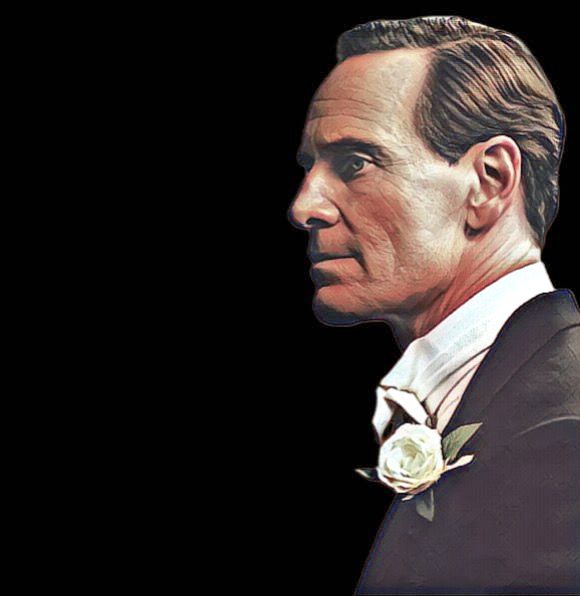
The presence of Gloria Swanson within Joe Kennedy Sr.’s orbit is not merely a period detail. It signals that the family’s power was also built at the intersection of politics, cinema, and public representation. Before holding office, the Kennedys already occupied the public imagination.
By organizing these trajectories into a narrative, the series risks smoothing complexity into coherence. Yet it is precisely within this balance, between revelation and construction, that it may find its strength.
And Joe Kennedy Sr.’s role as U.S. ambassador to the United Kingdom introduces an additional layer, bringing the series into proximity with the world explored in The Crown — not as aesthetic comparison, but as historical and symbolic overlap.
The right moment to revisit the Kennedys
None of this happens by chance. The renewed interest in the family, fueled by recent productions and their return to the center of pop culture, creates a context in which revisiting the Kennedys is no longer merely a historical gesture but a way of engaging directly with the present.
There is a clear contemporary impulse to understand how symbols are built, how dynasties maintain relevance across generations, how power organizes itself to appear inevitable. Kennedy arrives within this landscape not as a definitive answer, but as yet another attempt to reorganize a myth that has never stopped being retold.
From project to narrative
When I first wrote about the series, Kennedy still existed as an ambition. A project supported by a solid book, respected names, and an inevitable comparison with prestige productions that transform recent history into drama.
Inspired by JFK: Coming of Age in the American Century, 1917–1956 by Fredrik Logevall, the series begins long before the White House. As showrunner Sam Shaw defines it, the goal is to explore “the closest thing we have to an American mythology,” revealing not only the Kennedys but the time that shaped them.
Now, with the first images, a defined cast, and production underway, it becomes clear that the series does not simply intend to follow power.
It intends to show how it begins.
What Kennedy is about, and when it premieres
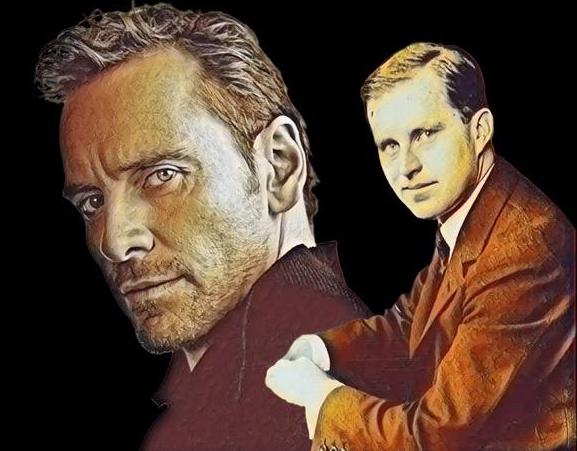
The series follows the intimate lives, loves, rivalries, and tragedies that shaped the Kennedy dynasty, beginning in the 1930s and tracing Joe and Rose and their nine children through a rise defined by ambition, expectation, and destiny.
Netflix has not yet announced a release date for the first season, which will consist of eight episodes.
Descubra mais sobre
Assine para receber nossas notícias mais recentes por e-mail.
 miscelana.com
1 comentário Adicione o seu