
From inside Vogue to the bestseller lists
When Lauren Weisberger published The Devil Wears Prada in 2003, what initially seemed like just another novel set in the fashion world quickly revealed a broader ambition. The book emerged from a very specific experience, yet it touched on something far more universal: the dynamics of power in environments where prestige and exhaustion exist side by side.
Weisberger had worked as an assistant to Anna Wintour at Vogue, one of the most coveted—and feared—positions in editorial fashion. By transforming that experience into fiction, she found a tone that balances fascination and burnout. Andrea Sachs does not simply enter a fashion magazine. She steps into a structure that demands total devotion while offering, in return, the promise of access.
The book’s success cannot be explained by glamour alone. It resonated because it felt recognizable. Even for readers far removed from fashion, it captured something familiar about hierarchical workplaces, distant bosses, and young professionals trying to prove themselves under nearly impossible conditions.

Miranda Priestly and the construction of a recognizable myth
From the beginning, the association between Miranda Priestly and Anna Wintour was unavoidable. Weisberger consistently maintained that the character was a composite, which is technically true. Still, the codes were there, arranged with too much precision to ignore.
The haircut, the sunglasses, the strategic use of silence, the way a single sentence can reshape the atmosphere of an entire room. Miranda does not need to raise her voice because the system around her is already designed to amplify every gesture.
Wintour’s response, in turn, was as strategic as the character that sparked the comparison. By attending the film’s premiere wearing Prada, she shifted the narrative. Rather than defending herself, she absorbed the moment into her own image. What could have been read as exposure became an extension of control.
The discomfort the book provoked
The novel’s impact within the industry was immediate, even if rarely acknowledged openly. The issue was not the revelation of specific secrets, but the visibility it gave to practices that had long existed and were treated as part of the system.
Exhausted assistants, unreasonable demands framed as loyalty tests, a culture that blurs the line between resilience and endurance. Weisberger did not invent this world, but she organized it in a way that made it accessible, which proved more unsettling than any explicit exposé.
Some criticized the author, suggesting she had turned her experience into opportunism. At the same time, the industry’s reluctance to directly challenge the more uncomfortable aspects of the portrayal functioned as a quiet confirmation that the depiction was not far from reality.
The path to the screen and a crucial shift in tone
The 2006 film adaptation, directed by David Frankel, understood something essential that many adaptations overlook. It was not enough to translate the story. It needed reinterpretation.
The film softens Andrea, expands the magazine’s world, and most importantly, reshapes Miranda. In the novel, she often feels like a constant oppressive force. On screen, she gains layers that make her presence more complex—and therefore more unsettling.
This transformation is inseparable from Meryl Streep. Her performance avoids caricature and instead builds a character rooted in restraint. Miranda’s power lies in what remains unsaid, in the space between instructions, in the awareness that everyone around her is already anticipating her expectations.
The now-iconic cerulean speech encapsulates this approach. It moves the conversation from surface to structure, revealing how seemingly trivial choices are shaped by intricate systems of influence. In doing so, the film both validates and exposes the world it portrays.
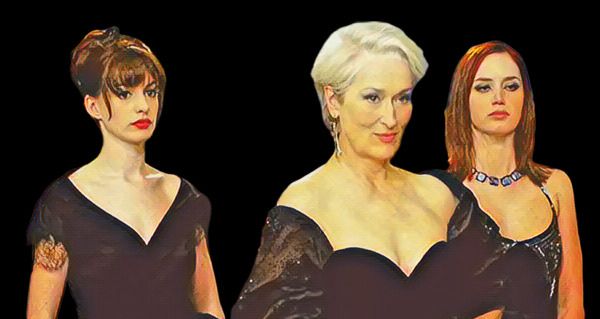
Alongside Streep, Anne Hathaway guides Andrea’s arc with a balance of vulnerability and ambition, while Emily Blunt delivers a sharp portrayal of the emotional cost of full adaptation to the system.
Results and cultural impact
The film grossed over $300 million worldwide and established itself as one of the defining titles of its genre. More than a commercial success, it reshaped how stories about female-driven corporate environments could be told.
It does not simply critique or celebrate. It operates in a space of ambiguity that allows for evolving interpretations over time. For some, Miranda is a villain. For others, she is a leader shaped by a system that demands excellence while punishing vulnerability.
This ambiguity is precisely what keeps the film present in cultural conversations, particularly in a moment when discussions around leadership, workplace culture, and personal boundaries continue to evolve.
The literary sequel and the possibility of a return to cinema
In 2013, Weisberger returned to this universe with Revenge Wears Prada. Andrea is no longer the uncertain young assistant. She has built her own career, yet discovers that the past does not dissolve easily, especially when Miranda Priestly reenters her life.
The conflict shifts. Survival is no longer the central question. It becomes about boundaries. Andrea understands the system now, but that knowledge does not grant immunity from its pressures.
Weisberger later expanded the universe with When Life Gives You Lululemons, focusing on Emily, reinforcing the idea that this world functions as a broader ecosystem where different trajectories reveal different ways of navigating the same pressures.
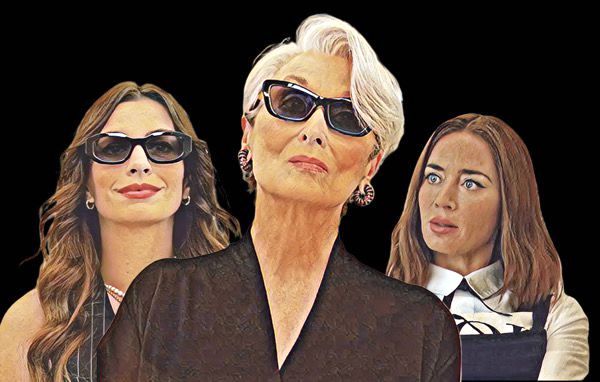
In cinema, the idea of a sequel to the original film has never fully disappeared. It resurfaces periodically, following the industry’s tendency to revisit established properties. The challenge is not simply reuniting cast and crew, but finding an approach that speaks to a transformed world.
Miranda Priestly, a figure built within a framework of unquestioned authority, would need to be recontextualized in an era shaped by social media, constant visibility, and more direct challenges to power structures. What was once accepted as demanding could now be read as excessive. That tension offers clear dramatic potential, but it requires a more nuanced lens.
Between fiction and reality, what truly endures
What makes The Devil Wears Prada so enduring is not factual precision, but its ability to translate a specific experience into something broadly recognizable. It does not document Vogue, nor does it attempt to. It reorganizes perceptions of work, ambition, and belonging.
In doing so, it transforms a personal story into something that resonates across contexts. And perhaps that is why, two decades later, the conversation is not only about who inspired Miranda Priestly, but about what she represents.
Descubra mais sobre
Assine para receber nossas notícias mais recentes por e-mail.
 miscelana.com