
The series Emergência Radioativa has brought back an episode that never truly disappeared from Brazil’s collective memory; it merely shifted places. It moved away from headlines, technical reports, and history books, and returned as image, sound, and narrative, confronting audiences with a question no reconstruction can fully answer: who were those people, really, the ones affected by the contamination, and what is lost when their names are no longer spoken?
The decision to change identities in the series is not a peripheral detail but a central narrative choice. It is not only about avoiding legal disputes or protecting families, although that matters. It is about creating a sa,fe dramatic space in which fiction can reorganize real events, condense characters, adjust timelines, and, above all, sustain a continuous narrative where, in reality, everything unfolded as fragments, confusion, and delay. The problem is that, in doing so, the series also shifts the weight of what truly happened, and that weight resides in names.
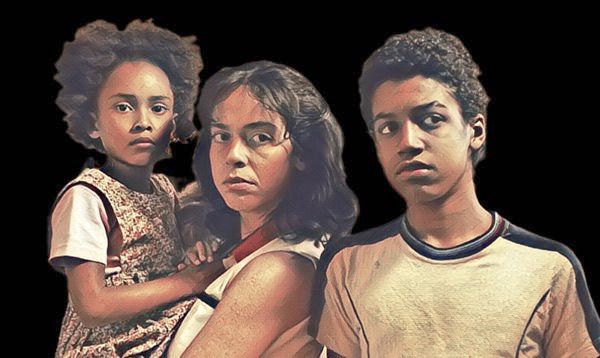
The Cesium-137 accident in Goiânia in 1987 did not begin as a visible tragedy. It began as curiosity. A radiotherapy device abandoned in a deactivated clinic was found by scrap collectors, dismantled without any understanding of what it contained, and transformed into an object of fascination. The glowing blue powder seemed harmless, almost beautiful. It was taken home, shared, and passed around. What the series reconstructs with unsettling accuracy is that initial moment of enchantment, because it is precisely there that the most disturbing dimension of the case lies: no one ran from danger. After all, no one knew it existed.
Among the real victims, some names continue to cut through any attempt at fictionalization.
Leide das Neves Ferreira, a six-year-old girl, became the most painful symbol of the tragedy. Fascinated by the glow, she handled the radioactive powder as if it were something magical. She ingested small amounts. Days later, her body could no longer endure it. The series recreates this trajectory with care, but changes her name. What does not change is the discomfort of witnessing a childhood interrupted by something invisible, something that had no smell, no recognizable warning, and offered no chance of defense.
Maria Gabriela Ferreira, Leide’s mother, was also contaminated while handling the substance without protection. Her story, like that of other family members, appears diluted into composite characters, a common strategy in dramatizations attempting to encompass multiple perspectives without multiplying the cast. The effect is ambiguous: it facilitates storytelling, but blurs historical accountability.
Wagner Mota Pereira, a young worker, and Israel Baptista dos Santos, who was involved in handling the material, are also among those who died from acute radiation exposure. Their paths in the series are reorganized, at times merged into fictional figures carrying traits of more than one real person. This fusion creates more “readable” characters for audiences, but weakens the collective dimension of the tragedy, which was precisely its most devastating feature.
And then there is a figure the series brings closer to reality, shaping him into a dramatic axis: the physicist Walter Mendes Ferreira. He was the one who realized the material was not ordinary, who identified the radiation and helped alert authorities. In many accounts, he is the first to name the danger. The series preserves this role, even as it dramatizes his actions to build tension. Here, artistic license does less to distort than to intensify.
What followed resists simplification. More than two hundred people were contaminated, dozens required intensive treatment, entire neighborhoods were isolated, homes demolished, and objects buried as nuclear waste. For a time, Goiânia became a city marked by fear of contact, stigma, and misinformation. People who were not contaminated were avoided, rejected, and treated as threats. The disaster did not end with the immediate deaths. It continued in the way these lives came to be perceived.
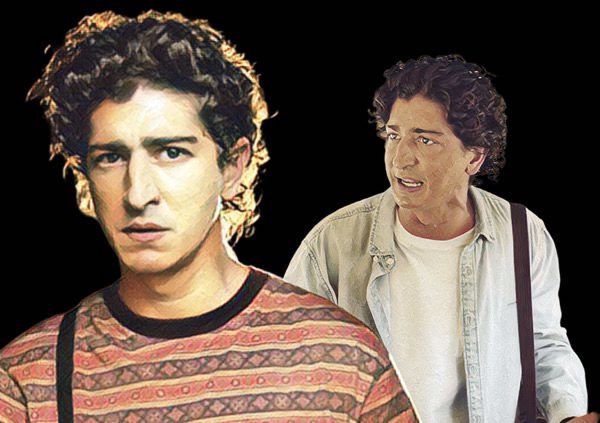
The series succeeds in showing that the greatest enemy was not only radiation, but ignorance. Still, choosing fictional names, it creates a layer of distance that protects but also softens. The viewer connects with characters when what is at stake are real people who existed, who were buried under strict safety protocols, whose funerals were marked by fear and tension, and whose stories still echo among families and survivors.
There is an ethical reason for this choice, and it is legitimate. But there is also an unavoidable side effect. When names are changed, the tragedy risks becoming less specific, less grounded, almost too universal. And the Cesium-137 accident was not a metaphor. It was a concrete event, with identifiable victims, in a real city, in a country that still grapples with the consequences of institutional decisions, structural neglect, and failures of control.
Perhaps the most important movement the series provokes lies not in what it shows, but in what it compels audiences to seek afterward. Once the episodes end, the question shifts from what happened on screen to what was left out, what was altered, and who those people really were behind the characters. It is in this second moment, outside fiction, that the story regains its full dimension.
And it is also there that names begin to matter again.
Descubra mais sobre
Assine para receber nossas notícias mais recentes por e-mail.
 miscelana.com